
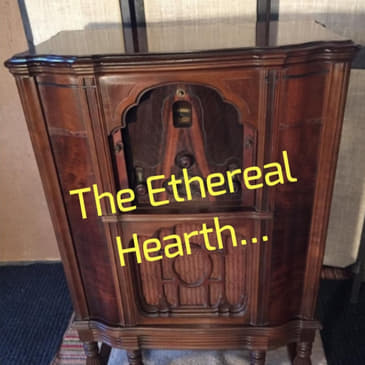
Radio transformed the world in a multitude of ways and ushered in the era of electronic mind control and social engineering... Reading from a book titled, "Media And The American Mind From Morse To McLuhan", by Daniel J. Czitrom... www.alchemicaltechrevolution.com
[00:00:00] Discover the amazing clinically proven health benefits of Original Tahitian Noni.
[00:00:05] Original Tahitian Noni includes powerful antioxidants, adaptogens, nutrients, and phytonutrients to naturally boost energy levels, immune system function, and overall health.
[00:00:15] Meticulously sourced from French Polynesia, this is the Original Superfruit, except no imitations.
[00:00:21] Original Tahitian Noni.
[00:00:23] Visit ATRHealth at AlchemicalTechRevolution.com and click on the Shop Here tab for more details.
[00:00:30] We lead the world in facing down a threat to decency and humanity.
[00:00:36] Last week, along with cocaine, what is it saying?
[00:00:39] It's more than one fall country.
[00:00:43] It is a big idea.
[00:00:44] It's because of oppression.
[00:00:46] A new role.
[00:00:54] For the faithful.
[00:00:56] You are listening to the Alchemical Tech Revolution, and I am your host, Wayne McRoy.
[00:01:27] Good evening, good morning, wherever you are around the world.
[00:01:30] Tonight, we're going to discuss this concept of the Ethereal Hearth.
[00:01:36] Well, the hearth is central in the home.
[00:01:39] Of course, you know this.
[00:01:41] This is a concept that predates our modern times.
[00:01:45] The hearth always being central in the home.
[00:01:49] Well, what is this notion of the Ethereal Hearth?
[00:01:53] Well, we're going to look back at the early history of radio broadcasting, and we're going
[00:01:59] to discover that in the early part of the 20th century, the radio became very central to
[00:02:08] many homes in not only America, but within the developed world.
[00:02:13] This became a centerpiece in the living rooms of people all across America and, of course,
[00:02:21] many other nations in the world.
[00:02:23] And this became one of the primary tools used not only to convey information in a relatively
[00:02:31] short time from place to place, but it also became one of the preeminent social engineering
[00:02:37] tools of modern times.
[00:02:40] And, of course, this was the precursor to the television.
[00:02:44] The television, the greatest mind control technology ever devised.
[00:02:49] But the radio certainly had its place, and it still has its place.
[00:02:53] As a medium, radio broadcasting is still very much important.
[00:02:58] In fact, that's what I'm doing right now.
[00:03:00] Were it not for this type of technology, I would not be able to convey information to you
[00:03:05] in the way that we do so.
[00:03:07] So it is a useful tool in many regards.
[00:03:11] The problem is it's been misused in the past by the social engineers and the dark occultists
[00:03:17] who run things in this world, who have misused and misapplied this technology in order to
[00:03:23] socially engineer the masses.
[00:03:25] Now, we always run into these same problematic themes across the board with the development
[00:03:31] of these technologies.
[00:03:32] And my view, of course, is these are tools.
[00:03:35] They can be used for good or they can be used for bad.
[00:03:38] And, of course, the early development of this was implemented by those who realized the potential
[00:03:45] to do bad things with it and capitalized upon that potential.
[00:03:51] And, of course, the rest is history, as they say.
[00:03:54] And we're going to explore that history.
[00:03:56] We're going to be reading into a book once again, and we've read from this book on some
[00:04:02] previous episodes here.
[00:04:03] It's titled Media and the American Mind from Morse to McLuhan by Daniel J. Sitzrom.
[00:04:10] Now, this is actually a very good book.
[00:04:13] It gives you a good factual fact-based history of the development of various things.
[00:04:19] And we did an episode prior about the motion picture industry.
[00:04:25] And this, of course, came into fruition prior to the mass adoption of the radio in the homes
[00:04:33] of the Americans.
[00:04:35] But you'll see there's some esoteric types of crossovers here when we're talking about
[00:04:39] the radio as the ethereal hearth.
[00:04:42] Now, this has been replaced in modern times by a new form of this ethereal hearth.
[00:04:50] And I would say, by and large, in the latter part of the 20th century and, of course, the
[00:04:56] beginning part of the 21st century, the ethereal hearth that at one time the radio filled the
[00:05:02] position of has now been filled by the television.
[00:05:05] And I would say in the more recent near past, it's being replaced by computers and or screens,
[00:05:17] computer screens of sorts.
[00:05:19] The internet could be said to be the ethereal hearth of modern times.
[00:05:24] But we'll see how this takes on a type of esoteric connotation.
[00:05:29] Because when you think about the hearth, you think about this notion of warmth and centrality
[00:05:37] to the home.
[00:05:39] It's central to family, the family unit.
[00:05:43] And they've, of course, replaced the hearth with something different at this point.
[00:05:48] It's not something that necessarily brings about this feeling of warmth or community or companionship
[00:05:56] or love.
[00:05:57] These types of ideas have now been replaced by this synthetic device.
[00:06:03] And, of course, in the early part of the 20th century, this would be the radio.
[00:06:07] And the latter part would be the television.
[00:06:09] And like I said, now it seems to be shifting more towards the computer being central to the
[00:06:16] home.
[00:06:17] And, of course, this takes away the notion of human contact.
[00:06:21] Once again, you can see how these subtle social engineering agendas are playing out.
[00:06:26] And the subtle occult types of connotations play out with this, if you could connect the
[00:06:32] dots there.
[00:06:33] So, certainly, we see that this notion of the ethereal hearth has become an important part
[00:06:40] of social engineering the masses in the modern era.
[00:06:43] And this has its roots with the advent of radio broadcasting.
[00:06:48] And we're going to get into that right now as we read from this book.
[00:06:52] And I find it compelling.
[00:06:53] And this is where I got the title.
[00:06:54] It's actually from chapter 3 of this book, where it talks about the ethereal hearth, American
[00:07:00] radio from wireless through broadcasting.
[00:07:02] From the years 1892 to 1940.
[00:07:06] The development of the telegraph and the motion picture proceeded in a relatively straight
[00:07:11] historical line.
[00:07:12] Pioneers in the creation of those two media struggled to find technological solutions to
[00:07:18] specific problems.
[00:07:19] The transmission of intelligence using coded electrical impulses through wires and the perfection
[00:07:25] of projected motion photography.
[00:07:27] Early in their history, the implications those media held for prevailing notions of communication
[00:07:33] and culture seemed startling.
[00:07:35] And I'm going to pause there.
[00:07:37] So, we had these inventions, motion pictures.
[00:07:41] Of course, we did a prior episode on the advent of the motion picture and how it influenced the
[00:07:49] world and changed the world in very many ways.
[00:07:51] And now we're talking about ways that these inventions, this along with the telegraph and other things,
[00:07:58] began to give credence to the possibility of instantaneous or near instantaneous communications
[00:08:03] across very long distances.
[00:08:07] So, this is an important concept to keep in mind.
[00:08:11] They seem to think that this had potential for other types of uses.
[00:08:18] And, of course, early on in the development phases of this, it was recognized by what would later
[00:08:25] become the military-industrial complex that this could be weaponized.
[00:08:30] So, now we're getting into the crux of the matter here.
[00:08:34] Radio broadcasting added a totally new dimension to modern communication by bringing the outside
[00:08:39] world into the individual home.
[00:08:42] The history of radio, however, was far more complex than the histories of the previous media
[00:08:47] breakthroughs which we just discussed.
[00:08:49] Motion pictures and a telegraph, that would be.
[00:08:52] The broadcasting system tied together a bundle of technological and scientific threads
[00:08:57] that had been dangling for a generation.
[00:09:00] It thus makes sense to distinguish wireless technology up to and including World War I
[00:09:06] from the later system of radio broadcasting.
[00:09:09] Wireless technology presumed a far higher level of scientific knowledge,
[00:09:13] particularly in mathematics and physics, than that required by previous advances in communication.
[00:09:20] Although individual experimenters around the world contributed to wireless progress,
[00:09:25] it ultimately achieved technological sophistication through the research performed and coordinated
[00:09:31] by science-based industry and the military.
[00:09:35] And I'm going to pause for a moment there.
[00:09:37] And there is the big connection.
[00:09:40] The military, they recognized the potential uses this could have on the battlefield
[00:09:47] or for the battlefield, for the greater war effort.
[00:09:51] And of course, the early, early advent of what would later become the military-industrial complex
[00:10:00] began to capitalize on this.
[00:10:03] And they were the ones that were most interested in figuring out how to use this wireless technology
[00:10:09] for themselves in order to achieve certain purposes.
[00:10:13] And of course, like everything else, this turns out to be a dual-use technology,
[00:10:19] first perfected for all its military applications,
[00:10:22] and then unleashed to the public for commercial use.
[00:10:26] So we have this going on in the early part of the 20th century,
[00:10:30] just prior to World War I, up to and including World War I,
[00:10:34] where they were figuring out how to use radio broadcasting in various different ways.
[00:10:39] They recognized the potential for this wireless technology.
[00:10:44] And certainly, the advent of things like the telegraph,
[00:10:47] this was hugely, monumentally changing of the way communication happened.
[00:10:55] So they used this in many ways, and it did transform the world in a lot of ways.
[00:11:03] But it was limited in its usage because, you see, you needed a wire
[00:11:07] in order to transmit information in that way.
[00:11:10] Whereas this newer technology of radio broadcasting,
[00:11:14] it introduced the idea of wireless communication.
[00:11:18] You didn't need this wire.
[00:11:20] It was far less limiting than the telegraph.
[00:11:23] So they decided to focus their attention and their resources
[00:11:27] into developing this technology.
[00:11:30] Radio broadcasting began as a marketing tool,
[00:11:34] a service designed by large electrical equipment manufacturers
[00:11:37] to sell privately owned receivers.
[00:11:40] The enormous potential of radio broadcasting
[00:11:42] for improving the quality of daily life,
[00:11:45] its ubiquitous power to bring art, entertainment, music, education,
[00:11:48] and news into the living room contained severe contradictions.
[00:11:53] I'm going to pause for a moment.
[00:11:55] So it was introduced first as a marketing tool.
[00:12:00] A marketing tool.
[00:12:01] Now the very beginning phases of the military industrial complex
[00:12:07] took notice of this and decided they were going to try
[00:12:11] to develop these technologies themselves for other uses,
[00:12:15] militaristic uses.
[00:12:17] And we have this different dichotomy of thought.
[00:12:20] But here it says here that it was begun for marketing purposes
[00:12:25] for things like the dissemination of entertainment,
[00:12:27] music, education, and news into the living rooms of people all around the world.
[00:12:32] It was a transformative tool.
[00:12:35] It brought information to people in a way that otherwise would not be available.
[00:12:41] And it became a replacement of sorts for a lot of the print media
[00:12:47] after it really had taken hold.
[00:12:50] Let's continue here though.
[00:12:52] It says, because it's talking about some of the contradictions
[00:12:55] that were contained in this advent of putting a radio in every living room.
[00:13:01] With radio broadcasting, wireless technology went public in the privacy of the home.
[00:13:06] But if the ownership of receivers promised to be democratic,
[00:13:10] what of the control of transmission?
[00:13:12] During the 1920s, debate over radio's future centered on the question of structure and finance.
[00:13:17] Would the electrical interests supply the service indefinitely?
[00:13:22] If not, who would pay for it and how would it be regulated?
[00:13:26] By the onset of the Great Depression,
[00:13:28] advertising had established itself as the basis for American broadcasting.
[00:13:33] Critics wondered about the hidden social costs of free broadcasting
[00:13:36] paid for by commercial sponsors.
[00:13:38] Meanwhile, with its newfound stability,
[00:13:41] radio programming regularly featured hybrid combinations
[00:13:44] of traditional entertainment and news forms.
[00:13:47] And I'm going to pause for a moment.
[00:13:49] So the early uses of radio
[00:13:52] were primarily for military purposes
[00:13:58] prior to World War I.
[00:14:00] But then the full-on commercialization of it came out
[00:14:03] directly after World War I.
[00:14:06] And in the 1920s, they began to figure out
[00:14:08] who's going to foot the bill for this?
[00:14:12] How are we going to do this?
[00:14:13] Who's going to be the broadcaster, per se?
[00:14:17] Who's going to take charge of that?
[00:14:19] Is it the electrical companies?
[00:14:21] Who's going to do it?
[00:14:23] And wouldn't you know,
[00:14:25] the industry itself decided
[00:14:28] how this would be done
[00:14:30] and how it would be paid for.
[00:14:32] And primarily, it was paid for
[00:14:35] by commercials.
[00:14:37] Commercial sponsorship.
[00:14:39] So companies would pay money
[00:14:41] to have an advertisement
[00:14:43] for their product and or service
[00:14:45] come over this new form of media
[00:14:47] to people for them to hear.
[00:14:50] And this would supply much of the monies
[00:14:52] that would prop up the infrastructure
[00:14:54] for broadcasting.
[00:14:55] And we have these different hybrid combinations
[00:14:58] which came forward from that.
[00:15:00] So in the beginning phases,
[00:15:01] it would seem the electrical companies
[00:15:03] and those who were supplying the infrastructure
[00:15:07] and perhaps building the radio sets themselves
[00:15:09] were the ones
[00:15:12] who were perhaps controlling
[00:15:15] the broadcasting at that point.
[00:15:17] But then, of course, like everything else,
[00:15:22] you have to get government involved
[00:15:25] at some point, right?
[00:15:26] And that's exactly what happened.
[00:15:28] It was all about
[00:15:29] who's going to regulate this?
[00:15:30] What kind of regulations
[00:15:31] are we going to have?
[00:15:32] Of who's going to foot the bill?
[00:15:35] Who's going to be in charge of broadcasting?
[00:15:38] And I think this was
[00:15:40] a hotly debated topic at the time
[00:15:43] because who were the commercial interests
[00:15:45] who were broadcasting on the radio?
[00:15:49] You see, it was kind of like
[00:15:50] the Wild West at that point.
[00:15:52] There were all kinds of different people
[00:15:55] who, if they had the technology to do so,
[00:15:58] if they had the devices to do so,
[00:16:01] they could broadcast or transmit
[00:16:03] radio signals themselves
[00:16:04] to be received on certain frequency bands.
[00:16:07] And there was little regulation
[00:16:10] in place at the time.
[00:16:12] Nobody necessarily owned
[00:16:14] any particular radio band
[00:16:15] or network or anything of the sort.
[00:16:17] So this is wherein everything began
[00:16:20] to really full sail roll out
[00:16:23] for consumer use.
[00:16:26] And of course, an entire industry
[00:16:28] arose around this,
[00:16:29] a broadcast industry
[00:16:32] complete with regulatory rules
[00:16:37] and agreements.
[00:16:39] So this is what was established
[00:16:41] in the 1920s.
[00:16:42] So by the time the Great Depression
[00:16:44] rolled around,
[00:16:45] advertising was established
[00:16:46] as the basis for the funding
[00:16:49] of American broadcasting.
[00:16:50] And it does say
[00:16:52] that the commercial sponsors
[00:16:56] were pretty much the ones
[00:16:58] footing the bill,
[00:16:59] but were they the ones broadcasting?
[00:17:00] Let's see if we could garner
[00:17:01] some other information here.
[00:17:03] Looking backward,
[00:17:05] quite a few of the contemporary appraisals
[00:17:06] of wireless technology
[00:17:08] and radio broadcasting
[00:17:09] strike us as rather quixotic.
[00:17:11] This is in part because
[00:17:12] today's broadcasting media
[00:17:14] continually propound the idea
[00:17:16] that their current configuration
[00:17:17] is the only one possible.
[00:17:19] But the range of opinions
[00:17:21] on wireless technology's significance
[00:17:23] and the variety of proposals
[00:17:24] for the organization
[00:17:25] of radio broadcasting
[00:17:26] remind us that the present
[00:17:29] incarnation of broadcast media
[00:17:30] need not be permanent.
[00:17:32] And I'm going to pause
[00:17:33] for a moment.
[00:17:33] And this is a massively
[00:17:35] important idea
[00:17:36] that does affect us
[00:17:38] in the modern times.
[00:17:39] Just because they have
[00:17:42] their systems set up right now
[00:17:44] doesn't mean it has to still
[00:17:46] always remain that way.
[00:17:48] You see, there's always
[00:17:50] new incarnations of this
[00:17:51] cropping up.
[00:17:52] Like right now,
[00:17:53] I'm broadcasting right now
[00:17:56] live from my basement,
[00:17:58] from my little studio
[00:17:59] in my basement.
[00:18:01] And people are hearing this.
[00:18:04] And this is a different type
[00:18:05] of broadcasting
[00:18:06] from what the regular structure is.
[00:18:08] I'm not on a particular
[00:18:11] affiliated radio network
[00:18:12] or some cable news network
[00:18:16] or some such thing
[00:18:17] or a broadcast news media channel
[00:18:19] or anything like that.
[00:18:20] I'm not on a mainstream channel
[00:18:23] that turns up on the radio,
[00:18:26] the terrestrial radio,
[00:18:28] or on the televisions.
[00:18:31] And of course,
[00:18:32] the regulatory process
[00:18:34] for all of this
[00:18:35] and the infrastructure
[00:18:37] was laid out
[00:18:38] and put in place
[00:18:38] starting in the 1920s.
[00:18:40] And we have the current
[00:18:41] iteration of it today.
[00:18:42] that we have now,
[00:18:43] that's largely accepted.
[00:18:44] But there are new ways
[00:18:46] of doing things
[00:18:46] and many technologies
[00:18:48] have been developed
[00:18:49] and will continue
[00:18:50] to be developed
[00:18:50] that make it possible
[00:18:51] to do things differently.
[00:18:53] And thus,
[00:18:54] it makes it harder
[00:18:56] for the regulators
[00:18:57] to impose restrictions
[00:19:00] and rules
[00:19:01] upon certain types
[00:19:04] of broadcast media.
[00:19:05] So here I am,
[00:19:07] as long as I have
[00:19:07] an internet connection
[00:19:08] and you have
[00:19:09] an internet connection,
[00:19:09] I can broadcast
[00:19:10] and you can hear this.
[00:19:12] And we also have,
[00:19:14] of course,
[00:19:15] all the prerequisite
[00:19:16] recording software
[00:19:17] and everything
[00:19:18] that goes with it today.
[00:19:19] So this can continue
[00:19:20] to be replayed
[00:19:21] over and over again
[00:19:22] and heard by many,
[00:19:24] many people.
[00:19:24] Whereas in the past,
[00:19:26] something like this
[00:19:26] would not have been feasible.
[00:19:28] You would have to have
[00:19:30] the proper studio equipment,
[00:19:33] which in the early days
[00:19:34] of radio was likely
[00:19:35] a lot more expensive
[00:19:36] and elaborate
[00:19:37] and you would have to have
[00:19:38] the proper way
[00:19:39] to do that.
[00:19:41] So it wasn't something
[00:19:42] that was accessible
[00:19:43] to most people.
[00:19:44] Now with our modern technology,
[00:19:46] this is more accessible
[00:19:47] than ever for people.
[00:19:48] And I would say radio,
[00:19:50] as a broadcast media form,
[00:19:53] still has unlimited potential.
[00:19:56] You would have thought
[00:19:58] in the era
[00:20:00] of digital film
[00:20:02] and digital media
[00:20:05] that radio
[00:20:07] would have disappeared.
[00:20:08] You would think so,
[00:20:10] wouldn't you?
[00:20:11] But there's always
[00:20:12] been a market for it.
[00:20:16] Now with motion pictures,
[00:20:19] of course,
[00:20:19] as we've stated earlier,
[00:20:21] and digital media
[00:20:22] and things of that nature,
[00:20:23] it probably has put
[00:20:25] a little bit of pinch
[00:20:26] on the overall
[00:20:27] radio industry itself.
[00:20:29] But certainly,
[00:20:30] people are listening
[00:20:32] to programs like this
[00:20:33] more now than ever before.
[00:20:35] With the invention
[00:20:36] of podcasting
[00:20:37] and everything
[00:20:38] that goes along with that,
[00:20:40] it made it more accessible
[00:20:42] for more people,
[00:20:43] more voices to be heard,
[00:20:45] more content
[00:20:47] for people to hear
[00:20:49] rather than content
[00:20:50] just put out there
[00:20:51] through the approved
[00:20:53] channels that existed
[00:20:55] at one point
[00:20:56] through the terrestrial
[00:20:57] radio stations,
[00:20:58] which are largely owned
[00:20:59] by major corporations,
[00:21:01] same thing with
[00:21:01] the television stations
[00:21:02] and all of that,
[00:21:04] centralized control
[00:21:04] of media.
[00:21:06] And we still have that
[00:21:07] to some degree today,
[00:21:09] but now we have
[00:21:10] these independent platforms
[00:21:12] that make it possible
[00:21:13] for broadcasters
[00:21:14] like myself
[00:21:14] to go out there
[00:21:15] and do this.
[00:21:17] And this is an important
[00:21:18] thing to keep in mind,
[00:21:19] and this is what
[00:21:20] the author here
[00:21:21] was talking about,
[00:21:22] the current incarnation
[00:21:24] of broadcast media
[00:21:25] need not be permanent.
[00:21:27] And certainly,
[00:21:27] we're seeing shifts
[00:21:28] in the way things are done.
[00:21:30] And of course,
[00:21:31] the regulators
[00:21:31] are always trying
[00:21:32] to push back
[00:21:32] and figure out
[00:21:33] new ways
[00:21:34] to control this.
[00:21:38] And concurrently,
[00:21:39] with the regulators,
[00:21:41] you always have
[00:21:42] the advertisers.
[00:21:44] Because you see,
[00:21:44] this was established
[00:21:46] very early
[00:21:47] in the history
[00:21:48] of broadcast media,
[00:21:49] that the advertisers
[00:21:51] would foot
[00:21:52] the bill,
[00:21:53] the brunt
[00:21:54] of the bill
[00:21:55] to pay for all of this.
[00:21:57] And certainly,
[00:21:57] we have the same thing
[00:21:58] going on today.
[00:21:59] In fact,
[00:22:00] a lot of podcasters
[00:22:01] depend upon,
[00:22:02] of course,
[00:22:03] ad revenue
[00:22:05] to help pay
[00:22:07] for the costs
[00:22:08] of broadcasting.
[00:22:09] Now,
[00:22:11] I'm no different
[00:22:12] in that regard.
[00:22:14] I do get
[00:22:15] ad revenues
[00:22:16] from various places
[00:22:19] simply out of necessity.
[00:22:22] But by and large,
[00:22:24] you won't hear
[00:22:25] ads on this show
[00:22:26] aside from
[00:22:27] an introductory ad.
[00:22:28] Unless,
[00:22:29] of course,
[00:22:29] you're listening
[00:22:29] on certain platforms
[00:22:30] like YouTube.
[00:22:31] And they insert
[00:22:32] commercials in there,
[00:22:33] of course.
[00:22:34] And I do get
[00:22:36] a little bit of cash
[00:22:37] from them for that.
[00:22:38] Not nearly
[00:22:39] what it should be.
[00:22:41] YouTube does not pay
[00:22:42] anything near
[00:22:43] what the standard rate
[00:22:44] is per capita
[00:22:46] in the rest
[00:22:47] of the broadcasting industry
[00:22:49] for sure
[00:22:49] with their advertisements.
[00:22:50] But they have
[00:22:51] a type of monopoly
[00:22:52] on video hosting.
[00:22:54] And that's where
[00:22:55] in the modern era
[00:22:56] you arrive
[00:22:58] at some
[00:22:59] various problems
[00:23:00] in that regard.
[00:23:02] And this is one
[00:23:03] of the ways
[00:23:04] in which they
[00:23:04] centralize control
[00:23:06] and regulation
[00:23:07] of this type of thing.
[00:23:09] But that's
[00:23:10] an aside
[00:23:10] for another time.
[00:23:11] That's
[00:23:11] a topic
[00:23:12] to explore
[00:23:13] some other time.
[00:23:14] I want to get back
[00:23:15] to the notion here
[00:23:16] of how radio
[00:23:18] became a preeminent
[00:23:19] part of the
[00:23:21] American lifestyle.
[00:23:23] And of course
[00:23:23] how this
[00:23:25] over the course
[00:23:26] of time
[00:23:26] transformed
[00:23:28] into television
[00:23:30] being a cultural
[00:23:31] influence
[00:23:32] on the American people.
[00:23:34] Almost as soon
[00:23:35] as scientists
[00:23:35] perfected
[00:23:36] electromagnetic
[00:23:37] telegraphy,
[00:23:38] they began searching
[00:23:39] for ways
[00:23:40] to eliminate
[00:23:40] the wires.
[00:23:41] Both Steinhale
[00:23:43] in Germany
[00:23:43] and Morse
[00:23:44] in America
[00:23:45] demonstrated
[00:23:45] telegraphy
[00:23:46] by conduction
[00:23:47] using the earth
[00:23:48] or water
[00:23:49] as a return circuit
[00:23:50] early in telegraph
[00:23:51] history.
[00:23:52] Later,
[00:23:53] various experimenters
[00:23:54] successfully telegraphed
[00:23:55] by forms of induction.
[00:23:57] Using electrostatic
[00:23:59] induction
[00:23:59] whereby an electric
[00:24:00] charge
[00:24:01] in one conductor
[00:24:02] induces one
[00:24:03] in another nearby,
[00:24:05] Edison
[00:24:05] in 1885
[00:24:06] created a system
[00:24:07] allowing moving
[00:24:08] trains to
[00:24:09] utilize telegraph
[00:24:11] lines running
[00:24:12] parallel to the
[00:24:13] tracks without
[00:24:13] interfering with
[00:24:14] the normal message
[00:24:15] load sent over
[00:24:16] the wires.
[00:24:18] Edison's
[00:24:18] motograph,
[00:24:19] as it was called,
[00:24:20] tried briefly
[00:24:21] on railroad
[00:24:23] lines in the
[00:24:24] 1880s
[00:24:25] and it proved
[00:24:26] a scientific
[00:24:26] success but
[00:24:27] a commercial
[00:24:28] failure.
[00:24:29] Using
[00:24:30] electromagnetic
[00:24:31] induction
[00:24:32] in which an
[00:24:32] electric current
[00:24:33] in a wire
[00:24:34] while increasing
[00:24:35] or decreasing
[00:24:36] induces another
[00:24:37] current in its
[00:24:38] neighborhood.
[00:24:39] William Preece
[00:24:40] managed to send
[00:24:41] telegraphic
[00:24:42] messages over
[00:24:43] several miles
[00:24:44] of water.
[00:24:45] As chief
[00:24:45] engineer of the
[00:24:46] British Post Office,
[00:24:47] Preece conducted
[00:24:48] numerous experiments
[00:24:49] in the 1890s
[00:24:51] using parallel
[00:24:52] series of wires
[00:24:53] to maintain
[00:24:53] communication with
[00:24:54] islands inaccessible
[00:24:55] to the wire
[00:24:56] telegraph.
[00:24:57] And I'm going to
[00:24:58] pause for a moment.
[00:24:59] So early
[00:25:00] bids at
[00:25:02] communicating
[00:25:02] were utilizing
[00:25:04] telegraph technology
[00:25:05] and of course it
[00:25:06] had its limitations
[00:25:07] because it
[00:25:07] needed a
[00:25:09] wire or
[00:25:10] some type
[00:25:10] of a
[00:25:11] conductive
[00:25:11] medium
[00:25:13] to
[00:25:15] kind of
[00:25:16] how should
[00:25:17] we say
[00:25:17] piggyback
[00:25:18] the signal
[00:25:18] one to
[00:25:19] the other
[00:25:19] to the
[00:25:20] other
[00:25:20] a relay
[00:25:20] system
[00:25:21] of sorts.
[00:25:23] So it
[00:25:23] provided
[00:25:24] some limitations
[00:25:25] for communication
[00:25:26] so certainly
[00:25:27] a wireless
[00:25:28] method of this
[00:25:29] would be
[00:25:30] preferable
[00:25:30] wouldn't it?
[00:25:31] Despite all
[00:25:33] of this
[00:25:33] work
[00:25:34] none of the
[00:25:34] conductive
[00:25:35] or
[00:25:35] inductive
[00:25:36] methods
[00:25:37] of
[00:25:37] wireless
[00:25:37] telegraphy
[00:25:38] demonstrated
[00:25:39] clear potential.
[00:25:40] During the
[00:25:41] 1880s and
[00:25:41] 1890s nearly
[00:25:43] all researchers
[00:25:43] approached the
[00:25:44] problem as
[00:25:45] one of
[00:25:45] conquering
[00:25:46] water
[00:25:46] communication
[00:25:47] between
[00:25:48] ships
[00:25:48] between ship
[00:25:49] and shore
[00:25:49] or between
[00:25:50] islands.
[00:25:51] Edison's
[00:25:52] curious
[00:25:52] motograph
[00:25:53] was the
[00:25:53] exception.
[00:25:54] For use
[00:25:55] over water
[00:25:55] however
[00:25:56] neither
[00:25:56] inductive
[00:25:57] nor
[00:25:57] conductive
[00:25:58] telegraphy
[00:25:59] could even
[00:26:00] replace
[00:26:01] the
[00:26:01] foghorn.
[00:26:02] Most
[00:26:03] observers
[00:26:03] agreed
[00:26:04] with the
[00:26:04] prognosis
[00:26:05] of the
[00:26:05] Harvard
[00:26:05] engineer
[00:26:06] John
[00:26:06] Trowbridge
[00:26:07] who
[00:26:08] ended
[00:26:08] an
[00:26:08] 1892
[00:26:09] review
[00:26:10] of
[00:26:10] various
[00:26:10] plans
[00:26:11] for
[00:26:11] wireless
[00:26:11] telegraphy
[00:26:12] at sea
[00:26:12] by declaring
[00:26:13] quote
[00:26:14] telegraphing
[00:26:15] through
[00:26:15] the air
[00:26:16] without
[00:26:16] wires
[00:26:17] by means
[00:26:17] of
[00:26:17] electricity
[00:26:18] does
[00:26:19] not
[00:26:19] seem
[00:26:19] at
[00:26:19] present
[00:26:20] to
[00:26:20] have
[00:26:20] the
[00:26:21] element
[00:26:21] of
[00:26:21] practicality
[00:26:22] in it
[00:26:23] end
[00:26:23] quote
[00:26:23] to
[00:26:24] Trowbridge
[00:26:25] the
[00:26:25] question
[00:26:25] of
[00:26:26] wireless
[00:26:26] communication
[00:26:26] over
[00:26:27] land
[00:26:27] did
[00:26:28] not
[00:26:28] seem
[00:26:28] worth
[00:26:29] deliberating
[00:26:29] and it
[00:26:30] probably
[00:26:30] would
[00:26:31] never
[00:26:31] be
[00:26:32] used
[00:26:32] even
[00:26:32] if
[00:26:33] it
[00:26:33] were
[00:26:33] practicable
[00:26:34] according
[00:26:34] to
[00:26:35] Trowbridge
[00:26:35] the
[00:26:36] ultimate
[00:26:36] scientific
[00:26:37] foundation
[00:26:38] for
[00:26:38] wireless
[00:26:39] telegraphy
[00:26:39] came
[00:26:40] not from
[00:26:41] induction
[00:26:41] or
[00:26:42] conduction
[00:26:42] but from
[00:26:43] the concept
[00:26:44] of
[00:26:44] electromagnetic
[00:26:45] waves
[00:26:45] traveling
[00:26:46] through
[00:26:46] space
[00:26:47] university
[00:26:48] trained
[00:26:49] scientists
[00:26:49] largely
[00:26:50] in
[00:26:50] England
[00:26:51] and
[00:26:51] Germany
[00:26:51] pioneered
[00:26:52] in
[00:26:53] proving
[00:26:53] the
[00:26:53] existence
[00:26:54] and
[00:26:54] utility
[00:26:55] of
[00:26:55] these
[00:26:55] waves
[00:26:55] in
[00:26:56] the
[00:26:56] 1860s
[00:26:57] James
[00:26:58] Clerk
[00:26:58] Maxwell
[00:26:58] one of
[00:26:59] the
[00:26:59] great
[00:26:59] theoretical
[00:27:00] physicists
[00:27:00] of
[00:27:00] the
[00:27:01] century
[00:27:01] mathematically
[00:27:02] predicted
[00:27:03] the
[00:27:03] existence
[00:27:04] of
[00:27:04] electromagnetic
[00:27:05] waves
[00:27:06] in
[00:27:06] the
[00:27:06] ether
[00:27:07] going to
[00:27:07] pause
[00:27:08] for a
[00:27:08] moment
[00:27:08] here
[00:27:09] folks
[00:27:09] that's
[00:27:10] right
[00:27:10] in
[00:27:10] the
[00:27:11] ether
[00:27:41] rebels
[00:27:43] seems
[00:27:44] to嗨
[00:27:47] throughout all
[00:27:48] time
[00:27:50] and
[00:27:50] study
[00:27:51] if
[00:27:51] you
[00:27:51] go back
[00:27:51] in the
[00:27:52] old natural
[00:27:52] sciences
[00:27:53] hermetic
[00:27:53] sciences
[00:27:54] it's an
[00:27:55] acknowledged
[00:27:55] feature of our
[00:27:56] reality
[00:27:57] the
[00:27:57] ether this
[00:27:58] is
[00:27:58] the
[00:27:58] substrate
[00:27:59] on which
[00:27:59] all
[00:28:00] of
[00:28:00] our physical
[00:28:01] manifestation
[00:28:01] exists
[00:28:02] You see, Tesla told us to think in terms like this, that light is nothing more than a sound wave in the ether.
[00:28:13] So we need to understand the correlation between light and sound.
[00:28:18] They're both electromagnetic frequency bands.
[00:28:22] One has a different medium than the other.
[00:28:24] The medium of sound travels through the air, while the medium of light travels through the ether.
[00:28:31] That's why light can traverse a vacuum.
[00:28:35] Because there's something else. It requires a medium.
[00:28:39] If there is a waveform that can travel, or I don't know if travel is even the right word.
[00:28:49] When you get back to the concepts that undergird ether physics, it's a perturbation of the ether in which we see this.
[00:29:00] It's just like a sound wave. It's not actually traveling.
[00:29:04] It's disturbing the medium. It's disturbing the air.
[00:29:08] So when you have this vibration, it disturbs the air, and it doesn't truly travel.
[00:29:13] It just creates this ripple through the air.
[00:29:17] And it translates as sound to the human ear.
[00:29:21] So it's the same thing with light.
[00:29:24] But light needs a medium also in which to manifest in this way.
[00:29:29] So this is how Tesla described it.
[00:29:32] And of course, there's a lot smarter people who have described this in much better ways than I can.
[00:29:37] But it seems to be a misnomer that sound or light, quote unquote, travel in the way that they do.
[00:29:44] So it's just a disruption in the medium.
[00:29:49] And of course, in this case, when we're talking about radio waves or what we're familiar with as radio,
[00:29:55] we're talking about different frequencies of sound waves.
[00:29:58] And sound travels through the air or the water or whatever other physical medium that we have here that it goes through.
[00:30:06] Or wires in some cases, as in the early telegraphy.
[00:30:10] But the discovery by the ether physicists, including James Clerk Maxwell,
[00:30:16] discovered that there's also perturbations that occur in the ether as well.
[00:30:21] And that these waveforms transcend through these different forms of mediums,
[00:30:27] whether it be the air or the ether.
[00:30:30] And this potential could be utilized if it's understood properly.
[00:30:35] So he made predictions on that.
[00:30:39] He made predictions about the existence of these electromagnetic waves in the ether.
[00:30:45] Because certainly it could be demonstrated that it happens through air or some other medium like water,
[00:30:52] these kinds of things.
[00:30:54] So he made the prediction about electromagnetic waves in the ether.
[00:30:58] So let's see what else we could muster from that now.
[00:31:00] So both light and electricity, Maxwell showed, resulted from vibrations in the ether.
[00:31:06] They differed only in the rate of vibration.
[00:31:08] He predicted that electric waves could be set up by electric oscillations and like light or sound waves,
[00:31:15] could be detected.
[00:31:16] These electric waves would travel at the speed of light.
[00:31:19] Although the notion of a mysterious all-pervasive ether later became discredited among scientists,
[00:31:25] it served Maxwell as a convenient fiction to help explain the presence and behavior of electromagnetic waves.
[00:31:33] I'm going to pause for a moment here, folks.
[00:31:35] So the author of this book seems to align his ideologies with what our modern physics shows.
[00:31:43] And that's fine.
[00:31:45] People can have differing opinions about this.
[00:31:47] It seems to me that if you go back to the understandings of ether physics,
[00:31:53] you have a better model to work from for how things truly operate in this world.
[00:32:00] That's just my opinion.
[00:32:02] And that's also the opinion of many other learned people,
[00:32:06] including Nikola Tesla,
[00:32:08] who seems to be the one who understood the electromagnetic spectrum the best.
[00:32:16] And I don't think there's too many others who've come along since then that maybe could understand this better than Tesla did.
[00:32:29] Now, there were some and there probably still are some.
[00:32:32] I would say Eric Dollard is probably one of the modern people that has a very good grasp of this and how things truly operate.
[00:32:40] So if you want a better understanding of that, you can go ahead and listen to some of the things he's put down.
[00:32:47] It's interesting, interesting stuff for sure.
[00:32:49] And of course, as always, I'll cite Ken Wheeler,
[00:32:52] who actually wrote several books and various other materials about this and seems to have a very good understanding of the true nature of electromagnetism.
[00:33:05] So he's another valuable resource in the modern era that could give you a better clue as to what goes on with this,
[00:33:11] at least in my view and the things I've seen and I've studied and I've looked at as well.
[00:33:15] It seems the ideas put forward by these two modern thinkers align with much of what I've found,
[00:33:21] especially that jive with some of these thinkers of the past,
[00:33:24] like Tesla, like James Clerk Maxwell,
[00:33:27] like some of the early ether physicists.
[00:33:30] And it seems it's a better model for understanding how things actually occur in this world.
[00:33:37] And this transcends just things like radio broadcasting, folks.
[00:33:41] I'm talking about the very nature of consciousness,
[00:33:44] the very nature of manifestation here in the physical world.
[00:33:48] It all ties together.
[00:33:49] And of course, it all ties back to the old hermetic sciences as well.
[00:33:54] So there's a lot of different connections and ways of thinking about it.
[00:33:57] But certainly, I think much has been lost in the modern era in regards to these ways of thinking.
[00:34:04] But as it pertains to the topic today, let's get back to the reading here.
[00:34:12] So it says,
[00:34:13] Over 20 years later, Heinrich Hertz built machines to generate and detect electric waves,
[00:34:18] confirming Maxwell's electromagnetic wave theory.
[00:34:21] Between 1888 and 1892, Hertz performed a series of classic experiments
[00:34:27] showing that electric waves, like sound, heat, or light,
[00:34:31] could be reflected, refracted, concentrated, and focused.
[00:34:34] Throughout the 1890s, scores of researchers all over the world
[00:34:38] took up the intellectual challenge of exploring the wonders of Hertzian waves.
[00:34:44] Edward Branly in France and Oliver Lodge in England
[00:34:48] made great strides in perfecting the coherer.
[00:34:51] Branly discovered that loose metal filings in a glass tube,
[00:34:55] which normally have a high electrical resistance,
[00:34:58] would lose their resistance in the presence of electric oscillations,
[00:35:01] cohering and thereby becoming a conductor.
[00:35:04] Lodge added a tapper arrangement, like that of a doorbell to Branly's coherer.
[00:35:09] Each successive impulse produced coherence and decoherence.
[00:35:14] The filings took the place of a telegraph key,
[00:35:17] allowing a recording instrument to receive messages.
[00:35:21] In Russia, Alexander Popov used a coherer attached to a vertical wire
[00:35:26] that was designed to record atmospheric disturbances
[00:35:29] and detect thunderstorms in advance.
[00:35:32] But none of these scientists had a clear conception
[00:35:35] of using Hertzian waves for regular wireless communication.
[00:35:40] Others in the scientific community, however,
[00:35:42] did see great potential for etheric telegraphy.
[00:35:46] In 1892, noting the investigations of Hertz and Lodge
[00:35:51] into ethereal vibrations or electric rays,
[00:35:54] British physicist William Crookes wrote,
[00:35:57] quote,
[00:35:58] Here is unfolded to us a new and astonishing world.
[00:36:01] One, which it is hard to conceive,
[00:36:04] should contain no possibilities of transmitting and receiving intelligence.
[00:36:08] What therefore remains to be discovered is,
[00:36:11] firstly, simpler and more certain means
[00:36:13] of generating electrical rays of any desired wavelength.
[00:36:17] Secondly, more delicate receivers,
[00:36:19] which will respond to wavelengths between certain defined limits
[00:36:23] and be silent to all others.
[00:36:26] Thirdly, means of darting the sheaf of rays in any desired direction.
[00:36:31] This is no mere dream of a visionary philosopher.
[00:36:35] All the requisites needed to bring it within the grasp of daily life
[00:36:39] are well within the possibilities of discovery, end quote.
[00:36:42] So that was from William Crookes.
[00:36:46] He wrote that in 1892.
[00:36:49] So he basically just outlined what's necessary to make radio broadcasting possible.
[00:36:56] Now, they're thinking in terms of communication, first of all.
[00:37:01] But there's another property of all of this
[00:37:06] that lies just beneath the surface of what's being discussed here
[00:37:11] and what lies just beneath the surface of what's been devised and developed technologically in this world.
[00:37:18] And Nikola Tesla touched upon this in his work, in his researches.
[00:37:22] You see, if you can wirelessly transmit information via a broadcast or radio wave,
[00:37:29] it is also not only possible,
[00:37:33] but probable that you can transmit electricity wirelessly.
[00:37:39] And certainly, this is what Tesla wanted to do.
[00:37:46] And those financiers who were supporting his work,
[00:37:51] when they found out what he was up to,
[00:37:54] they decided to stop funding him for this
[00:37:58] because their whole concern,
[00:38:01] how do you put a meter on that?
[00:38:04] That was their concern.
[00:38:07] Of course, we're talking about J.P. Morgan in particular,
[00:38:10] and some others in general.
[00:38:14] But this was the whole notion that captured the imagination of Nikola Tesla,
[00:38:19] the wireless transmission of electricity as a usable form of energy.
[00:38:24] We're talking wireless energy.
[00:38:26] And he was able to demonstrate and do this.
[00:38:29] He had built a workshop somewhere near Colorado Springs,
[00:38:37] and he was able to light light bulbs wirelessly from a distance of 20-some miles,
[00:38:42] if memory serves me correctly,
[00:38:44] using just this transmitting tower he built there in an experiment.
[00:38:49] Now, he later developed these concepts a little further
[00:38:53] in his laboratory called Wardenclyffe on Long Island.
[00:38:57] And this is where he was beginning to develop the fundamental stages
[00:39:05] of the wireless broadcasting of electricity.
[00:39:08] And this is when J.P. Morgan stepped in
[00:39:11] and began to shut down the funding for the research.
[00:39:14] And Wardenclyffe shut down.
[00:39:16] And the tower that was there is no longer standing.
[00:39:19] But, of course, there is still some infrastructure there.
[00:39:22] And you can actually visit Wardenclyffe.
[00:39:25] You could arrange a tour there of the old shutdown Wardenclyffe.
[00:39:29] Now, it's said there's not much that remains inside.
[00:39:32] But you could walk around the grounds there.
[00:39:35] And I would love to go check that place out at some point.
[00:39:39] But, at any rate, that's what lies just beneath the surface.
[00:39:45] We know, beyond a shadow of a reasonable doubt,
[00:39:49] that you can transmit a radio signal wirelessly.
[00:39:53] Well, this is just an electromagnetic spectrum frequency band of sorts.
[00:40:00] Electricity is also essentially the same thing.
[00:40:04] So, it's just a matter of perhaps finding the proper way to attune the frequency band
[00:40:13] in order to wirelessly transmit electricity.
[00:40:16] And there are certain tech companies that are actually working on that
[00:40:20] and developing that right now
[00:40:22] and have probably developed some working models of this.
[00:40:25] And, of course, they're talking about now where you can, in the near future,
[00:40:30] buy a cell phone or something that you'll never need to recharge
[00:40:33] because it will recharge wirelessly.
[00:40:36] They're working on these technologies.
[00:40:37] It's out there in the open literature.
[00:40:39] Now, this was all stuff envisioned by Tesla way back over 120 years ago.
[00:40:45] He knew what he was doing.
[00:40:47] He knew what he was looking at.
[00:40:49] And some of these early ether physicists also understood that precept.
[00:40:56] And you have to wonder, well, why did ether physics take a backdoor to Einstein's theories?
[00:41:03] And if we look at that convoluted time in the history of science and physics,
[00:41:09] we begin to see certain ideas pushed to the background
[00:41:15] and new ideas adopted in its place,
[00:41:18] which lead us into thinking in terms of a model of physics
[00:41:22] that doesn't seem to jive with the reality around us.
[00:41:26] So, in order to make it work, they have to have two distinct models of physics.
[00:41:30] And they try their best to unify these models of physics
[00:41:34] into a grand unified model of physics.
[00:41:36] Of course, we're talking about, we have these notions of Einsteinian relativity
[00:41:42] and quantum theory,
[00:41:43] which seem to be the two major physics models
[00:41:47] that are at odds with one another right now.
[00:41:51] So, you have the physics on the macroscale
[00:41:53] and the physics on the microscale,
[00:41:54] and they're always trying to reify
[00:41:56] these two very distinct and different things,
[00:41:59] and they can't ever seem to make them jive.
[00:42:02] Now, if you go back and you look at the ether model of physics,
[00:42:07] there's no need to come up with all of these different mathematical reifications
[00:42:11] and ways of thinking in order to make these systems jive,
[00:42:15] to make the microcosm jive with the macrocosm.
[00:42:18] There's no need for that.
[00:42:20] Ether physics adequately explained things
[00:42:23] wherein our current models of physics do not.
[00:42:26] And I do think it seems very evident
[00:42:31] that within some of the black budget community
[00:42:34] and the special access programs of the military-industrial complex,
[00:42:38] they know this,
[00:42:39] and they know how to apply
[00:42:41] these different concepts
[00:42:44] that are derived from ether physics
[00:42:46] and develop technologies around those.
[00:42:50] So, this makes me question a lot of things,
[00:42:52] but certainly,
[00:42:53] this is something that's an important notion
[00:42:56] in the background of this development of radio as a technology.
[00:42:59] And that's why, even today,
[00:43:01] I am fascinated by radio.
[00:43:05] That's something strange
[00:43:07] that has kind of been
[00:43:10] enveloped in my personality
[00:43:12] from a very young age.
[00:43:13] I've always had a fascination with radio.
[00:43:16] Strange.
[00:43:17] And I never thought
[00:43:19] that it would play such an important role
[00:43:21] in my life as it does now.
[00:43:24] And it's interesting
[00:43:25] because this is actually something
[00:43:27] that runs through my family,
[00:43:30] which is strange enough.
[00:43:31] Now, my late father and I,
[00:43:34] we had a mutual love for talk radio.
[00:43:37] And this was something
[00:43:38] that I very fondly remember of him,
[00:43:40] and he actually gave me
[00:43:41] an old, old radio set
[00:43:43] that I have here in my studio
[00:43:45] behind me right now
[00:43:46] that I keep here
[00:43:48] as a keepsake.
[00:43:49] It has some sentimental value to me.
[00:43:51] It's an old 1950s-style radio tuner.
[00:43:55] And
[00:43:58] we've had this
[00:43:59] fascination with radio
[00:44:01] that somehow has transcended
[00:44:03] through our family generationally.
[00:44:05] You see, my grandfather,
[00:44:06] he was an old-time
[00:44:09] television repairman.
[00:44:11] I remember in his garage,
[00:44:13] he would have
[00:44:13] all of these television sets
[00:44:15] and radio tubes,
[00:44:16] and he would repair radio sets
[00:44:18] and television sets
[00:44:19] back in the day.
[00:44:21] That is what he did.
[00:44:23] And he had a fascination
[00:44:25] with this technology.
[00:44:25] So I find it weird,
[00:44:26] and I think it's
[00:44:27] something that runs
[00:44:30] through the generations
[00:44:32] in this way.
[00:44:32] Maybe it's that whole notion
[00:44:34] of genetic memory
[00:44:35] and this kind of thing.
[00:44:36] But I've always had
[00:44:37] this fascination
[00:44:38] with radio.
[00:44:40] And it's taken on
[00:44:41] such an important
[00:44:42] and prominent role
[00:44:43] in my life.
[00:44:44] So I'm still exploring
[00:44:45] these ideas.
[00:44:46] And of course,
[00:44:47] you see all of these
[00:44:48] other related things
[00:44:50] that occur
[00:44:51] in the background
[00:44:52] with the development
[00:44:53] of these radio technologies.
[00:44:54] So this is something
[00:44:55] that is of particular
[00:44:57] interest to me.
[00:44:58] And I hope you don't find
[00:44:59] my little diatribe here
[00:45:00] boring.
[00:45:01] But certainly,
[00:45:03] there are a lot of things
[00:45:04] we could still learn
[00:45:05] from the mechanics
[00:45:07] of radio broadcasting
[00:45:08] that could be applied
[00:45:09] if you just know
[00:45:11] how to think outside
[00:45:11] the box
[00:45:12] into other potential
[00:45:14] fields
[00:45:15] or modalities,
[00:45:16] if you want to put it
[00:45:17] that way.
[00:45:19] But let's get back
[00:45:20] to the reading here.
[00:45:21] So it says,
[00:45:22] Crook's article
[00:45:23] inspired the young
[00:45:24] Anglo-Italian
[00:45:25] Guglielmo Marconi
[00:45:26] to develop a truly
[00:45:28] practical
[00:45:28] wireless telegraphy
[00:45:30] based on Hertzian waves.
[00:45:32] In the popular imagination,
[00:45:34] Marconi's name
[00:45:35] is the most closely
[00:45:37] associated with
[00:45:38] the invention
[00:45:39] of the wireless telegraph.
[00:45:41] But this is a gross
[00:45:43] simplification.
[00:45:44] Marconi should be viewed
[00:45:46] as the crucial innovator
[00:45:47] in wireless,
[00:45:48] not as its inventor.
[00:45:50] By modifying,
[00:45:52] improving,
[00:45:52] and perfecting
[00:45:53] the devices
[00:45:53] introduced by Hertz,
[00:45:55] Lodge,
[00:45:55] Bramley,
[00:45:55] Popoff,
[00:45:56] and others,
[00:45:57] Marconi achieved
[00:45:58] the best practical results
[00:45:59] in wireless communication
[00:46:00] beginning in 1895.
[00:46:03] Gonna pause for a moment.
[00:46:05] And concurrently,
[00:46:06] Nikola Tesla
[00:46:07] was also developing
[00:46:08] the same types of ways
[00:46:10] of doing things
[00:46:11] as Marconi.
[00:46:12] And some will still argue
[00:46:14] that Tesla
[00:46:16] should be the one
[00:46:17] credited with the invention
[00:46:18] of the radio
[00:46:19] rather than Marconi.
[00:46:20] And of course,
[00:46:20] this is open for debate
[00:46:22] among scholars.
[00:46:23] It's all about
[00:46:24] who filed what patent
[00:46:26] at what time
[00:46:27] with what entity.
[00:46:29] All of these things
[00:46:30] were being developed
[00:46:31] pretty much simultaneously.
[00:46:33] So,
[00:46:34] Guglielmo Marconi,
[00:46:35] he gets a lot of credit
[00:46:37] for it
[00:46:37] because it would seem
[00:46:39] that his patents
[00:46:41] were the ones
[00:46:42] that were filed first
[00:46:45] or are the ones
[00:46:46] that are more
[00:46:47] held out
[00:46:48] as actual patents
[00:46:49] for radio broadcasting
[00:46:51] as a type of a
[00:46:54] means of communication
[00:46:55] or a way of doing things
[00:46:56] as wireless telegraphy
[00:46:57] as it was called.
[00:47:00] And Tesla's patents
[00:47:02] were a little more
[00:47:03] generalized.
[00:47:03] Like he had
[00:47:04] several different patents
[00:47:05] but he didn't have
[00:47:07] the patents
[00:47:07] stacked together
[00:47:08] into the same
[00:47:10] performance of a task
[00:47:11] in the same way
[00:47:12] Marconi did.
[00:47:13] Now,
[00:47:15] I don't want to get off
[00:47:16] on that side tangent here
[00:47:17] but let's put it this way.
[00:47:19] There's debate
[00:47:19] as to who should be
[00:47:21] the true father
[00:47:22] of radio.
[00:47:25] And you could argue
[00:47:26] all you want with this.
[00:47:27] So,
[00:47:27] largely the one
[00:47:28] that came into
[00:47:30] the scientific realm
[00:47:31] as the accepted
[00:47:32] inventor of radio broadcasting
[00:47:33] was Gugliomo Marconi
[00:47:35] by using the devices
[00:47:37] invented by some
[00:47:39] of these other people
[00:47:39] in conjunction
[00:47:40] in certain ways
[00:47:41] to get the best results.
[00:47:43] Unlike the university
[00:47:45] scientists,
[00:47:46] he had a clear idea
[00:47:47] for the commercial
[00:47:48] development of wireless.
[00:47:49] From the start,
[00:47:50] he surrounded himself
[00:47:51] with the best engineers
[00:47:52] for assistance
[00:47:53] as well as top
[00:47:54] managerial talent.
[00:47:55] Although his own
[00:47:57] technical contributions
[00:47:58] were not radically new,
[00:48:00] Marconi applied for patents
[00:48:01] on all of his projects
[00:48:03] thus making certain
[00:48:04] that his company
[00:48:05] acquired a dominant position.
[00:48:07] Taking advantage
[00:48:08] of his family's wealth
[00:48:09] and contacts in England,
[00:48:11] Marconi performed
[00:48:12] extensive experiments
[00:48:13] under the auspices
[00:48:14] of the British Post Office
[00:48:16] and in 1897,
[00:48:18] with the backing
[00:48:18] of English capitalists,
[00:48:20] he formed the
[00:48:21] Marconi Wireless
[00:48:22] Telegraph Company.
[00:48:23] The organization planned
[00:48:24] to install wireless equipment
[00:48:26] on light ships
[00:48:27] and lighthouses
[00:48:28] along the English coast.
[00:48:30] Marconi's achievements
[00:48:31] in wireless communication
[00:48:33] over progressively
[00:48:34] greater distances
[00:48:35] attracted enormous attention
[00:48:37] from the scientific world
[00:48:38] and the popular press
[00:48:39] on both sides
[00:48:40] of the Atlantic.
[00:48:42] Fifty years earlier,
[00:48:43] wire telegraphy
[00:48:44] inspired diverse theories
[00:48:45] about the nature
[00:48:46] of its driving force,
[00:48:48] electricity.
[00:48:49] All the work done
[00:48:50] with Hertzian waves
[00:48:51] fueled a similar,
[00:48:52] if more sophisticated,
[00:48:54] type of speculation
[00:48:55] on the nature
[00:48:56] of the ether.
[00:48:58] In particular,
[00:48:59] many scientists
[00:49:00] agreed with
[00:49:01] J. Ambrose Fleming,
[00:49:03] prominent physicist,
[00:49:04] engineer,
[00:49:04] and a later close
[00:49:05] associate of Marconi,
[00:49:06] who thought
[00:49:07] the theoretical import
[00:49:08] of wireless
[00:49:09] far more intriguing
[00:49:10] than its capacity
[00:49:11] to send messages.
[00:49:13] Its practical uses
[00:49:14] are indubitable,
[00:49:16] he wrote in 1899,
[00:49:17] but it has a wider interest
[00:49:19] from a scientific standpoint
[00:49:21] opens up a vista
[00:49:22] of fascinating speculation
[00:49:24] into the possible revelations
[00:49:26] in store for us
[00:49:27] concerning the powers
[00:49:28] and potencies
[00:49:29] of the mysterious ether.
[00:49:32] Gonna pause
[00:49:33] for a moment here, folks.
[00:49:35] Now,
[00:49:37] the question comes to mind again.
[00:49:41] Why has this notion
[00:49:43] of ether
[00:49:44] been promulgated
[00:49:46] to the dustbin
[00:49:46] of scientific history
[00:49:50] when this had
[00:49:51] such true potential
[00:49:53] of understanding
[00:49:54] and developing
[00:49:56] new technologies
[00:49:57] that could
[00:49:59] be massively
[00:50:01] transformational
[00:50:02] for the world?
[00:50:04] Well,
[00:50:05] who controls
[00:50:06] the development
[00:50:07] of these technologies?
[00:50:08] That's what we need
[00:50:10] to ask.
[00:50:11] And then you can begin
[00:50:12] to understand
[00:50:13] who has a financial interest
[00:50:15] in keeping
[00:50:16] these types
[00:50:17] of technologies
[00:50:18] just out of reach
[00:50:20] of the masses.
[00:50:21] Because if you think about it,
[00:50:23] if you explore this topic
[00:50:24] out to the depths
[00:50:25] of its potentials
[00:50:27] and possibilities,
[00:50:29] just exploring
[00:50:30] the concept alone
[00:50:31] of wireless electricity
[00:50:34] being a potentiality,
[00:50:36] this can be
[00:50:38] massively world-changing.
[00:50:41] free energy
[00:50:44] available
[00:50:45] out of thin air
[00:50:47] for anybody
[00:50:48] to use
[00:50:49] who has
[00:50:49] some type
[00:50:50] of a device
[00:50:51] that's electrical
[00:50:52] that could access it.
[00:50:54] Think about that.
[00:50:55] How transformational
[00:50:56] could that be?
[00:50:57] The other thing is
[00:50:58] how do you control
[00:50:59] access to this?
[00:51:00] If it's out there,
[00:51:03] if it's being
[00:51:04] broadcast
[00:51:04] through the ether,
[00:51:06] if you're broadcasting
[00:51:07] electricity
[00:51:07] through the ether,
[00:51:08] anybody with a potential
[00:51:12] proper receiver
[00:51:13] for that electricity
[00:51:15] can pick up
[00:51:16] that signal
[00:51:16] and use that,
[00:51:18] how would you
[00:51:19] control access
[00:51:20] to that?
[00:51:22] The only way
[00:51:23] would be
[00:51:24] maybe to sell
[00:51:25] a one-time use device
[00:51:26] that gives you
[00:51:27] access to that
[00:51:28] free electricity.
[00:51:30] And this is not
[00:51:32] very profitable
[00:51:33] for those companies
[00:51:35] in charge,
[00:51:35] is it?
[00:51:36] The ones that like to,
[00:51:38] I don't know,
[00:51:38] get their energy
[00:51:39] from burning
[00:51:40] what they term
[00:51:41] fossil fuels
[00:51:42] and this kind of thing.
[00:51:43] The big moneyed
[00:51:45] interests,
[00:51:47] the ones that
[00:51:48] generate power
[00:51:49] by building
[00:51:50] these massive
[00:51:50] electrical power plants
[00:51:52] where they burn
[00:51:53] fossil fuels
[00:51:54] or they use
[00:51:56] some other means
[00:51:58] to produce
[00:51:59] the electricity
[00:52:00] and then
[00:52:00] they have an
[00:52:02] entire infrastructure
[00:52:03] that they have to build
[00:52:04] and supply this to.
[00:52:05] this goes back
[00:52:06] to the old ways
[00:52:07] of thinking
[00:52:07] of the telegraph.
[00:52:09] It's a wired connection.
[00:52:11] You need to have
[00:52:11] this wired connection
[00:52:13] in order to
[00:52:15] send the electricity
[00:52:16] where it's needed.
[00:52:17] And this creates
[00:52:19] a monopoly of sorts
[00:52:20] by a small
[00:52:21] select few
[00:52:22] within
[00:52:22] an entire
[00:52:24] industry.
[00:52:25] Now,
[00:52:26] if that all
[00:52:27] goes away
[00:52:29] and we have
[00:52:30] free energy
[00:52:31] available to
[00:52:32] everyone,
[00:52:34] that
[00:52:34] is problematic
[00:52:36] for the people
[00:52:37] who control
[00:52:37] things in this world
[00:52:38] because it takes away
[00:52:40] much of their
[00:52:41] wealth and power
[00:52:42] and remember,
[00:52:43] wealth,
[00:52:44] as expressed
[00:52:45] in dollars,
[00:52:46] as expressed
[00:52:47] in the form
[00:52:48] of money,
[00:52:49] is nothing more
[00:52:50] than a measurement
[00:52:52] of social energy.
[00:52:53] It's about
[00:52:54] control.
[00:52:55] If you control
[00:52:56] the dollars,
[00:52:56] you control
[00:52:57] the people.
[00:52:58] Well,
[00:52:58] if they have
[00:52:59] no more need,
[00:53:01] if the people
[00:53:02] have no more
[00:53:03] need of
[00:53:04] access to
[00:53:05] the goods
[00:53:05] or services
[00:53:06] of that
[00:53:07] small select
[00:53:08] group of
[00:53:08] elitists
[00:53:09] who control
[00:53:09] things,
[00:53:10] then they
[00:53:11] have freedom
[00:53:11] to go about
[00:53:12] and do what
[00:53:12] they want
[00:53:13] and they
[00:53:13] don't need
[00:53:15] the industry
[00:53:18] to prop
[00:53:19] them up.
[00:53:20] And they're
[00:53:21] not paying
[00:53:22] their wealth,
[00:53:23] their social
[00:53:24] energy,
[00:53:25] to that industry
[00:53:25] or the
[00:53:26] mega corporations
[00:53:27] that run
[00:53:28] that industry
[00:53:30] and therefore
[00:53:31] it's not a
[00:53:32] profitable business
[00:53:33] model anymore
[00:53:34] and a lot of
[00:53:35] this falls down
[00:53:35] on that.
[00:53:36] Greedy
[00:53:37] corporations,
[00:53:37] that's one
[00:53:38] side of it,
[00:53:39] but when it
[00:53:39] gets down
[00:53:40] to the
[00:53:41] core of
[00:53:42] all of it,
[00:53:43] it's about
[00:53:43] control
[00:53:44] and it's
[00:53:45] about control
[00:53:45] by those
[00:53:46] at the top
[00:53:47] of the power
[00:53:47] structure
[00:53:48] who steer
[00:53:49] and direct
[00:53:51] these various
[00:53:52] agendas
[00:53:52] and technological
[00:53:53] developments.
[00:53:54] So they
[00:53:54] don't want
[00:53:55] the masses
[00:53:57] to have access
[00:53:58] to this,
[00:53:58] but certainly
[00:53:59] they cannot
[00:54:00] overlook
[00:54:01] the importance
[00:54:03] of the
[00:54:07] broadcasting
[00:54:07] of electromagnetic
[00:54:08] spectrum waves
[00:54:09] or Hertzian
[00:54:10] waves as they
[00:54:11] were called
[00:54:11] here.
[00:54:12] And this
[00:54:13] is just
[00:54:16] one
[00:54:16] aspect
[00:54:17] to this
[00:54:19] that we
[00:54:20] need to
[00:54:21] explore
[00:54:21] because there's
[00:54:24] a whole
[00:54:24] model of
[00:54:25] physics
[00:54:25] that exists
[00:54:26] beneath the
[00:54:27] surface
[00:54:28] that's not
[00:54:28] expressed in
[00:54:30] the mainstream
[00:54:30] at all.
[00:54:30] this ether
[00:54:32] model of
[00:54:32] physics
[00:54:33] which has
[00:54:34] better
[00:54:35] explanatory
[00:54:36] notions as
[00:54:38] to how
[00:54:38] things work
[00:54:39] first of all
[00:54:39] and second
[00:54:40] of all
[00:54:41] the developments
[00:54:42] that could be
[00:54:43] garnered from
[00:54:43] an understanding
[00:54:44] of this
[00:54:45] could monumentally
[00:54:46] change
[00:54:47] the focus
[00:54:48] of the world
[00:54:50] could change
[00:54:51] the direction
[00:54:51] the world's
[00:54:52] going in
[00:54:53] and could
[00:54:54] end poverty
[00:54:56] and end
[00:54:57] inequality
[00:54:58] and end
[00:54:59] all of these
[00:55:00] problems
[00:55:00] that we
[00:55:01] have
[00:55:01] but there's
[00:55:04] people at
[00:55:05] the top
[00:55:05] who have a
[00:55:06] vested interest
[00:55:07] in none of
[00:55:07] that coming
[00:55:08] to fruition
[00:55:10] because it
[00:55:10] benefits them
[00:55:12] to have
[00:55:13] one up
[00:55:14] on the rest
[00:55:14] of us
[00:55:15] makes them
[00:55:16] wealthy
[00:55:16] gives them
[00:55:17] a lot of
[00:55:18] privilege
[00:55:19] gives them
[00:55:20] a lot of
[00:55:20] power and
[00:55:21] influence
[00:55:22] gives them
[00:55:23] a lot of
[00:55:23] control of
[00:55:24] things that
[00:55:25] happen in
[00:55:25] this world
[00:55:27] and they
[00:55:27] don't care
[00:55:28] about humanity
[00:55:30] at large
[00:55:30] although they
[00:55:31] will profess
[00:55:31] that they
[00:55:32] do
[00:55:33] and that
[00:55:34] is the
[00:55:34] true
[00:55:36] evil
[00:55:36] behind all
[00:55:37] of this
[00:55:37] at any
[00:55:38] rate
[00:55:39] but let's
[00:55:40] get back
[00:55:41] to the
[00:55:41] reading
[00:55:42] here
[00:55:42] so it
[00:55:42] says
[00:55:42] for
[00:55:43] centuries
[00:55:43] scientists
[00:55:44] had
[00:55:44] postulated
[00:55:45] various
[00:55:46] ethers
[00:55:46] to explain
[00:55:47] phenomena
[00:55:47] as diverse
[00:55:48] as gravity
[00:55:49] light
[00:55:49] and the
[00:55:50] motion
[00:55:50] of the
[00:55:50] planets
[00:55:51] the
[00:55:51] theoretical
[00:55:52] work
[00:55:52] of
[00:55:53] Maxwell
[00:55:53] corroborated
[00:55:54] by
[00:55:54] Hertz's
[00:55:55] experiments
[00:55:55] seemed to
[00:55:56] prove that
[00:55:57] all
[00:55:57] electromagnetic
[00:55:58] and optical
[00:55:59] phenomena
[00:55:59] could be
[00:56:00] explained by
[00:56:01] a system
[00:56:01] of mechanical
[00:56:02] stresses
[00:56:02] in a
[00:56:03] single
[00:56:03] ether
[00:56:04] this
[00:56:05] all
[00:56:05] encompassing
[00:56:06] ether
[00:56:06] of fixed
[00:56:07] position
[00:56:08] and finite
[00:56:08] density
[00:56:09] sufficed
[00:56:10] to transmit
[00:56:10] all the
[00:56:11] known forces
[00:56:12] such as
[00:56:12] gravity
[00:56:13] light
[00:56:13] heat
[00:56:13] and
[00:56:13] electromagnetism
[00:56:14] that one
[00:56:16] material object
[00:56:17] exerted on
[00:56:17] another
[00:56:18] through distance
[00:56:19] the ether
[00:56:20] hypothesis
[00:56:20] enjoyed a
[00:56:21] wide
[00:56:21] acceptance
[00:56:22] by scientists
[00:56:23] in the
[00:56:23] late
[00:56:23] 19th
[00:56:24] century
[00:56:24] development
[00:56:25] of the
[00:56:26] first
[00:56:26] wireless
[00:56:27] devices
[00:56:27] in the
[00:56:28] 1890s
[00:56:28] no doubt
[00:56:29] added to
[00:56:30] the prestige
[00:56:30] of the
[00:56:31] single
[00:56:31] ether
[00:56:32] theory
[00:56:32] but when
[00:56:33] various
[00:56:33] experiments
[00:56:34] showed
[00:56:34] that the
[00:56:35] ether
[00:56:35] and its
[00:56:36] properties
[00:56:36] were
[00:56:37] unobservable
[00:56:38] the notion
[00:56:39] of a
[00:56:39] material
[00:56:40] ether
[00:56:40] became
[00:56:41] untenable
[00:56:41] and I'm
[00:56:42] going to
[00:56:42] pause for a
[00:56:43] moment here
[00:56:43] folks
[00:56:43] and here's
[00:56:44] what they're
[00:56:45] not telling
[00:56:45] you
[00:56:47] those
[00:56:47] experiments
[00:56:48] that supposedly
[00:56:49] showed
[00:56:50] that the
[00:56:50] ether
[00:56:51] and its
[00:56:51] properties
[00:56:51] were
[00:56:51] unobservable
[00:56:53] while they're
[00:56:54] lying about
[00:56:55] that
[00:56:55] this has
[00:56:57] since been
[00:56:57] demonstrated
[00:56:58] that you
[00:56:59] can
[00:56:59] observe
[00:57:00] some of
[00:57:01] the properties
[00:57:01] of the
[00:57:02] ether
[00:57:02] this is what
[00:57:04] the
[00:57:04] mickelson-morley
[00:57:05] experiment
[00:57:05] was about
[00:57:06] now
[00:57:06] here's the
[00:57:08] thing
[00:57:08] they said
[00:57:08] the results
[00:57:09] mickelson-morley
[00:57:10] got disproved
[00:57:11] the ether
[00:57:11] well that's
[00:57:12] not necessarily
[00:57:13] true
[00:57:13] and
[00:57:14] the mickelson-morley
[00:57:16] experiment
[00:57:17] is regarded
[00:57:19] by some as a
[00:57:19] very important
[00:57:20] facet to
[00:57:21] the proving
[00:57:22] or disproving
[00:57:22] of the
[00:57:23] ether
[00:57:23] now here's
[00:57:24] what happened
[00:57:26] about 20
[00:57:27] years ago
[00:57:27] or so
[00:57:28] a group
[00:57:29] in new
[00:57:30] zealand
[00:57:30] called
[00:57:30] liquid
[00:57:31] gravity
[00:57:31] decided to
[00:57:33] redo
[00:57:34] the
[00:57:34] mickelson-morley
[00:57:35] experiment
[00:57:36] but they
[00:57:36] turned the
[00:57:37] entire
[00:57:37] apparatus
[00:57:38] 90 degrees
[00:57:39] and they
[00:57:39] were able
[00:57:39] to observe
[00:57:40] and measure
[00:57:41] an ether
[00:57:43] flow
[00:57:44] and this
[00:57:45] is something
[00:57:47] that is
[00:57:47] important
[00:57:48] to consider
[00:57:49] but you
[00:57:50] will very
[00:57:50] likely not
[00:57:51] hear about
[00:57:52] that anywhere
[00:57:54] this was
[00:57:55] an important
[00:57:56] finding
[00:57:58] because
[00:57:59] the mickelson-morley
[00:58:00] experiment
[00:58:02] when they
[00:58:03] originally did
[00:58:04] this
[00:58:05] they had
[00:58:06] the apparatus
[00:58:07] positioned
[00:58:08] in the wrong
[00:58:09] way
[00:58:10] and therefore
[00:58:11] that is why
[00:58:11] people came up
[00:58:12] with this idea
[00:58:14] that it disproved
[00:58:15] the ether
[00:58:16] when in fact
[00:58:17] nothing could be
[00:58:18] further from the
[00:58:18] truth
[00:58:19] but this is
[00:58:20] what the
[00:58:20] annals of
[00:58:21] history record
[00:58:23] this is what
[00:58:23] we're told
[00:58:24] and then we
[00:58:25] have this rise
[00:58:25] of einsteinian
[00:58:26] theory here
[00:58:27] and we're
[00:58:27] going to get
[00:58:28] into that
[00:58:28] now
[00:58:28] because the
[00:58:29] author
[00:58:29] discusses
[00:58:30] this
[00:58:30] so he
[00:58:31] says that
[00:58:32] the various
[00:58:32] experiments
[00:58:33] showed that
[00:58:34] the ether
[00:58:35] and its
[00:58:35] properties
[00:58:36] were
[00:58:36] unobservable
[00:58:37] and therefore
[00:58:38] it became
[00:58:39] untenable
[00:58:40] now just
[00:58:41] because something
[00:58:42] is unobservable
[00:58:43] doesn't mean
[00:58:43] it's not true
[00:58:44] right
[00:58:45] that's the
[00:58:45] other facet
[00:58:46] of this
[00:58:46] we need
[00:58:47] to keep
[00:58:47] in mind
[00:58:48] but just
[00:58:49] like everything
[00:58:49] else
[00:58:50] our modern
[00:58:50] science
[00:58:51] will discard
[00:58:51] it if it
[00:58:52] cannot be
[00:58:52] adequately
[00:58:54] measured
[00:58:54] or weighed
[00:58:55] or quantified
[00:58:56] because they're
[00:58:57] all about
[00:58:57] quantifying
[00:58:58] the properties
[00:59:00] of a thing
[00:59:00] in order to
[00:59:02] prove their
[00:59:02] existence
[00:59:02] if you can't
[00:59:03] quantify it
[00:59:04] it doesn't
[00:59:04] exist
[00:59:04] and that's
[00:59:05] the problem
[00:59:05] with our
[00:59:06] modern way
[00:59:06] of thinking
[00:59:07] our modern
[00:59:08] science
[00:59:10] more rightly
[00:59:10] called
[00:59:11] scientism
[00:59:12] but let's
[00:59:13] get back to it
[00:59:13] here so it
[00:59:14] says by
[00:59:14] 1905
[00:59:15] Einstein's
[00:59:16] special theory
[00:59:17] of relativity
[00:59:17] had shown
[00:59:18] among other
[00:59:19] things that
[00:59:20] there could be
[00:59:20] no single
[00:59:21] ether providing
[00:59:22] an absolute
[00:59:23] standard of
[00:59:23] rest and that
[00:59:24] the velocity
[00:59:25] of light in
[00:59:26] empty space
[00:59:26] is always
[00:59:27] the same
[00:59:27] relative to
[00:59:28] any moving
[00:59:29] coordinate
[00:59:29] system
[00:59:30] I'm going to
[00:59:31] pause for a
[00:59:31] moment here
[00:59:32] folks now
[00:59:32] even in
[00:59:33] mainstream
[00:59:33] physics this
[00:59:34] has now
[00:59:35] been disproven
[00:59:36] the speed
[00:59:37] of light
[00:59:37] is not
[00:59:37] constant it
[00:59:38] is not
[00:59:38] always the
[00:59:39] same
[00:59:41] this has
[00:59:41] been disproven
[00:59:42] and you
[00:59:43] would think
[00:59:43] this would
[00:59:43] be a big
[00:59:44] part of
[00:59:44] relativity
[00:59:45] theory
[00:59:45] wouldn't
[00:59:46] you
[00:59:46] you would
[00:59:47] think
[00:59:47] this would
[00:59:47] be a
[00:59:48] big
[01:00:11] he called
[01:00:12] it
[01:00:12] quote
[01:00:12] a perfectly
[01:00:13] continuous
[01:00:14] subtle
[01:00:15] incomprehensible
[01:00:16] substance
[01:00:16] pervading all
[01:00:17] space
[01:00:17] and penetrating
[01:00:19] between the
[01:00:19] molecules
[01:00:20] of all
[01:00:21] ordinary
[01:00:21] matter
[01:00:22] which are
[01:00:23] embedded in
[01:00:24] it and
[01:00:24] connected with
[01:00:24] one another
[01:00:25] by its
[01:00:25] means
[01:00:26] and we
[01:00:26] must regard
[01:00:27] it as
[01:00:28] the one
[01:00:28] universal
[01:00:28] medium
[01:00:29] by which
[01:00:30] all actions
[01:00:30] between
[01:00:31] bodies
[01:00:31] are carried
[01:00:32] on
[01:00:32] end
[01:00:32] quote
[01:00:34] now
[01:00:34] I'm going
[01:00:35] to pause
[01:00:35] for a second
[01:00:36] there
[01:00:37] the ether
[01:00:38] you dare
[01:00:39] not utter
[01:00:40] that word
[01:00:40] in the realms
[01:00:41] of physics
[01:00:41] today
[01:00:42] but of course
[01:00:43] they still
[01:00:45] discuss this
[01:00:46] because it
[01:00:47] has to be
[01:00:48] present
[01:00:48] there has
[01:00:49] to be
[01:00:49] a medium
[01:00:50] there
[01:00:50] and they
[01:00:51] recognize
[01:00:51] this
[01:00:52] but they
[01:00:52] won't
[01:00:53] dare
[01:00:53] call it
[01:00:54] ether
[01:00:54] they won't
[01:00:55] dare
[01:00:56] talk about
[01:00:56] it
[01:00:57] in certain
[01:00:57] terms
[01:00:58] they will
[01:00:59] however
[01:01:00] use a
[01:01:01] mathematical
[01:01:02] reification
[01:01:02] to describe
[01:01:03] it
[01:01:03] some
[01:01:03] will
[01:01:04] call
[01:01:04] it
[01:01:04] dark
[01:01:04] matter
[01:01:05] or
[01:01:05] dark
[01:01:06] energy
[01:01:06] Einstein
[01:01:07] referred
[01:01:08] to it
[01:01:08] as the
[01:01:08] cosmological
[01:01:09] constant
[01:01:09] in his
[01:01:10] equations
[01:01:10] because you
[01:01:11] see even
[01:01:11] he had
[01:01:12] to account
[01:01:12] for it
[01:01:13] even though
[01:01:14] he's said
[01:01:15] to have
[01:01:15] discredited
[01:01:15] it
[01:01:17] and of
[01:01:18] course
[01:01:18] you have
[01:01:19] the modern
[01:01:20] quantum
[01:01:20] scientists
[01:01:21] quantum
[01:01:22] physicists
[01:01:22] describing
[01:01:24] this as
[01:01:24] the quantum
[01:01:25] vacuum
[01:01:25] or the
[01:01:26] zero
[01:01:26] point
[01:01:28] understand
[01:01:29] this
[01:01:30] doesn't
[01:01:30] matter
[01:01:30] what you
[01:01:31] call
[01:01:31] it
[01:01:31] it's
[01:01:32] still
[01:01:32] ether
[01:01:33] it's
[01:01:33] there
[01:01:34] they
[01:01:35] don't
[01:01:35] want
[01:01:35] to
[01:01:35] admit
[01:01:36] to
[01:01:36] it
[01:01:36] because
[01:01:37] here's
[01:01:37] the
[01:01:37] thing
[01:01:38] if you
[01:01:38] go back
[01:01:39] to some
[01:01:39] of these
[01:01:39] older
[01:01:39] ways
[01:01:40] of
[01:01:40] thinking
[01:01:40] going
[01:01:41] back
[01:01:41] to
[01:01:41] the
[01:01:42] science
[01:01:42] of the
[01:01:43] late
[01:01:43] 19th
[01:01:44] century
[01:01:44] here
[01:01:45] discussing
[01:01:46] ether
[01:01:46] physics
[01:01:47] you have
[01:01:47] a closer
[01:01:48] proximity
[01:01:48] of what
[01:01:49] things
[01:01:50] really
[01:01:50] look like
[01:01:51] and how
[01:01:52] they
[01:01:52] truly
[01:01:52] operate
[01:01:53] and if
[01:01:54] you get
[01:01:54] too
[01:01:54] close
[01:01:55] then you
[01:01:55] might
[01:01:56] actually
[01:01:56] make
[01:01:56] some
[01:01:56] discoveries
[01:01:57] that
[01:01:58] could
[01:01:58] lead
[01:01:59] to
[01:02:00] the fall
[01:02:00] of the
[01:02:01] empire
[01:02:02] that's
[01:02:03] what it's
[01:02:03] about
[01:02:03] and at
[01:02:06] the heart
[01:02:07] of all
[01:02:07] of this
[01:02:07] was the
[01:02:08] discovery
[01:02:09] of radio
[01:02:09] broadcasting
[01:02:10] that's why
[01:02:11] it's a
[01:02:12] massively
[01:02:12] important
[01:02:13] topic
[01:02:15] wireless
[01:02:16] broadcasting
[01:02:17] wireless
[01:02:18] energy
[01:02:19] wireless
[01:02:20] radio
[01:02:23] oh okay
[01:02:24] so we just
[01:02:25] described what
[01:02:26] Oliver Lodge
[01:02:27] described this
[01:02:28] as
[01:02:28] the ether
[01:02:30] so
[01:02:31] throughout
[01:02:31] the greater
[01:02:32] part of
[01:02:32] space
[01:02:33] one
[01:02:33] found
[01:02:34] simple
[01:02:34] unmodified
[01:02:35] ether
[01:02:35] elastic
[01:02:36] and massive
[01:02:37] squirming
[01:02:38] and quivering
[01:02:38] with energy
[01:02:39] but stationary
[01:02:40] as a whole
[01:02:40] here and there
[01:02:41] however were
[01:02:42] specks of
[01:02:43] electrified
[01:02:44] ether
[01:02:44] that were
[01:02:45] connected by
[01:02:45] fields of
[01:02:46] force
[01:02:46] and in a
[01:02:47] state of
[01:02:47] violent
[01:02:48] motion
[01:02:48] these
[01:02:49] specks
[01:02:49] were known
[01:02:50] as
[01:02:50] matter
[01:02:51] for
[01:02:52] physicists
[01:02:52] the
[01:02:53] ether
[01:02:53] theory
[01:02:53] provided
[01:02:54] a simple
[01:02:54] unifying
[01:02:55] principle
[01:02:55] ether
[01:02:56] was a
[01:02:56] basic
[01:02:57] category
[01:02:57] for
[01:02:58] understanding
[01:02:58] the
[01:02:58] physical
[01:02:59] universe
[01:02:59] the
[01:03:00] vagueness
[01:03:01] of
[01:03:01] the
[01:03:01] notion
[01:03:01] argued
[01:03:02] lodge
[01:03:03] will be
[01:03:03] nothing
[01:03:03] more
[01:03:04] than
[01:03:04] is
[01:03:04] proper
[01:03:05] in
[01:03:05] the
[01:03:05] present
[01:03:05] state
[01:03:06] of
[01:03:06] our
[01:03:06] knowledge
[01:03:06] so I'm
[01:03:07] going to
[01:03:07] pause
[01:03:08] for a
[01:03:08] moment
[01:03:08] here
[01:03:08] and this
[01:03:09] is what
[01:03:10] our
[01:03:10] modern
[01:03:10] science
[01:03:11] does not
[01:03:11] like
[01:03:12] about
[01:03:12] ether
[01:03:13] it's
[01:03:13] kind
[01:03:14] of
[01:03:14] vague
[01:03:14] because
[01:03:15] you can't
[01:03:15] truly
[01:03:16] measure
[01:03:16] it
[01:03:16] because
[01:03:17] it
[01:03:17] is
[01:03:17] a
[01:03:17] sub
[01:03:18] stratum
[01:03:19] of
[01:03:19] the
[01:03:19] material
[01:03:20] world
[01:03:21] in
[01:03:21] which
[01:03:21] we
[01:03:21] live
[01:03:22] it's
[01:03:23] not
[01:03:23] strictly
[01:03:24] physical
[01:03:24] now
[01:03:25] it is
[01:03:25] described
[01:03:26] in
[01:03:27] the
[01:03:27] secret
[01:03:28] schools
[01:03:28] by the
[01:03:29] occult
[01:03:30] fraternities
[01:03:30] as being
[01:03:31] a sub
[01:03:32] layer
[01:03:32] of the
[01:03:33] physical
[01:03:33] material
[01:03:34] plane
[01:03:35] in which
[01:03:35] we live
[01:03:36] the
[01:03:36] ether
[01:03:36] but it's
[01:03:37] a much
[01:03:38] finer
[01:03:38] form
[01:03:39] of
[01:03:39] matter
[01:03:40] it's
[01:03:41] much
[01:03:41] less
[01:03:42] dense
[01:03:42] according
[01:03:43] to how
[01:03:44] they
[01:03:58] occult
[01:03:58] to
[01:03:59] describe
[01:03:59] these
[01:03:59] various
[01:04:00] realms
[01:04:01] that
[01:04:01] exist
[01:04:02] around
[01:04:02] us
[01:04:02] and
[01:04:03] throughout
[01:04:03] the
[01:04:04] world
[01:04:04] here
[01:04:04] the
[01:04:04] invisible
[01:04:05] realms
[01:04:05] that
[01:04:07] seem
[01:04:07] to be
[01:04:08] ever
[01:04:08] present
[01:04:09] but can't
[01:04:10] necessarily
[01:04:10] be
[01:04:11] objectively
[01:04:12] quantified
[01:04:13] by our
[01:04:14] modern
[01:04:14] science
[01:04:15] ether
[01:04:15] falls into
[01:04:16] that
[01:04:16] category
[01:04:17] so
[01:04:17] it's
[01:04:18] kind
[01:04:18] of
[01:04:18] vague
[01:04:19] they
[01:04:20] can't
[01:04:21] deny
[01:04:21] its
[01:04:22] existence
[01:04:22] but
[01:04:22] they
[01:04:23] also
[01:04:24] can't
[01:04:24] measure
[01:04:24] it
[01:04:25] objectively
[01:04:25] so therefore
[01:04:26] they deny
[01:04:27] its
[01:04:27] existence
[01:04:28] even though
[01:04:29] they can't
[01:04:29] deny
[01:04:29] its
[01:04:30] existence
[01:04:30] so they
[01:04:31] come up
[01:04:31] with
[01:04:31] mathematical
[01:04:32] reifications
[01:04:33] to explain
[01:04:34] it away
[01:04:35] and sometimes
[01:04:36] they'll describe
[01:04:37] it as the
[01:04:37] quantum vacuum
[01:04:38] they'll describe
[01:04:39] it as I said
[01:04:40] as dark
[01:04:40] matter
[01:04:41] or dark
[01:04:41] energy
[01:04:42] and they'll
[01:04:43] find a way
[01:04:43] to work
[01:04:44] it into
[01:04:44] their
[01:04:45] system
[01:04:46] like I said
[01:04:47] Einstein
[01:04:47] described it
[01:04:48] as the
[01:04:48] cosmological
[01:04:49] constant
[01:04:49] what more
[01:04:50] can I tell
[01:04:51] you there
[01:04:51] they have
[01:04:52] to account
[01:04:52] for it
[01:04:53] in their
[01:04:54] mathematical
[01:04:55] measurements
[01:04:55] and
[01:04:56] quantifications
[01:04:56] but
[01:04:57] it's
[01:04:57] a vague
[01:04:58] quantity
[01:04:59] so therefore
[01:05:00] it's hard
[01:05:00] for them
[01:05:01] to express
[01:05:01] it adequately
[01:05:02] so they
[01:05:03] have to
[01:05:03] use
[01:05:03] a variable
[01:05:05] number
[01:05:06] for it
[01:05:06] and that's
[01:05:07] what they
[01:05:07] don't like
[01:05:08] because it
[01:05:09] is kind
[01:05:09] of a vague
[01:05:10] commodity
[01:05:11] and they
[01:05:12] don't have
[01:05:13] an adequate
[01:05:13] understanding
[01:05:14] of how
[01:05:15] it truly
[01:05:16] works
[01:05:17] now I
[01:05:18] think
[01:05:18] they've
[01:05:18] probably
[01:05:19] gotten a lot
[01:05:19] closer
[01:05:20] through the
[01:05:21] special
[01:05:21] access
[01:05:22] programs
[01:05:22] of the
[01:05:23] military
[01:05:23] industrial
[01:05:24] complex
[01:05:24] of understanding
[01:05:25] perhaps
[01:05:26] some of
[01:05:26] the machinations
[01:05:26] of how
[01:05:27] it works
[01:05:27] but they're
[01:05:29] not telling
[01:05:29] us about
[01:05:30] it are
[01:05:30] they
[01:05:32] let's
[01:05:33] read on
[01:05:33] but
[01:05:34] ether
[01:05:34] had
[01:05:35] important
[01:05:35] metaphysical
[01:05:36] implications
[01:05:36] as well
[01:05:37] and these
[01:05:37] might
[01:05:38] eventually
[01:05:38] be
[01:05:38] grasped
[01:05:39] with the
[01:05:39] help
[01:05:39] of the
[01:05:40] new
[01:05:40] wireless
[01:05:41] devices
[01:05:41] the feeling
[01:05:42] that the
[01:05:43] wireless
[01:05:43] had somehow
[01:05:44] put men
[01:05:45] on the
[01:05:45] threshold
[01:05:45] of the
[01:05:46] innermost
[01:05:46] secrets
[01:05:46] of nature
[01:05:47] paralleled
[01:05:48] that
[01:05:48] elicited
[01:05:49] by wire
[01:05:50] telegraphy
[01:05:50] the relation
[01:05:51] between
[01:05:52] the wireless
[01:05:52] and ether
[01:05:53] stirred anew
[01:05:54] the old
[01:05:54] dream
[01:05:55] of universal
[01:05:55] communication
[01:05:56] a dream
[01:05:57] expressed in
[01:05:58] religious terms
[01:05:59] by the early
[01:05:59] commentators
[01:06:00] on the
[01:06:01] telegraph
[01:06:01] but with
[01:06:02] the wireless
[01:06:03] the discussion
[01:06:04] drew its
[01:06:05] metaphors
[01:06:05] and vocabulary
[01:06:06] primarily from
[01:06:08] physics and
[01:06:08] biology
[01:06:10] conceptualizing
[01:06:11] and explaining
[01:06:11] just how
[01:06:12] ethereal
[01:06:13] telegraphy
[01:06:14] worked
[01:06:14] proved no
[01:06:15] easy task
[01:06:16] for scientists
[01:06:17] we have been
[01:06:18] so trained
[01:06:19] to regard
[01:06:19] currents of
[01:06:20] electricity
[01:06:20] as something
[01:06:21] flowing in
[01:06:22] one unbroken
[01:06:23] circuit
[01:06:23] wrote William
[01:06:24] Priest
[01:06:25] that their
[01:06:26] temporary
[01:06:27] condition
[01:06:27] as waves
[01:06:28] of energy
[01:06:29] in space
[01:06:29] is hard
[01:06:30] to realize
[01:06:30] especially
[01:06:31] in the
[01:06:31] absence
[01:06:32] of an
[01:06:32] electrical
[01:06:33] sense
[01:06:33] but perhaps
[01:06:34] in the
[01:06:35] coming
[01:06:35] ether
[01:06:36] age
[01:06:36] man
[01:06:37] might
[01:06:38] evolve
[01:06:38] a new
[01:06:39] electrical
[01:06:39] sense
[01:06:40] through his
[01:06:40] knowledge
[01:06:41] of electromagnetic
[01:06:42] waves
[01:06:42] Oliver Lodge
[01:06:44] argued that
[01:06:45] we are
[01:06:46] growing a
[01:06:46] new sense
[01:06:47] not indeed
[01:06:48] an actual
[01:06:49] sense organ
[01:06:49] but not
[01:06:50] so very
[01:06:51] unlike a
[01:06:52] new sense
[01:06:52] organ
[01:06:53] electroscopes
[01:06:54] galvanometers
[01:06:55] a new
[01:06:56] telephones
[01:06:56] delicate
[01:06:57] instruments
[01:06:58] these
[01:06:58] yet
[01:06:59] not yet
[01:07:00] eclipsing
[01:07:00] our sense
[01:07:01] organs of
[01:07:01] flesh
[01:07:02] but in
[01:07:02] a few
[01:07:03] cases
[01:07:03] coming
[01:07:03] within
[01:07:04] measurable
[01:07:04] distance
[01:07:05] of their
[01:07:05] surprising
[01:07:06] sensitiveness
[01:07:07] and with
[01:07:08] these
[01:07:08] what can
[01:07:09] we do
[01:07:09] can we
[01:07:10] smell
[01:07:10] the ether
[01:07:11] or touch
[01:07:11] it
[01:07:12] or what
[01:07:12] is the
[01:07:13] closest
[01:07:13] analogy
[01:07:14] perhaps
[01:07:14] there is
[01:07:15] no
[01:07:15] useful
[01:07:16] analogy
[01:07:16] but
[01:07:16] nonetheless
[01:07:17] we deal
[01:07:17] with it
[01:07:18] and that
[01:07:19] closely
[01:07:19] and I'm
[01:07:20] going to
[01:07:21] pause
[01:07:21] for a
[01:07:21] moment
[01:07:21] here
[01:07:22] so is
[01:07:23] it true
[01:07:23] are people
[01:07:24] developing
[01:07:24] some type
[01:07:25] of a
[01:07:25] new
[01:07:25] sense
[01:07:26] of sorts
[01:07:27] well think
[01:07:28] about this
[01:07:29] there are
[01:07:29] people who
[01:07:30] are sensitive
[01:07:31] to electromagnetic
[01:07:32] spectrum
[01:07:33] frequencies
[01:07:33] you probably
[01:07:35] know some
[01:07:35] people
[01:07:37] that get
[01:07:38] relatively
[01:07:38] sick
[01:07:39] if they
[01:07:40] approach
[01:07:41] a 5G
[01:07:42] tower
[01:07:42] or if
[01:07:43] they are
[01:07:44] in a
[01:07:45] heavy
[01:07:45] Wi-Fi
[01:07:46] network
[01:07:46] area
[01:07:48] they know
[01:07:49] it's
[01:07:49] there
[01:07:51] they can
[01:07:52] sense
[01:07:52] it
[01:07:53] and perhaps
[01:07:54] it has
[01:07:55] some ill
[01:07:55] health
[01:07:55] effects
[01:07:56] on them
[01:07:56] maybe
[01:07:57] there's
[01:07:57] something
[01:07:58] to this
[01:07:58] is this
[01:07:59] a type
[01:07:59] of an
[01:08:00] acknowledgement
[01:08:01] of the
[01:08:01] ether
[01:08:03] are we
[01:08:04] developing
[01:08:04] some new
[01:08:05] sense
[01:08:05] about it
[01:08:06] because of
[01:08:06] the inundation
[01:08:07] of the
[01:08:08] world
[01:08:08] with these
[01:08:09] new
[01:08:09] electromagnetic
[01:08:10] frequencies
[01:08:10] that hadn't
[01:08:12] been around
[01:08:12] prior
[01:08:13] who knows
[01:08:15] let's
[01:08:16] continue
[01:08:17] reading
[01:08:17] because now
[01:08:18] it gets
[01:08:18] interesting
[01:08:18] telepathy
[01:08:20] perhaps the
[01:08:20] ultimate
[01:08:21] form of
[01:08:21] universal
[01:08:22] communication
[01:08:22] might follow
[01:08:23] from a
[01:08:24] better
[01:08:24] understanding
[01:08:25] of the
[01:08:25] ether
[01:08:26] the
[01:08:26] universal
[01:08:26] medium
[01:08:28] among
[01:08:28] others
[01:08:29] the American
[01:08:30] physicist
[01:08:30] Amos E.
[01:08:31] Dolbear
[01:08:31] postulated
[01:08:32] that since
[01:08:33] different kinds
[01:08:34] of motion
[01:08:35] in the
[01:08:35] ether
[01:08:35] generated
[01:08:36] heat
[01:08:36] light
[01:08:37] electricity
[01:08:37] and
[01:08:37] magnetism
[01:08:38] scientists
[01:08:39] might soon
[01:08:39] be able
[01:08:40] to manipulate
[01:08:40] the ether
[01:08:41] to produce
[01:08:42] thought
[01:08:42] transference
[01:08:43] with brain
[01:08:44] waves
[01:08:44] gonna pause
[01:08:45] for a moment
[01:08:46] folks
[01:08:46] and are we
[01:08:47] indeed
[01:08:48] just about
[01:08:48] there
[01:08:49] I would
[01:08:51] say
[01:08:51] probably
[01:08:53] let's
[01:08:54] continue
[01:08:54] though
[01:08:54] the English
[01:08:55] scientist
[01:08:56] William
[01:08:56] Ayrton
[01:08:57] told Marconi
[01:08:58] that his
[01:08:58] new method
[01:08:59] of communication
[01:09:00] seemed
[01:09:00] almost like
[01:09:01] dreamland
[01:09:02] and ghost
[01:09:03] land
[01:09:03] not the
[01:09:04] ghost
[01:09:04] land
[01:09:04] of the
[01:09:05] heated
[01:09:05] imagination
[01:09:05] cultivated
[01:09:06] by the
[01:09:07] psychical
[01:09:08] society
[01:09:08] but a
[01:09:08] real
[01:09:09] communication
[01:09:09] from a
[01:09:10] distance
[01:09:10] based on
[01:09:11] true
[01:09:11] physical
[01:09:12] laws
[01:09:12] if the
[01:09:13] ether
[01:09:14] theory
[01:09:14] straddled
[01:09:15] the
[01:09:15] physical
[01:09:15] and the
[01:09:16] metaphysical
[01:09:16] most
[01:09:17] scientists
[01:09:17] found
[01:09:18] this fact
[01:09:18] more ironic
[01:09:19] than preposterous
[01:09:20] after all
[01:09:21] the ether
[01:09:22] theory
[01:09:22] had gained
[01:09:22] greater
[01:09:23] credence
[01:09:23] precisely
[01:09:24] because
[01:09:24] of the
[01:09:25] latest
[01:09:25] discoveries
[01:09:26] of scientists
[01:09:27] in the field
[01:09:27] of the
[01:09:28] wireless
[01:09:28] Oliver Lodge
[01:09:30] noted that
[01:09:30] natural
[01:09:31] philosophy
[01:09:31] must sometimes
[01:09:32] be forced
[01:09:33] into a
[01:09:34] conviction
[01:09:34] about something
[01:09:35] intangible
[01:09:35] and occult
[01:09:36] and I'm
[01:09:37] going to
[01:09:37] quote from
[01:09:37] him here
[01:09:38] this is
[01:09:39] Oliver Lodge
[01:09:39] quote
[01:09:40] and when
[01:09:41] next century
[01:09:42] or the
[01:09:42] century
[01:09:43] after
[01:09:43] lets us
[01:09:44] deeper
[01:09:45] into their
[01:09:45] secrets
[01:09:46] and he's
[01:09:46] speaking of
[01:09:47] electricity
[01:09:47] and ether
[01:09:48] and into
[01:09:49] the secrets
[01:09:49] of some
[01:09:50] other
[01:09:50] phenomena
[01:09:51] now for
[01:09:52] the first
[01:09:52] time being
[01:09:53] rationally
[01:09:53] investigated
[01:09:54] I feel
[01:09:55] as if it
[01:09:55] would be
[01:09:56] no merely
[01:09:57] material
[01:09:57] prospect
[01:09:58] that will
[01:09:59] be opening
[01:10:00] on our
[01:10:00] view
[01:10:00] but that
[01:10:01] we shall
[01:10:02] get a
[01:10:02] glimpse
[01:10:03] into a
[01:10:03] region
[01:10:04] of the
[01:10:04] universe
[01:10:04] as yet
[01:10:05] unexplored
[01:10:06] by science
[01:10:06] which has
[01:10:07] been sought
[01:10:08] from afar
[01:10:09] and perhaps
[01:10:10] blindly
[01:10:11] apprehended
[01:10:11] by painters
[01:10:12] and poets
[01:10:12] by philosophers
[01:10:13] and scientists
[01:10:14] end quote
[01:10:15] so that's an
[01:10:16] interesting
[01:10:17] quote
[01:10:17] so he's
[01:10:19] foreseeing
[01:10:20] that perhaps
[01:10:21] sometime
[01:10:22] this century
[01:10:23] now he was
[01:10:24] speaking in
[01:10:25] terms of
[01:10:25] the 20th
[01:10:26] century and
[01:10:27] perhaps the
[01:10:27] following
[01:10:27] century the
[01:10:28] 21st
[01:10:28] century that's
[01:10:29] now that
[01:10:30] we would be
[01:10:31] coming into
[01:10:32] perhaps this
[01:10:33] new knowledge
[01:10:33] of how things
[01:10:34] work and I
[01:10:36] think we're at
[01:10:37] the precipice of
[01:10:37] this folks it's
[01:10:38] just a matter
[01:10:39] of those
[01:10:41] structures in
[01:10:43] this world
[01:10:43] that have been
[01:10:45] built and
[01:10:45] implemented and
[01:10:46] put in place
[01:10:46] to protect
[01:10:48] the elitist
[01:10:49] class this
[01:10:51] very wealthy
[01:10:51] sub group
[01:10:53] that sits
[01:10:54] astride the
[01:10:55] top of the
[01:10:56] power structure
[01:10:56] in this
[01:10:57] world once
[01:10:58] those things
[01:10:59] begin to
[01:10:59] fall then
[01:11:00] perhaps we'll
[01:11:01] have a better
[01:11:01] understanding of
[01:11:03] the machinations
[01:11:04] of how things
[01:11:05] truly work in
[01:11:06] this world and
[01:11:07] perhaps we'll
[01:11:08] have a better
[01:11:09] future a better
[01:11:10] way forward
[01:11:12] we are living in
[01:11:13] the times of
[01:11:14] revelation the
[01:11:15] veils being
[01:11:16] torn away and I
[01:11:17] don't think it's
[01:11:17] any different with
[01:11:18] this a lot of
[01:11:19] the scientific
[01:11:20] developments have
[01:11:21] been hidden away
[01:11:21] from us by
[01:11:22] these military
[01:11:23] industrial complex
[01:11:24] special access
[01:11:25] programs the
[01:11:27] black budget
[01:11:28] community the
[01:11:29] deep state
[01:11:29] whatever you want
[01:11:30] to call it it
[01:11:31] constitutes a
[01:11:31] breakaway
[01:11:32] civilization of
[01:11:33] sorts that has
[01:11:34] been hiding
[01:11:36] some of these
[01:11:37] innovations from
[01:11:38] mankind because
[01:11:39] it does not
[01:11:40] benefit them to
[01:11:40] let them out to
[01:11:41] the public at
[01:11:42] large that I
[01:11:46] think is the
[01:11:48] important prospect
[01:11:49] to all of this
[01:11:50] but let's get
[01:11:51] back to it
[01:11:52] and this is just
[01:11:52] showing you
[01:11:53] why is looking
[01:11:55] at the history
[01:11:55] of radio so
[01:11:57] important today
[01:11:58] and what about
[01:12:00] this concept of
[01:12:01] the ethereal
[01:12:02] hearth
[01:12:04] the hearth
[01:12:05] the center of
[01:12:06] the home
[01:12:07] and how can it
[01:12:09] be reached
[01:12:10] through some
[01:12:13] unknown
[01:12:14] invisible medium
[01:12:16] and how could
[01:12:17] it be influenced
[01:12:18] and certainly
[01:12:19] you could see
[01:12:20] this psychological
[01:12:23] underscore
[01:12:24] of how that's
[01:12:26] been done by
[01:12:27] manipulating
[01:12:27] radio broadcast
[01:12:29] media to
[01:12:31] influence human
[01:12:32] behaviors and
[01:12:33] later of course
[01:12:34] television
[01:12:35] internet
[01:12:36] social media
[01:12:37] all of the
[01:12:38] things we have
[01:12:38] today all of
[01:12:39] these different
[01:12:40] forms of
[01:12:40] communication
[01:12:42] communication
[01:12:43] being key here
[01:12:44] because they're
[01:12:45] communicating in
[01:12:47] ways that we
[01:12:48] scarcely even
[01:12:48] realize with
[01:12:49] some of
[01:12:50] these technologies
[01:12:50] you see it's
[01:12:52] not just a
[01:12:52] direct conversation
[01:12:53] back and forth
[01:12:54] or a exchange
[01:12:56] of information
[01:12:57] or a broadcast
[01:12:58] of information
[01:12:58] there are
[01:13:00] unconscious
[01:13:01] things being
[01:13:02] conveyed through
[01:13:02] this and
[01:13:03] subconscious
[01:13:04] things being
[01:13:04] conveyed through
[01:13:05] this this is
[01:13:07] something that
[01:13:08] transcends
[01:13:10] the conscious
[01:13:11] mind into the
[01:13:12] unconscious realm
[01:13:13] through this
[01:13:14] ethereal hearth
[01:13:15] because these
[01:13:18] carrier signals
[01:13:19] can sometimes
[01:13:20] have other
[01:13:22] spiritual
[01:13:23] connotations
[01:13:23] attached to
[01:13:24] them some
[01:13:25] intentionality
[01:13:26] attached to
[01:13:26] them things
[01:13:27] that are not
[01:13:28] easily quantifiable
[01:13:29] but certainly
[01:13:29] do exist and
[01:13:31] disregarding the
[01:13:32] spiritual component
[01:13:33] of things is what
[01:13:34] our modern science
[01:13:35] does all the
[01:13:36] time but the
[01:13:37] intention is
[01:13:39] also embedded
[01:13:40] in the signal
[01:13:41] and that's why I
[01:13:43] think this author
[01:13:44] presciently whether
[01:13:45] he realizes it or
[01:13:46] not called it the
[01:13:47] ethereal hearth
[01:13:48] the radio
[01:13:50] let's continue
[01:13:53] though in 1902
[01:13:54] Marconi succeeded
[01:13:55] in signaling
[01:13:56] across the
[01:13:57] Atlantic by
[01:13:57] wireless telegraphy
[01:13:58] fueling further
[01:13:59] excitement about
[01:14:00] the possibilities
[01:14:01] two areas of
[01:14:03] service opened up
[01:14:03] in these years
[01:14:04] the purely
[01:14:05] commercial sending
[01:14:06] of messages
[01:14:07] and the selling
[01:14:07] or leasing of
[01:14:08] equipment for
[01:14:09] the marine
[01:14:10] wireless
[01:14:11] by 1905
[01:14:12] the Marconi
[01:14:13] organization alone
[01:14:14] had outfitted
[01:14:15] hundreds of
[01:14:16] naval and
[01:14:16] commercial vessels
[01:14:17] and had set up
[01:14:18] 50 land stations
[01:14:20] around the world
[01:14:21] at first the
[01:14:22] Marconi companies
[01:14:23] sold equipment
[01:14:23] but they soon
[01:14:24] adopted a policy
[01:14:25] of selling
[01:14:26] communication like
[01:14:27] the telephone
[01:14:28] company
[01:14:28] they leased
[01:14:29] wireless sets
[01:14:30] and provided a
[01:14:31] Marconi trained
[01:14:32] operator who
[01:14:33] communicated only
[01:14:34] with other
[01:14:35] Marconi equipped
[01:14:35] ships or shore
[01:14:37] stations
[01:14:37] gonna pause for a
[01:14:38] moment here
[01:14:39] so now you see
[01:14:40] early on
[01:14:42] they figured
[01:14:43] out how to
[01:14:44] monetize this
[01:14:45] even though
[01:14:47] technically
[01:14:49] if you just
[01:14:50] produce the
[01:14:50] device and
[01:14:51] sell it to
[01:14:52] the buyer
[01:14:54] and you have
[01:14:54] other buyers
[01:14:55] who have the
[01:14:57] same devices
[01:14:57] then ostensibly
[01:14:59] you would think
[01:15:00] they could just
[01:15:01] use the device
[01:15:02] and communicate
[01:15:02] one with another
[01:15:03] well no that
[01:15:04] does not generate
[01:15:05] long term revenues
[01:15:06] so this is what
[01:15:08] they had in mind
[01:15:09] in the developing
[01:15:10] of these technologies
[01:15:11] how are we gonna
[01:15:13] keep making a
[01:15:14] buck off of
[01:15:15] this and it's
[01:15:16] sad that that's
[01:15:17] the state of
[01:15:18] human affairs
[01:15:18] when we have
[01:15:19] something that
[01:15:20] could be as
[01:15:20] transformational
[01:15:21] as this
[01:15:22] it's become
[01:15:23] an industrial
[01:15:24] property
[01:15:25] it's become
[01:15:26] commercialized
[01:15:27] it's become
[01:15:27] incentivized
[01:15:29] it's become
[01:15:30] a cash cow
[01:15:31] so this is what
[01:15:32] happened with
[01:15:32] the early
[01:15:32] Marconi company
[01:15:34] and we'll see
[01:15:35] how this crosses
[01:15:36] over into
[01:15:37] military and
[01:15:38] intelligence
[01:15:39] realms of
[01:15:42] things when you
[01:15:43] look at it here
[01:15:43] as well
[01:15:44] let's continue
[01:15:45] in the United
[01:15:47] States the
[01:15:48] British Marconi
[01:15:49] interests launched
[01:15:49] an American
[01:15:50] subsidiary that
[01:15:51] soon dominated
[01:15:52] the wireless
[01:15:53] field
[01:15:53] other companies
[01:15:54] began in
[01:15:55] America at
[01:15:56] this time
[01:15:56] spurred on
[01:15:57] by government
[01:15:57] patronage
[01:15:58] the U.S.
[01:15:59] weather borough
[01:16:00] hired Reginald
[01:16:01] Fessenden
[01:16:01] a Pittsburgh
[01:16:03] electrical engineer
[01:16:04] to conduct
[01:16:04] experiments in
[01:16:05] wireless as
[01:16:06] an aid to
[01:16:07] forecasting
[01:16:08] in 1902
[01:16:09] Fessenden
[01:16:10] formed the
[01:16:11] National Electric
[01:16:12] Signaling Company
[01:16:13] and he later
[01:16:14] became a leader
[01:16:15] in the development
[01:16:16] of wireless
[01:16:16] telephony
[01:16:17] telephony
[01:16:18] I guess is the
[01:16:19] proper pronunciation
[01:16:19] the wireless
[01:16:21] telephone
[01:16:21] Lee DeForest
[01:16:23] the other
[01:16:24] important American
[01:16:25] wireless inventor
[01:16:25] formed the
[01:16:26] first of several
[01:16:27] wireless companies
[01:16:28] in 1901
[01:16:29] the next year
[01:16:30] the government
[01:16:31] commissioned him
[01:16:32] to build
[01:16:33] experimental
[01:16:33] wireless sets
[01:16:34] and stations
[01:16:35] providing
[01:16:36] desperately
[01:16:36] needed funds
[01:16:37] later DeForest
[01:16:38] became perhaps
[01:16:39] the preeminent
[01:16:40] American inventor
[01:16:41] of the pre-war
[01:16:42] era
[01:16:43] and his
[01:16:43] Audion vacuum
[01:16:44] tube proved
[01:16:45] crucial for
[01:16:46] both radio
[01:16:47] transmission
[01:16:47] and reception
[01:16:48] gonna pause
[01:16:50] for a moment
[01:16:51] here folks
[01:16:52] now some of
[01:16:54] this is more
[01:16:55] familiar type
[01:16:56] technologies
[01:16:58] for some people
[01:17:00] who understood
[01:17:00] the early
[01:17:02] workings of
[01:17:03] radio
[01:17:04] radio
[01:17:04] this is where
[01:17:05] the vacuum
[01:17:06] tubes
[01:17:07] come into
[01:17:07] play
[01:17:08] here
[01:17:08] with all
[01:17:09] of this
[01:17:10] they were
[01:17:11] an important
[01:17:11] part of
[01:17:12] this
[01:17:12] now
[01:17:13] we're so
[01:17:14] beyond
[01:17:14] vacuum
[01:17:15] tubes
[01:17:15] at this
[01:17:15] point
[01:17:16] that it
[01:17:17] seems archaic
[01:17:18] to think
[01:17:18] about
[01:17:18] but these
[01:17:19] were some
[01:17:19] of the
[01:17:21] important
[01:17:21] early
[01:17:22] inventions
[01:17:23] that made
[01:17:25] this type
[01:17:25] of thing
[01:17:25] possible
[01:17:27] the major
[01:17:28] technical
[01:17:29] problem
[01:17:29] in these
[01:17:30] years
[01:17:30] was the
[01:17:30] perfection
[01:17:31] of
[01:17:31] syntony
[01:17:32] namely
[01:17:33] the tuning
[01:17:33] of wireless
[01:17:34] devices
[01:17:34] so that a
[01:17:35] transmitter
[01:17:36] could communicate
[01:17:37] with one
[01:17:37] receiver
[01:17:38] to the
[01:17:38] exclusion
[01:17:39] of others
[01:17:39] and vice
[01:17:40] versa
[01:17:40] the point
[01:17:41] to point
[01:17:42] model
[01:17:42] of the
[01:17:42] wireless
[01:17:43] stemmed
[01:17:43] from the
[01:17:44] military
[01:17:44] implications
[01:17:45] that many
[01:17:45] saw
[01:17:46] in it
[01:17:46] of course
[01:17:47] the military
[01:17:48] implications
[01:17:49] right
[01:17:49] as early
[01:17:50] as 1897
[01:17:51] marconi himself
[01:17:52] had pointed
[01:17:53] out the
[01:17:53] military
[01:17:54] potential
[01:17:54] of wireless
[01:17:55] telegraphy
[01:17:56] for exploding
[01:17:57] gunpowder
[01:17:58] and the
[01:17:58] magazines
[01:17:59] of ships
[01:18:00] from a
[01:18:00] distance
[01:18:00] he clearly
[01:18:02] had military
[01:18:02] uses in
[01:18:03] mind
[01:18:03] when discussing
[01:18:04] the urgency
[01:18:05] of improved
[01:18:06] tuning
[01:18:06] others noted
[01:18:07] the prospects
[01:18:08] for steering
[01:18:09] torpedoes
[01:18:10] firing mines
[01:18:11] and blowing
[01:18:11] up forts
[01:18:12] with radio
[01:18:13] waves
[01:18:13] going to
[01:18:14] pause
[01:18:14] for a
[01:18:14] moment
[01:18:14] here
[01:18:15] so now
[01:18:16] all of
[01:18:16] these
[01:18:16] implications
[01:18:17] are here
[01:18:18] as well
[01:18:20] think about
[01:18:21] this
[01:18:21] they're talking
[01:18:24] about using
[01:18:26] radio waves
[01:18:28] to destroy
[01:18:30] targets
[01:18:31] to explode
[01:18:31] gunpowder
[01:18:32] and the
[01:18:35] magazines
[01:18:35] of ships
[01:18:36] from a
[01:18:36] distance
[01:18:37] steering
[01:18:37] torpedoes
[01:18:38] blowing up
[01:18:39] forts
[01:18:39] with radio
[01:18:40] waves
[01:18:40] the Tesla
[01:18:42] death ray
[01:18:42] which is
[01:18:43] a reality
[01:18:44] by the way
[01:18:46] all of
[01:18:47] these things
[01:18:48] were discussed
[01:18:49] early on
[01:18:50] as being
[01:18:52] potentials
[01:18:53] in the
[01:18:54] military
[01:18:54] industrial
[01:18:55] complex
[01:18:55] for this
[01:18:56] now of
[01:18:57] course
[01:18:57] this was
[01:18:58] the early
[01:18:58] phases
[01:18:59] of the
[01:18:59] military
[01:19:00] industrial
[01:19:00] complex
[01:19:01] it really
[01:19:02] didn't
[01:19:02] come to
[01:19:03] full
[01:19:04] manifestation
[01:19:04] until
[01:19:05] sometime
[01:19:06] around
[01:19:07] the
[01:19:07] second
[01:19:07] world
[01:19:07] war
[01:19:08] surrounding
[01:19:08] the
[01:19:09] second
[01:19:09] world
[01:19:09] war
[01:19:09] this
[01:19:10] is
[01:19:10] when
[01:19:10] the
[01:19:10] military
[01:19:11] industrial
[01:19:11] complex
[01:19:12] as we
[01:19:12] know
[01:19:12] it
[01:19:13] properly
[01:19:13] today
[01:19:13] really
[01:19:14] came
[01:19:15] into
[01:19:15] fruition
[01:19:16] came
[01:19:16] into
[01:19:16] formation
[01:19:17] unto
[01:19:17] its
[01:19:17] own
[01:19:18] now
[01:19:18] some
[01:19:18] of
[01:19:18] its
[01:19:18] roots
[01:19:19] could
[01:19:19] be
[01:19:19] traced
[01:19:19] back
[01:19:19] to
[01:19:20] world
[01:19:20] war
[01:19:20] one
[01:19:20] as
[01:19:21] well
[01:19:21] but
[01:19:21] this
[01:19:22] wasn't
[01:19:23] really
[01:19:23] truly
[01:19:23] what
[01:19:24] we
[01:19:24] would
[01:19:24] accept
[01:19:25] in
[01:19:25] the
[01:19:25] modern
[01:19:25] era
[01:19:25] as
[01:19:26] the
[01:19:26] military
[01:19:26] industrial
[01:19:27] complex
[01:19:27] at
[01:19:28] that
[01:19:28] point
[01:19:28] now
[01:19:29] this
[01:19:29] is
[01:19:29] when
[01:19:30] everything
[01:19:30] began
[01:19:30] to
[01:19:30] become
[01:19:31] interconnected
[01:19:32] is
[01:19:32] during
[01:19:32] some
[01:19:33] point
[01:19:34] in the
[01:19:36] phases of
[01:19:37] World
[01:19:37] War
[01:19:37] War
[01:19:39] when
[01:19:39] it
[01:19:39] all
[01:19:39] kind
[01:19:40] of
[01:19:40] came
[01:19:40] together
[01:19:40] and
[01:19:41] everything
[01:19:41] kind
[01:19:41] of
[01:19:41] cycles
[01:19:42] through
[01:19:42] the
[01:19:42] military
[01:19:43] industrial
[01:19:43] complex
[01:19:44] now
[01:19:44] before
[01:19:45] it gets
[01:19:46] out there
[01:19:46] for public
[01:19:47] consumption
[01:19:47] now
[01:19:48] at this
[01:19:49] time
[01:19:49] this was
[01:19:49] kind
[01:19:50] of a
[01:19:50] mixed
[01:19:50] bag
[01:19:50] with
[01:19:51] the
[01:19:51] early
[01:19:51] invention
[01:19:52] of radio
[01:19:53] broadcasting
[01:19:53] was
[01:19:54] out there
[01:19:55] for
[01:19:55] marketing
[01:19:55] uses
[01:19:56] for
[01:19:56] commercial
[01:19:56] uses
[01:19:57] and
[01:19:57] the
[01:19:58] military
[01:19:58] picked
[01:19:58] up
[01:19:59] on
[01:19:59] it
[01:19:59] and
[01:20:00] decided
[01:20:00] to
[01:20:00] run
[01:20:00] with
[01:20:01] it
[01:20:01] and
[01:20:01] do
[01:20:01] different
[01:20:01] things
[01:20:02] and
[01:20:02] of course
[01:20:02] Marconi
[01:20:03] had
[01:20:03] military
[01:20:04] uses
[01:20:04] in mind
[01:20:05] as he
[01:20:05] pointed
[01:20:05] out
[01:20:06] here
[01:20:07] so
[01:20:07] let's
[01:20:07] get back
[01:20:08] to this
[01:20:08] though
[01:20:09] the
[01:20:10] point
[01:20:10] to
[01:20:10] point
[01:20:10] model
[01:20:11] for
[01:20:11] the
[01:20:11] wireless
[01:20:12] did
[01:20:12] not
[01:20:12] however
[01:20:13] preclude
[01:20:13] non
[01:20:14] military
[01:20:14] uses
[01:20:14] the
[01:20:15] perfection
[01:20:15] of
[01:20:16] tuning
[01:20:16] would
[01:20:17] ensure
[01:20:17] the
[01:20:17] secrecy
[01:20:18] of
[01:20:18] different
[01:20:18] kinds
[01:20:18] of
[01:20:19] messages
[01:20:19] Ray
[01:20:20] Standard
[01:20:20] Baker
[01:20:21] who
[01:20:22] reported
[01:20:22] on
[01:20:22] Marconi's
[01:20:23] achievements
[01:20:23] in
[01:20:24] 1902
[01:20:24] thus
[01:20:25] projected
[01:20:25] a
[01:20:25] not
[01:20:26] distant
[01:20:26] future
[01:20:27] where
[01:20:27] organizations
[01:20:28] and even
[01:20:29] families
[01:20:29] could
[01:20:30] secure
[01:20:30] their
[01:20:30] own
[01:20:31] private
[01:20:31] frequencies
[01:20:32] great
[01:20:33] telegraph
[01:20:34] companies
[01:20:34] will
[01:20:34] each
[01:20:35] have
[01:20:35] its
[01:20:35] own
[01:20:35] tuned
[01:20:36] instruments
[01:20:36] to
[01:20:37] receive
[01:20:37] only
[01:20:37] its
[01:20:38] own
[01:20:38] messages
[01:20:38] and
[01:20:39] there
[01:20:39] may
[01:20:40] be
[01:20:40] special
[01:20:40] tunes
[01:20:41] for
[01:20:41] each
[01:20:41] of
[01:20:42] the
[01:20:42] important
[01:20:42] governments
[01:20:43] of
[01:20:43] the
[01:20:43] world
[01:20:43] or
[01:20:44] perhaps
[01:20:44] for
[01:20:45] the
[01:20:45] system
[01:20:45] can
[01:20:46] be
[01:20:46] operated
[01:20:46] very
[01:20:47] cheaply
[01:20:47] the
[01:20:48] time
[01:20:48] will
[01:20:48] even
[01:20:48] come
[01:20:49] when
[01:20:49] the
[01:20:49] great
[01:20:50] banking
[01:20:50] houses
[01:20:50] and
[01:20:51] business
[01:20:51] houses
[01:20:52] or
[01:20:52] even
[01:20:52] families
[01:20:53] and
[01:20:53] friends
[01:20:53] will
[01:20:54] each
[01:20:54] have
[01:20:54] its
[01:20:55] own
[01:20:55] wireless
[01:20:55] system
[01:20:56] with
[01:20:56] its
[01:20:56] own
[01:20:57] secret
[01:20:57] tune
[01:20:58] having
[01:20:58] variations
[01:20:59] of
[01:20:59] millions
[01:21:00] of
[01:21:00] different
[01:21:00] vibrations
[01:21:01] there
[01:21:01] will
[01:21:01] be
[01:21:01] no
[01:21:02] lack
[01:21:02] of
[01:21:02] tunes
[01:21:02] the
[01:21:03] English
[01:21:03] engineer
[01:21:04] William
[01:21:04] Ayrton
[01:21:05] offered
[01:21:05] an even
[01:21:06] more
[01:21:06] personal
[01:21:07] vision
[01:21:07] eventually
[01:21:08] everyone
[01:21:09] might possess
[01:21:09] his own
[01:21:10] wireless
[01:21:10] transmitter
[01:21:11] and receiver
[01:21:13] so think
[01:21:15] about
[01:21:15] your
[01:21:15] cell phone
[01:21:16] in your
[01:21:16] pocket
[01:21:17] all of
[01:21:18] this
[01:21:18] predicted
[01:21:19] way back
[01:21:19] in 1902
[01:21:20] they understood
[01:21:21] what the
[01:21:22] potentials
[01:21:23] were for
[01:21:23] this
[01:21:24] and
[01:21:24] honestly
[01:21:25] some of
[01:21:26] these things
[01:21:27] were probably
[01:21:27] developed
[01:21:28] much
[01:21:29] sooner
[01:21:30] in
[01:21:30] secret
[01:21:30] than
[01:21:31] what
[01:21:31] we
[01:21:31] acknowledge
[01:21:32] in
[01:21:32] public
[01:21:33] cell
[01:21:34] phone
[01:21:35] technology
[01:21:35] they
[01:21:36] certainly
[01:21:36] had
[01:21:37] this
[01:21:38] very
[01:21:39] far
[01:21:39] back
[01:21:40] going
[01:21:40] back
[01:21:40] to
[01:21:42] at least
[01:21:42] the
[01:21:42] 1970s
[01:21:43] or
[01:21:43] 60s
[01:21:44] bare
[01:21:44] minimum
[01:21:45] they
[01:21:46] actually
[01:21:47] had
[01:21:47] this
[01:21:47] technology
[01:21:47] available
[01:21:48] then
[01:21:49] within
[01:21:49] the
[01:21:50] auspices
[01:21:50] of the
[01:21:50] military
[01:21:51] industrial
[01:21:51] complex
[01:21:52] it
[01:21:52] just
[01:21:52] hadn't
[01:21:52] been
[01:21:53] widely
[01:21:53] rolled
[01:21:53] out
[01:21:54] on a
[01:21:54] grand
[01:21:55] scale
[01:21:55] as
[01:21:55] of
[01:21:55] yet
[01:21:56] so
[01:21:56] the
[01:21:56] infrastructure
[01:21:57] was
[01:21:58] not
[01:21:58] quite
[01:21:58] there
[01:21:58] to
[01:21:59] make
[01:21:59] it
[01:21:59] practicable
[01:22:00] at
[01:22:01] that
[01:22:01] point
[01:22:01] but
[01:22:02] they
[01:22:02] certainly
[01:22:02] had
[01:22:03] developed
[01:22:03] the
[01:22:03] technologies
[01:22:05] and
[01:22:06] this
[01:22:06] is
[01:22:06] something
[01:22:06] to
[01:22:06] think
[01:22:07] about
[01:22:07] so
[01:22:08] here's
[01:22:08] what
[01:22:09] William
[01:22:10] Ayrton
[01:22:10] said
[01:22:11] quote
[01:22:12] if a person
[01:22:13] wanted to
[01:22:13] call a
[01:22:14] friend
[01:22:14] he knew
[01:22:14] not
[01:22:15] where
[01:22:15] he
[01:22:16] would
[01:22:16] call
[01:22:16] in
[01:22:16] a
[01:22:17] loud
[01:22:17] electromagnetic
[01:22:17] voice
[01:22:18] heard
[01:22:18] by him
[01:22:19] who
[01:22:19] had
[01:22:19] the
[01:22:19] electromagnetic
[01:22:20] ear
[01:22:21] silent
[01:22:22] to
[01:22:22] him
[01:22:22] who
[01:22:22] had
[01:22:23] it
[01:22:23] not
[01:22:23] where
[01:22:24] are
[01:22:24] you
[01:22:24] he
[01:22:25] would
[01:22:25] say
[01:22:25] a
[01:22:25] small
[01:22:26] reply
[01:22:26] would
[01:22:26] come
[01:22:26] I
[01:22:26] am
[01:22:27] at
[01:22:27] the
[01:22:27] bottom
[01:22:27] of
[01:22:27] a
[01:22:27] coal
[01:22:28] mine
[01:22:28] or
[01:22:28] crossing
[01:22:28] the
[01:22:29] Andes
[01:22:29] or
[01:22:29] in
[01:22:29] the
[01:22:30] middle
[01:22:30] of
[01:22:30] the
[01:22:30] Pacific
[01:22:30] let
[01:22:31] them
[01:22:31] think
[01:22:32] of
[01:22:32] what
[01:22:32] that
[01:22:32] meant
[01:22:32] of
[01:22:33] the
[01:22:33] calling
[01:22:34] which
[01:22:34] went
[01:22:35] on
[01:22:35] every day
[01:22:35] from
[01:22:40] room
[01:23:27] Between two and three hundred thousand had receiving sets. A burgeoning cottage industry
[01:23:32] of electrical suppliers and wireless publications sprang up to cater the amateurs needs. The rapid
[01:23:37] spread of the wireless art among amateurs vitally affected the evolution of radio. In the short run,
[01:23:44] the amateurs contributed to the ethereal chaos by interfering with naval and commercial service,
[01:23:49] thus making the need for government regulation more imperative. We're going to pause for a moment
[01:23:54] here, folks. Here's the justification for commercial regulation of the radio channels.
[01:24:00] And in a more recent note, just a few months back, California banned shortwave radios.
[01:24:10] You're not allowed to have a ham radio in California anymore. That's my understanding.
[01:24:16] Why is this? They don't want people, perhaps, taking things into their own hands.
[01:24:24] Having ways to communicate with one another that go outside the bounds of the control system.
[01:24:31] They don't want people to figure things out or to develop new technologies themselves. They don't
[01:24:37] like tinkerers, folks. Let's put it that way. They don't like anything that goes on outside of the
[01:24:45] auspices of their immediate control. Thus, they have centralized many of these developments to large
[01:24:52] corporations that subcontract to governments to develop these things. And intelligence agencies
[01:24:59] and military intelligence agencies, places like DARPA, they subcontract out to some of these major
[01:25:04] corporations who develop some of these cutting-edge technologies. They don't like tinkerers with
[01:25:10] workshops in their garage that figure things out on their own and produce effects that are unsanctioned
[01:25:19] by those arbiters of what is the most state-of-the-art, quote-unquote, science of the day.
[01:25:25] People like John Hutchinson, they don't like those people, so they will quickly do their very best to
[01:25:33] snatch those people up and get them under their employ or to shut them up in one way, shape, or form.
[01:25:40] John Hutchinson, if you haven't heard of him, folks, look him up. He did some interesting things
[01:25:47] in his garage. Let's put it that way. You can still find some of the videos on YouTube, others not so
[01:25:53] much. But at any rate, they don't like those types of people and they don't like when people begin to
[01:26:00] tinker and figure things out on their own. And that's why they had to put regulations in place because
[01:26:05] you see in the early days of radio, there were a lot of amateurs out there who figured out
[01:26:09] how to build radio sets and transmitters and receivers. And they were actually out there
[01:26:18] interfering with the commercial bandwidth and the military bandwidth of this.
[01:26:24] They didn't like that, so they had to set up regulation. So in the long run, amateur wireless
[01:26:30] sets provided an invaluable training ground for future researchers and broadcasters.
[01:26:35] And these hams formed the first audience of the earliest radio broadcasts.
[01:26:40] Government regulation of the wireless began in this period with the report of the Roosevelt
[01:26:45] Board in 1904, which recommended a three-way division of authority over the American wireless.
[01:26:51] The Department of Labor and Commerce would supervise commercial stations.
[01:26:55] The War Department would have charge of military stations. And most importantly,
[01:27:00] the Navy would control coastal stations. This report, though not law, established the dominance of
[01:27:08] the United States Navy in the wireless field, enabling it to build its own systems and pour millions of
[01:27:13] dollars into research. Congress later passed laws requiring ships to carry wireless equipment and
[01:27:19] operators, but not until the Radio Act of 1912 did the government produce a comprehensive plan
[01:27:25] to regulate the wireless. I'm going to pause for a moment. So up until 1912, it was like the Wild West.
[01:27:33] That's right. So they could not have this going on. They had to regulate everything and take control of
[01:27:41] this means of communication because you cannot have control over a population if they have an unfettered
[01:27:48] means of communicating one with another with the expression, the free expression of ideas amongst themselves
[01:27:54] without some type of oversight.
[01:27:57] That's what they've done.
[01:27:59] The Act divided the wireless spectrum between ship, coastal, amateur, and government frequencies.
[01:28:05] It also gave the Secretary of Commerce broad but contradictory powers.
[01:28:09] He could assign wavelengths and time limits on stations, but he could not refuse to grant a license.
[01:28:15] This act remained the fundamental radio law until 1927. It did not mention broadcasting, yet it would serve
[01:28:23] as precisely the time that broadcasting began, thus contributing to the confusion that characterized
[01:28:29] American radio in the 1920s. Just as wireless telegraphy appeared to achieve a semblance of stability,
[01:28:36] two interrelated developments, one scientific and one political, intervened,
[01:28:40] wireless telephony, and World War I. Scientists had worked on the transmission of speech without wires
[01:28:47] since the turn of the century, trying to overcome several obstacles. The generation of uniform high-frequency
[01:28:53] electric waves that were sufficiently continuous to transmit the upper harmonics of speech,
[01:28:58] a means of modulating the electric waves in accordance with sound waves,
[01:29:02] a continuously responsive receiver sensitive to speech, and the linking of wireless and wire telephones
[01:29:08] by means of suitable relays. Early experimenters in wireless telephony often found themselves so far
[01:29:15] ahead of contemporary practice that they needed to wait for years until engineering realities caught up
[01:29:21] with them. By 1910, both Fessenden and DeForest successfully transmitted speech and music by wireless,
[01:29:30] startlingly wireless operators who happened to be listening in. Fessenden pioneered in the use of a high-frequency
[01:29:37] alternator for the production of the continuous undamped waves required to transmit the human voice.
[01:29:43] DeForest patented the three-element vacuum tube, or Audion, which could be used both to modulate
[01:29:50] received radio waves and to create high-power waves in transmission. The perfection of wireless telephony
[01:29:57] became largely a function of research and development by several large corporations and the federal government.
[01:30:03] Private enterprise and government enjoyed forces on this project. They even joined forces on this project.
[01:30:11] Excuse me. Private enterprise and government joined forces. That's one of the early phases we see here of
[01:30:19] this relationship between the military-industrial complex, government, federal agencies, and big business.
[01:30:28] American Telephone and Telegraph, wary of possible competition,
[01:30:33] directed a massive research effort.
[01:30:35] As Frank Jewett, chief of the Bell Systems Laboratory Research, recalled it in later years,
[01:30:40] it was clear to the AT&T company that a full, thorough, and complete understanding of radio
[01:30:45] must be had at all times if the art of telephony
[01:30:48] was to be advanced and the money invested in that service safeguarded.
[01:30:53] In 1913 and 1914, AT&T bought all patent rights to DeForest's Audion and related inventions,
[01:31:00] and it soon possessed all patents and patent rights covering the use of vacuum tubes and wire
[01:31:05] and wireless telephony.
[01:31:07] So I'm going to pause there.
[01:31:10] So this is how the whole industry became commercialized.
[01:31:17] AT&T was at the heart of it, as was Bell Labs.
[01:31:21] The Naval Department was in there as well.
[01:31:23] You have all of these different connections across the military community,
[01:31:28] across these big businesses that wanted to monopolize the field.
[01:31:34] So we have all of this cooperation that had gone on with these early inventions here
[01:31:45] that made radio broadcasting feasible.
[01:31:49] Now, we're going to close up here.
[01:31:51] The radiomania of the early 1920s began in response to the first regular broadcasting
[01:31:58] done by station KDKA of the Westinghouse Corporation.
[01:32:02] I'm going to pause for a moment.
[01:32:04] So now you have your answer.
[01:32:05] Who were the early broadcasters?
[01:32:08] Well, Westinghouse Corporation, of course.
[01:32:13] The electrical companies.
[01:32:15] They were the ones who early got involved with radio broadcasting.
[01:32:18] But we'll see that this soon shifted.
[01:32:22] And entire other corporations came into existence that made their sole purpose broadcasting.
[01:32:31] Westinghouse executive Harry P. Davis noticed that amateur broadcasts from the garage of an employee,
[01:32:37] Frank Conrad, attracted attention in the local Pittsburgh Press,
[01:32:40] a department store advertised wireless sets capable of picking up Conrad's wireless concerts.
[01:32:45] The ad, Davis later wrote,
[01:32:47] caused the thought to come to me that the efforts that were then being made to develop radio telephony
[01:32:53] as a confidential means of communications were wrong,
[01:32:57] and that instead its field was really one of wide publicity.
[01:33:01] In fact, the only means of instantaneous collective communication ever devised.
[01:33:05] In the fall of 1920, the company converted Conrad's amateur station into a stronger one at its main plant.
[01:33:13] Starting with the Harding-Cox election returns,
[01:33:16] it began regularly nightly broadcasts that were probably heard by only a few hundred people.
[01:33:22] After its wartime conversion to the production of radio equipment,
[01:33:26] Westinghouse found itself in the economic doldrums when peace came.
[01:33:30] Shut out of the RCA-GE-AT&T axis,
[01:33:34] it aggressively promoted broadcasting as a service
[01:33:37] that could sell cheap receiving sets and give the company publicity.
[01:33:41] Seizing the initiative in broadcasting enabled Westinghouse
[01:33:45] to enter the corporate alliance of the radio group in the spring of 1921.
[01:33:50] It bought 20% of RCA
[01:33:52] and would share the manufacturing of receivers and parts with GE.
[01:33:56] I'm going to pause for a moment here, folks.
[01:33:59] And this is how multinational corporate conglomerations come into being.
[01:34:03] This is demonstrable yet again here.
[01:34:06] So you have Westinghouse combining,
[01:34:09] merging with portions of RCA and GE
[01:34:11] to produce the equipment and run the broadcasting.
[01:34:17] And this is how corporate interests get to steer and guide public discourse in this world.
[01:34:30] You see, they're the ones providing the broadcasting service.
[01:34:32] They're the ones building the equipment.
[01:34:35] The war is over.
[01:34:37] So their profitability from developing these things for the use in the war effort,
[01:34:42] they needed to shift.
[01:34:43] They needed to pivot.
[01:34:44] That's a popular word they like to use in business.
[01:34:47] So they pivoted.
[01:34:49] And they decided,
[01:34:50] hey, this could be way, way more profitable
[01:34:56] and have way more potential
[01:34:57] than just this guy broadcasting out of his garage
[01:35:00] and getting the attention of a couple hundred people.
[01:35:03] So they decided,
[01:35:05] let's turn this into an industry in and of itself,
[01:35:09] this broadcasting industry.
[01:35:11] So they began to sell the equipment and manufacture the equipment
[01:35:15] in conjunction with these two other big players who developed these things
[01:35:19] and see after the war was over,
[01:35:21] much of their capital that they had,
[01:35:26] much of their wealth that they had coming in,
[01:35:29] began to drop off
[01:35:30] because the military wasn't buying up the products like it had been.
[01:35:33] So they needed to shift.
[01:35:36] And they shifted their focus towards broadcasting.
[01:35:40] Westinghouse devised this
[01:35:41] and combined with these other major corporations to make it a thing.
[01:35:48] So they formed this first radio network of sorts called KDKA.
[01:35:53] Immediately after KDKA started its service,
[01:35:57] scores and then hundreds of broadcasters entered the field.
[01:36:00] By May of 1922,
[01:36:01] the Commerce Department had granted over 300 licenses for broadcasting.
[01:36:06] At the end of that year,
[01:36:08] the number stood at 570.
[01:36:10] Tens of thousands of people began purchasing receiving sets and accessories.
[01:36:14] Swamped by this unanticipated demand,
[01:36:16] the radio group manufacturers struggled to produce radio equipment
[01:36:19] for the new audience and the legion of broadcasters.
[01:36:22] New and often shady companies sprang up to help meet the demand.
[01:36:27] Newspapers and periodicals around the country
[01:36:29] printed special radio supplements,
[01:36:31] eagerly accepting their share.
[01:36:34] Of the new industry's advertising.
[01:36:37] The public bought about 100,000 receiving sets in 1922
[01:36:41] and over half a million in 1923.
[01:36:44] Total sales revenue from radio receivers and parts
[01:36:47] reached $136 million in 1923.
[01:36:51] And that's a lot of bread, folks.
[01:36:53] Especially in 1923 dollars.
[01:36:56] Early broadcasting did not proceed
[01:36:59] as an independent commercial enterprise,
[01:37:01] but following the lead of KDKA,
[01:37:03] instead became basically a merchandising offshoot.
[01:37:07] The first broadcasters divided into three classes,
[01:37:10] those selling radio sets,
[01:37:11] those seeking goodwill and free advertising,
[01:37:14] such as newspapers, hotels, and department stores,
[01:37:17] and religious and educational institutions.
[01:37:20] For example, of the 570 stations licensed in 1922,
[01:37:25] radio and electrical manufacturers owned 231.
[01:37:28] Newspapers owned 70.
[01:37:31] Educational institutions owned 65.
[01:37:33] And department stores owned 30.
[01:37:36] The turnover rate was high,
[01:37:38] with 94 stations having shut down already by the end of 1922.
[01:37:42] Although some of these stations purchased their transmitters
[01:37:45] from the patent allies,
[01:37:46] many more bypassed the radio group
[01:37:48] and had theirs built by zealous amateurs,
[01:37:51] thousands of whom had received radio training during the war.
[01:37:54] At first, all these stations operated on the same wavelength,
[01:37:59] 360 meters,
[01:38:01] wreaking havoc in the air,
[01:38:03] particularly in urban centers.
[01:38:05] Secretary of Commerce Herbert Hoover,
[01:38:07] saddled with New Obsolete Radio Act of 1912,
[01:38:10] called a series of four annual radio conferences.
[01:38:14] These began in 1922
[01:38:15] and aimed at attaining some semblance of regulation.
[01:38:19] Broadcasters, manufacturers, amateurs, and researchers
[01:38:21] gradually worked out ways to allocate the broadcast spectrum.
[01:38:25] In 1923, the conference divided the stations into three classes.
[01:38:29] High power, later called clear channels,
[01:38:31] designed to serve large areas and be free of interference.
[01:38:35] Medium power, often sharing time.
[01:38:38] And low power, which are local stations,
[01:38:41] all on the 360 meter wavelength.
[01:38:43] The programming in these first years
[01:38:46] included a broad variety of material.
[01:38:48] Regular shows were rare in the early 1920s,
[01:38:51] and most stations depended on phonograph records,
[01:38:54] popular and light classical music
[01:38:55] performed live by local talent and talks,
[01:38:58] such as storytelling for children.
[01:39:00] For example,
[01:39:02] the early program logs of WHA,
[01:39:05] a pioneer station of the University of Wisconsin,
[01:39:07] reveal radio programs on nearly every imaginable topic.
[01:39:11] Faculty members, mostly on a one-time basis,
[01:39:14] gave dramatic readings and talk on music appreciation,
[01:39:16] gardening, electronics, and history.
[01:39:19] Such talks became a staple in radio,
[01:39:21] particularly on the stations run by universities.
[01:39:24] On station KDKA,
[01:39:26] musical concerts, singers, and phonograph records predominated,
[01:39:30] along with rudimentary news reports
[01:39:32] and remote broadcasts of church services.
[01:39:35] KDKA, like the other stations owned by radio manufacturers and dealers,
[01:39:39] also featured lectures on technical aspects of radio.
[01:39:42] These were aimed at the nucleus of early broadcast listeners,
[01:39:45] the wireless amateurs.
[01:39:48] Itinerant vaudevillians began to perform on radio stations during these years.
[01:39:52] Singer Wendell Hall, one of the first of this group,
[01:39:55] performed in stations all over the country,
[01:39:57] often without fee,
[01:39:58] as a means of boosting the sales of his records and sheet music.
[01:40:02] Hall attracted thousands of fan letters wherever he went,
[01:40:06] a testament to the publicizing power of radio for entertainers.
[01:40:11] And that's how we got to where we are today.
[01:40:16] Anyway, the early history of radio is a very important subject for us to explore
[01:40:24] because it gives us a foundation upon which the later social engineers built.
[01:40:29] They realized the potential of this technology.
[01:40:32] They utilized it to the utmost.
[01:40:34] And we see how it's been commercialized,
[01:40:38] how this draw of wealth,
[01:40:42] the accumulation of wealth through the use of this technology,
[01:40:46] became a predominant part of it,
[01:40:48] and how advertising took hold.
[01:40:50] And of course, if you're exploring the field of advertising,
[01:40:54] you're talking about propaganda.
[01:40:59] Advertising, marketing, propaganda,
[01:41:01] they're all one and the same thing.
[01:41:02] It's just the delineation of how it's used
[01:41:05] that gives it its nuance.
[01:41:10] So this was well understood
[01:41:12] by the early practitioners
[01:41:14] who put these things together.
[01:41:17] And they very quickly
[01:41:18] turned it into an industry.
[01:41:21] They put regulations on it.
[01:41:22] They put government oversights on it.
[01:41:25] And from there,
[01:41:27] this regulation began to expand more and more.
[01:41:33] And the cost to broadcast became more and more.
[01:41:37] But these things have now been transformed
[01:41:39] in the modern era.
[01:41:42] Now,
[01:41:43] it does not cost nearly what it did
[01:41:46] at one time to broadcast.
[01:41:49] You see, we're coming full circle again.
[01:41:52] The early days of radio broadcast,
[01:41:54] it was like the Wild West,
[01:41:55] and there were a lot of people out there
[01:41:56] just broadcasting.
[01:41:59] And now we've seen kind of a renaissance
[01:42:01] of that occurring in the podcast era.
[01:42:04] Don't we?
[01:42:05] It's the same kind of thing going on.
[01:42:10] And of course,
[01:42:11] we could learn from our history
[01:42:13] and see what way that early radio went
[01:42:17] to know what's coming in the near future.
[01:42:21] How there's going to be more regulation.
[01:42:24] And as new developments occur,
[01:42:26] they're going to regulate all the more.
[01:42:28] And you're going to have vested business interests
[01:42:30] who step in,
[01:42:31] big moneyed interests,
[01:42:33] who monopolize certain ways of doing things.
[01:42:38] And you're always going to have this kind of thing going on.
[01:42:42] But the important point here is they utilized it
[01:42:44] as a social engineering tool.
[01:42:47] And they took advantage of the fact that this,
[01:42:50] now for the first time,
[01:42:51] introduced the idea to the masses at large
[01:42:54] of having a receiver in their living room.
[01:42:57] Their own ethereal hearth right there
[01:43:00] to receive broadcasts from.
[01:43:04] And this is how every household in America
[01:43:07] and, well, almost every household in America,
[01:43:10] we should say at some point,
[01:43:12] has been infiltrated
[01:43:15] by those who control the flow of information in this world.
[01:43:19] They got their foot in the door.
[01:43:22] This happened with the advent of radio.
[01:43:26] And it has transferred over to television
[01:43:29] and to the internet
[01:43:30] and the computer and social media
[01:43:33] and all of that stuff we have now.
[01:43:36] They got their foot in the door
[01:43:37] and now they are forever here
[01:43:39] in our ears
[01:43:41] feeding us information
[01:43:43] and also feeding us propaganda
[01:43:46] and social engineering.
[01:43:49] And these things are changeable.
[01:43:52] And we are seeing a renaissance of that
[01:43:54] in the podcast era, like I had said.
[01:43:56] But even that's not without its troubles
[01:43:59] because, you see,
[01:44:00] you have to play by the rules
[01:44:01] of whoever's hosting your podcast now.
[01:44:06] Unless, of course, you host your own
[01:44:08] and serve your own audio and or video out there,
[01:44:12] which is becoming harder and harder to do
[01:44:14] because there are strict regulations
[01:44:16] on internet traffic
[01:44:17] and there's only certain
[01:44:21] things available
[01:44:22] that you can get,
[01:44:23] certain domain names and such like that
[01:44:26] and certain broadcast platforms
[01:44:28] you could use to actually reach
[01:44:30] a high number of people.
[01:44:32] So it gets more challenging.
[01:44:34] So these challenges we can overcome with this.
[01:44:37] But we're back to the grassroots
[01:44:40] with this podcast era we're in now.
[01:44:44] Much like it was in the early days of radio
[01:44:46] where you had a lot of people out there
[01:44:48] that were just interested amateurs
[01:44:49] out there broadcasting.
[01:44:52] Same thing going on today.
[01:44:56] Just looks a little different.
[01:44:57] Our technology is a little bit better
[01:44:59] than what it was at that point with it.
[01:45:01] But it's the same thing.
[01:45:02] But we can't lose sight
[01:45:04] of the potentials here.
[01:45:06] And there's a lot of potentials.
[01:45:07] A lot of potentials.
[01:45:10] But the whole point here
[01:45:13] is the early phases of radio
[01:45:15] began to be monitored
[01:45:19] and controlled
[01:45:20] by a small group of regulators
[01:45:21] who decided what was going to be
[01:45:23] and how it was going to be.
[01:45:25] And then it was later weaponized
[01:45:27] against the people,
[01:45:28] the minds of the people.
[01:45:29] Once they got their foot in your door
[01:45:31] and they had their radio set
[01:45:33] in your living room,
[01:45:34] then they could inundate you
[01:45:35] with information.
[01:45:36] And then you have
[01:45:38] the radio groups
[01:45:40] that came about later,
[01:45:41] some of these study groups,
[01:45:43] Princeton Radio Group,
[01:45:44] who performed broadcasts
[01:45:46] like The War of the Worlds
[01:45:49] and actually did scientific studies
[01:45:52] on people's reaction to that.
[01:45:55] And this is available
[01:45:57] in book form as well
[01:45:59] by a gentleman named Hadley Cantrell.
[01:46:05] He wrote the book about it
[01:46:09] and gave the study results.
[01:46:10] It was a project, folks.
[01:46:12] It was a work.
[01:46:13] It was a social engineering project.
[01:46:15] And this laid the groundwork
[01:46:16] for many of the social engineers
[01:46:18] of the modern era.
[01:46:19] They knew what they had a hold of here.
[01:46:22] This technology had a whole lot of potential
[01:46:24] to influence a lot of people's ways of thinking.
[01:46:27] And they only doubled down on that.
[01:46:29] So that's the important point.
[01:46:32] Like I said,
[01:46:33] there is also this occult side of it.
[01:46:35] The hearth,
[01:46:36] the center of the home,
[01:46:38] associated with love
[01:46:39] and with family
[01:46:40] and with comfort,
[01:46:43] with something very personal,
[01:46:46] intimate.
[01:46:48] Well, they've ensconced themselves
[01:46:51] in your intimate space.
[01:46:53] That's what the whole
[01:46:57] esoteric premise of it is.
[01:46:59] Your mind.
[01:47:01] And that's the point
[01:47:03] of the etheric
[01:47:04] or ethereal hearth.
[01:47:08] So there you have it, folks.
[01:47:10] But that's all the time
[01:47:11] we have for tonight.
[01:47:12] I want to thank you all
[01:47:13] for tuning in.
[01:47:14] I want to remind you all
[01:47:16] I appreciate each and every one of you.
[01:47:17] And we'll catch you next time.
[01:47:19] Have a good one now.
[01:47:19] Discover the amazing,
[01:47:21] clinically proven health benefits
[01:47:23] of Original Tahitian Noni.
[01:47:25] Original Tahitian Noni
[01:47:27] includes powerful antioxidants,
[01:47:28] adaptogens,
[01:47:29] nutrients,
[01:47:30] and phytonutrients
[01:47:31] to naturally boost energy levels,
[01:47:33] immune system function,
[01:47:34] and overall health.
[01:47:35] Meticulously sourced
[01:47:36] from French Polynesia,
[01:47:38] this is the original super fruit.
[01:47:40] Accept no imitations.
[01:47:41] Original Tahitian Noni.
[01:47:44] Visit ATRHealth
[01:47:45] at alchemicaltechrevolution.com
[01:47:47] and click on the Shop Here tab
[01:47:49] for more details.
[01:47:51] We lead the world
[01:47:51] in facing down
[01:47:53] a threat to decency
[01:47:54] and humanity.
[01:47:57] What is at stake
[01:47:58] is more than one call
[01:48:01] touch-tell.
[01:48:02] It is a big idea
[01:48:04] for new and more
[01:48:06] beliefs.
[01:48:09] Every faith.
[01:48:11] The faith.
[01:48:15] The faith.