
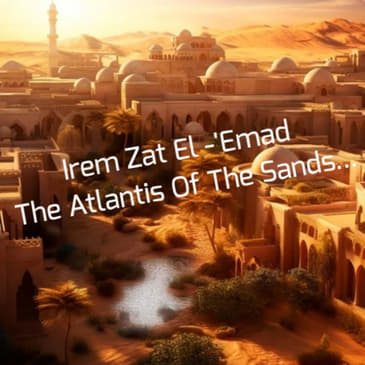
Special Free Bonus Episode!
I am making this paid-subscriber only episode free as a preview to show you what you could be missing out on by not upgrading to a paid subscriber. I hope you find value in this offering.
Exploring the legend of Irem (Iram), known as the "Atlantis of the Sands" and its etymological connections to the occult concepts that permeate our reality in ways we scarcely realize...
www.alchemicaltechrevolution.com
www.alchemicaltechrevolution.com/atr-health
[00:00:00] [SPEAKER_00]: Discover the amazing, clinically proven health benefits of original Tahitian None.
[00:00:05] [SPEAKER_00]: Original Tahitian None includes powerful antoxidin sedaptogens, nutrients and phytonutrients
[00:00:11] [SPEAKER_00]: to naturally boost energy levels, immune system function, and overall health, meticulously sourced from French Polynesia.
[00:00:18] [SPEAKER_00]: This is the original superfruit except no imitations, original Tahitian None visit ATR Health at alchemicaltechrevolution.com
[00:00:27] [SPEAKER_00]: and click on the shop here tab for more details.
[00:01:22] [SPEAKER_00]: Your listening to the alchemical tech revolution and I am your host, Wayne McRoy.
[00:01:27] [SPEAKER_00]: Good evening everyone, tonight we are going to discuss.
[00:01:33] [SPEAKER_00]: Irem Zat El-Emad, the Atlantis Of The Sands..., now many of you have probably never heard of this and that's understandable.
[00:01:43] [SPEAKER_00]: But this is an important concept that we're going to be delving into, and it does directly connect to some of the other historical background
[00:01:52] [SPEAKER_00]: that we've been looking at as of late, things like Atlantis, the Lost Lemuria,
[00:01:59] [SPEAKER_00]: and those assorted things that go along with those notions.
[00:02:05] [SPEAKER_00]: So this relates directly to that in a little bit of context and background as to this topic tonight.
[00:02:13] [SPEAKER_00]: You see in the geographic area in which I live it's a very important place. It's a type of a crossroads of sorts.
[00:02:22] [SPEAKER_00]: Geographically speaking, it's an important junction point. It's approximately halfway between the cities of Philadelphia and New York City.
[00:02:33] [SPEAKER_00]: And therefore it's always, always, always since its inception here, been an important area
[00:02:40] [SPEAKER_00]: as far as things happening in the world.
[00:02:46] [SPEAKER_00]: And it's strange to think of it in this way, but many different world changing events had their start here.
[00:02:57] [SPEAKER_00]: Now of course if you go back and you look through the fundamentalist Christian theology,
[00:03:02] [SPEAKER_00]: you'll notice that a major revival happened in this area started in this area that had become famous
[00:03:08] [SPEAKER_00]: in the Christian church. And this, of course, is an important facet of it as well.
[00:03:16] [SPEAKER_00]: But many different things have come from this area in which I live.
[00:03:21] [SPEAKER_00]: And in a facet of this is actually something that's right in plain sight for all people who live here to see
[00:03:28] [SPEAKER_00]: but they never took the time to notice and they don't understand the occult underpinnings
[00:03:33] [SPEAKER_00]: or the esoteric connotations associated with it. Now in the region in which I live in the city
[00:03:40] [SPEAKER_00]: close by called Wilkesbury and the pronunciation, depending upon where you live in the country,
[00:03:45] [SPEAKER_00]: will be different but the people here call it Wilkesbury. The city of Wilkesbury has a Masonic temple
[00:03:53] [SPEAKER_00]: that was built there in 1908 called the Irum temple. Now this is
[00:04:03] [SPEAKER_00]: a temple built by the Schriners, the ancient Arabic order of the mystic nobles of the shrine.
[00:04:15] [SPEAKER_00]: They built this building in 1908 here. They established their organization here back then and this
[00:04:27] [SPEAKER_00]: is been a key focal point of our area. And a lot of things have come about because of the establishment
[00:04:37] [SPEAKER_00]: of this Masonic lodge here in Wilkesbury in the surrounding Wyoming Valley in which I reside
[00:04:45] [SPEAKER_00]: in this geographic region. So that being the case, I thought it was interesting to delve into the
[00:04:51] [SPEAKER_00]: backgrounds of this particular Masonic lodge. So having it done so, I found some very interesting
[00:05:00] [SPEAKER_00]: connections that most people are totally unaware of and especially the people who live in this
[00:05:07] [SPEAKER_00]: area and are familiar with this Masonic temple and the surrounding country club and everything that's
[00:05:12] [SPEAKER_00]: come about around it. You see, they built all kinds of different infrastructure surrounding
[00:05:22] [SPEAKER_00]: this Irum temple, this Masonic lodge and all of this infrastructure, well it's heavily used
[00:05:32] [SPEAKER_00]: by many different people and it's heavily used by church groups for a lot of different things
[00:05:42] [SPEAKER_00]: and they don't understand the conflict of interest involved in that. And tonight we're going to
[00:05:49] [SPEAKER_00]: look at the roots of what does this mean? Irum temple, Irums ought to immod that is where the term
[00:05:59] [SPEAKER_00]: Irum comes from and some of what we're going to read tonight comes directly from a book.
[00:06:07] [SPEAKER_00]: Titled, Irum temple, looks very pay, written by Oscar Jewel Harvey in 1907 talking about the
[00:06:14] [SPEAKER_00]: foundation of the Irum temple here in Wilkesbury, Pennsylvania. Now, that being the case, people
[00:06:23] [SPEAKER_00]: in the beginning construction phases of the temple were asking what does this mean? What is this
[00:06:30] [SPEAKER_00]: word Irum mean? What's the significance? So we're going to delve a little bit into that and it's
[00:06:37] [SPEAKER_00]: going to take us in some directions you might not expect and you'll see as we get there later.
[00:06:44] [SPEAKER_00]: But I had to lay down this basic foundation so you understand what it is we are talking about here
[00:06:50] [SPEAKER_00]: and how it relates to some of the various other topics I've been covering here as of late.
[00:06:56] [SPEAKER_00]: So that being the case we're going to get into it here. We're going to read from this book first
[00:07:02] [SPEAKER_00]: and we're going to connect some dots and we're going to go and look at some other articles relating
[00:07:07] [SPEAKER_00]: to this Atlantis of the Sands as it's coming to be known and we'll begin to connect some more
[00:07:15] [SPEAKER_00]: and we'll look at the word derivations of this as well as some other things connected to it
[00:07:23] [SPEAKER_00]: and perhaps some things will begin to make a little more sense to you. Now, like I said, historically
[00:07:30] [SPEAKER_00]: in geographically this area in which I live has always been important for some reason
[00:07:35] [SPEAKER_00]: and the establishment of this Irum temple here in Wilkesbury, Pennsylvania, which is approximately
[00:07:41] [SPEAKER_00]: halfway between the cities of Philadelphia and New York City is an important focal point around this
[00:07:49] [SPEAKER_00]: and we've seen some historical events arise from this area and spread outward from here
[00:07:55] [SPEAKER_00]: across the nation which have affected the entire world. So there's geographically something
[00:08:01] [SPEAKER_00]: important about this place. Now, doesn't have to do with the concepts of geomancy or lay lines or
[00:08:07] [SPEAKER_00]: such thing I don't know perhaps it does. I do know of a gentleman named Michael Juan who has a website
[00:08:14] [SPEAKER_00]: called Suscojana Alcamy which focuses on all of the mystical things associated with the Suscojana
[00:08:21] [SPEAKER_00]: river on which Wilkesbury is built and maybe there are some connections in the esoteric there.
[00:08:28] [SPEAKER_00]: I haven't explored those avenues of thought but if you wanted to look, I'm sure he has quite a bit of
[00:08:35] [SPEAKER_00]: pertaining to the nature of the Suscojana river which was named by of course the American Indian
[00:08:41] [SPEAKER_00]: tribes here we have a lot of areas here that have some strange names and they're associated with
[00:08:49] [SPEAKER_00]: the languages of the native cultures who were here prior to the arrival of European settlers
[00:08:56] [SPEAKER_00]: but this in and of itself geographically is an important area for some reason and historically many
[00:09:02] [SPEAKER_00]: things have happened here. So they built this I room temple here in Wilkesbury Pennsylvania and it sits
[00:09:10] [SPEAKER_00]: here as a testament to the nature of the overarching conspiracy for lack of better terms.
[00:09:20] [SPEAKER_00]: There it is in plain sight for all the people to see and nobody seems to question
[00:09:24] [SPEAKER_00]: what is this building? Why is it built like a mosque with two massive towers
[00:09:33] [SPEAKER_00]: spires in the front and what exactly does it relate to where does the term come from?
[00:09:41] [SPEAKER_00]: Nobody seems to ask those questions. It's just become an accepted landmark here now I have been
[00:09:47] [SPEAKER_00]: to this Masonic temple in the past. I've gone to some conventions and things there because you see
[00:09:52] [SPEAKER_00]: have it open to the public certain portions of the temple for use and they have just begun a massive
[00:10:02] [SPEAKER_00]: reconstruction project of this temple because it has been shut down now for a few years since about
[00:10:07] [SPEAKER_00]: 2019 since the just prior to the start of the whole COVID pandemic they decided they were shutting
[00:10:14] [SPEAKER_00]: the doors they were out of money for refurbishing this and now they've begun some kind of a reconstruction
[00:10:19] [SPEAKER_00]: project which was funded here on the temple and we'll see what becomes of that but it's always been
[00:10:26] [SPEAKER_00]: an important focal point in the area and from there not just the temple itself in Wilkesbury
[00:10:35] [SPEAKER_00]: in a community nearby called Dallas Pennsylvania where I live relatively close to they have a
[00:10:43] [SPEAKER_00]: club the I-ROOM temple country club and they have 355 acre grounds upon which many things are
[00:10:51] [SPEAKER_00]: hosted by the Masonic temple by the I-ROOM temple there they have a golf course and everything else
[00:10:57] [SPEAKER_00]: it's a country club they host weddings and banquets and all sorts of different events
[00:11:05] [SPEAKER_00]: at this big property so it is a central focal point to the community to the greater Wyoming
[00:11:13] [SPEAKER_00]: Valley community here in Pennsylvania so that being the case I wanted to explore the background of
[00:11:19] [SPEAKER_00]: this because I do have relatives I have a relative I should say who was and I'm sure still is he's
[00:11:28] [SPEAKER_00]: older now he's in his 80s and he suffers from dementia but he was a Schreiner and he belonged to
[00:11:38] [SPEAKER_00]: this organization and I don't know if he still belongs to the organization or not he was an
[00:11:44] [SPEAKER_00]: avid golfer in his younger days and therefore was always playing golf at the golf course up
[00:11:50] [SPEAKER_00]: the country club and he was very proud of his status as a Schreiner so that being the case it's
[00:12:00] [SPEAKER_00]: always been there in plain sight it's always been in front of my eyes here in the area in which I live
[00:12:08] [SPEAKER_00]: and you know what it kind of became an accepted thing by most of the people who live here and they don't
[00:12:13] [SPEAKER_00]: even really question it most of them don't think it's anything more than a country club or some such
[00:12:19] [SPEAKER_00]: thing or just an organization where they have meetings and it's the old boys club and most people
[00:12:27] [SPEAKER_00]: accept that to be the case they don't delve deeply into the background so here it is a testament
[00:12:34] [SPEAKER_00]: to the secretive nature of these things out there in plain sight the way they've always done it
[00:12:40] [SPEAKER_00]: and here in the modern era we see the veil being torn away we are living in the times of
[00:12:45] [SPEAKER_00]: the revelation and here sits this edifice and this whole organization around this edifice
[00:12:57] [SPEAKER_00]: that has come about in plain and important role here in the history of not only this community but
[00:13:03] [SPEAKER_00]: other communities outside of here and where do they derive their origins from what is invoked here
[00:13:12] [SPEAKER_00]: and this is what is the huge point to all of this you see in order to better understand many
[00:13:18] [SPEAKER_00]: of these things you have to delve into the etymology of words and symbols and most people won't
[00:13:28] [SPEAKER_00]: bother to do that most people have not the slightest clue where this term comes from and that's
[00:13:37] [SPEAKER_00]: problematic in my view because there it is in plain sight and it represents an archetype
[00:13:45] [SPEAKER_00]: this word this name represents an archetype and it's ever present and it has a real effect on
[00:13:51] [SPEAKER_00]: the unconscious human mind but people don't understand what's in being invoked here
[00:13:59] [SPEAKER_00]: and there is something being invoked I assure you and we'll get to that but
[00:14:08] [SPEAKER_00]: the origins of the name I room so I'm going to read first from this book which I sighted here
[00:14:19] [SPEAKER_00]: in the beginning and we'll begin to connect some dots and we'll go and we'll explore further
[00:14:25] [SPEAKER_00]: the story of I roomsot and I mod the edmantis of the sands the story of I roomsot and I mod
[00:14:37] [SPEAKER_00]: the nobles of the I room temple are often asked when's was the name I room derived and what is
[00:14:43] [SPEAKER_00]: the significance for the satisfaction of all who are interested in this matter it may be stated that
[00:14:52] [SPEAKER_00]: according to article 27 of the constitution of the imperial council of the accepted Arabic order
[00:14:59] [SPEAKER_00]: of the nobles of the mystic shrine every temple formed in this jurisdiction shall select an ancient
[00:15:04] [SPEAKER_00]: Arabic or Egyptian name according to the ancient laws of the order I room according to oriental
[00:15:12] [SPEAKER_00]: tradition was the most beautiful of all earthly paradises and was laid out for Shaddad King of odd
[00:15:21] [SPEAKER_00]: but no sooner was it finished then it was struck with the lightning wand of the death angel
[00:15:27] [SPEAKER_00]: and was never after visible to the eye of man gonna pause for a moment here folks
[00:15:34] [SPEAKER_00]: so now we see some mystical connotations being attached here Shaddad King of odd
[00:15:42] [SPEAKER_00]: going back into some of the Arabic traditions the Egyptian traditions these old traditions now this is a
[00:15:50] [SPEAKER_00]: story that I believe is covered in the tales of the Arabian knights as well and we'll get there
[00:16:00] [SPEAKER_00]: but this is also acknowledged in the Quran folks this city this beautiful city as we'll see here
[00:16:11] [SPEAKER_00]: let's continue on and we'll see what's associated here so now we have this city that was built
[00:16:19] [SPEAKER_00]: and it was a beautiful city very splendid and it was struck by the lightning wand of the death angel
[00:16:26] [SPEAKER_00]: lightning you can make the connection or connotation all day long to the invocation of Lucifer there if you would
[00:16:32] [SPEAKER_00]: like to and of course it was never visible again to the eye of man and according to some of the
[00:16:38] [SPEAKER_00]: legends it was buried in the desert never to be found again except on a rare occasion as we'll see here
[00:16:47] [SPEAKER_00]: so southy in his to laba the destroyer written in 1797 refers to i-rum in these words quote
[00:16:58] [SPEAKER_00]: the paradise of i-rum this a garden more surpassing fair then that before whose gate the lightning
[00:17:06] [SPEAKER_00]: of the cherubs fiery sword waves wide to bat bar access and quote in the 84th chapter of
[00:17:18] [SPEAKER_00]: the Quran entitled the daybreak i-rum is referred to as follows quote here we go this is from the
[00:17:25] [SPEAKER_00]: Quran folks quote has to thou not considered how thy lord dealt with odd the people of i-rum
[00:17:33] [SPEAKER_00]: adorned with lofty buildings the like where of have not been erected in the land and quote
[00:17:41] [SPEAKER_00]: lofty buildings keep that in mind lofty buildings also sometimes translated as lofty pillars
[00:17:56] [SPEAKER_00]: pillars now if you understand symbology at all you may understand the significance of the
[00:18:06] [SPEAKER_00]: pillars the lofty pillars let's continue here saw lay in his notes on the Quran says quote
[00:18:17] [SPEAKER_00]: i-rum was the name of the territory or city of the oddites and also of the garden mentioned here
[00:18:24] [SPEAKER_00]: and after where we're so called from i-rum or arum the grandfather of odd their progenitor they say
[00:18:32] [SPEAKER_00]: that odd left two sons shadad and shadid who reigned jointly after his deceased and extended
[00:18:40] [SPEAKER_00]: their power over the greater part of the world but shadid dying his brother became soul monarch
[00:18:46] [SPEAKER_00]: who having heard of the celestial paradise made a garden and imitation their of in the deserts
[00:18:53] [SPEAKER_00]: of eight and and called it i-rum after the name of his great grandfather when it was finished
[00:19:00] [SPEAKER_00]: he set out with great attendance to take a view of it but when they were come within a day's
[00:19:08] [SPEAKER_00]: journey of the place they were all destroyed by a terrible noise from heaven all by dolly adds
[00:19:16] [SPEAKER_00]: that one abdala even keleba accidentally hit on this wonderful place as he was seeking a camel and
[00:19:24] [SPEAKER_00]: quote and that's the end of the quote here from this commentary on the Quran so we see there's
[00:19:36] [SPEAKER_00]: this story associated with it this wonderful paradise was built this city of the garden of the lofty
[00:19:44] [SPEAKER_00]: buildings or lofty pillars in the desert by king shadad and when they were journeying there to go and see
[00:19:53] [SPEAKER_00]: the place in all its respondent glory they were struck down by a terrible noise from heaven
[00:20:03] [SPEAKER_00]: and the city itself was buried forever in the sands but it was stumbled upon by abdala even keleba
[00:20:14] [SPEAKER_00]: accidentally will he was out in the desert seeking for a camel now let's read a little bit more into that
[00:20:20] [SPEAKER_00]: story among the longer stories of the thousand and one nights or the Arabian nights entertainments
[00:20:27] [SPEAKER_00]: many anecdotes are inserted it is said by commentators that they are chiefly extracted from other works
[00:20:35] [SPEAKER_00]: and that many are historical and going to pause for a moment their folks did you know that many
[00:20:40] [SPEAKER_00]: of them are historical but thousand and one Arabian nights stories have you heard any of them
[00:20:48] [SPEAKER_00]: did you know that they are semi historical accounts in many regards they're not just fiction
[00:20:54] [SPEAKER_00]: according to the secret schools according to the shriners here because I assure you that's who
[00:21:02] [SPEAKER_00]: wrote this book they were shriners that's where this comes from and if you're not familiar with the
[00:21:13] [SPEAKER_00]: mystic shrine this is a Masonic organization or a quasi-masonic organization you have to be
[00:21:20] [SPEAKER_00]: a master Mason to join the shriners or two petition the shriners you have to at least go through
[00:21:29] [SPEAKER_00]: the Masonic initiations first before you learn any of the stuff associated with the shrine
[00:21:38] [SPEAKER_00]: and it is tied very directly to other pre-masonic teachings many of the things
[00:21:45] [SPEAKER_00]: inferred in the mystic shrine but that's neither here nor there I want to stay on topic here with
[00:21:52] [SPEAKER_00]: this story so now we realize that the thousand one Arabian nights stories according to some of the
[00:22:02] [SPEAKER_00]: secret schools are based on true historical accounts let's read on here one of these anecdotes is
[00:22:12] [SPEAKER_00]: titled the discovery and history of iRumsat al-Iman the terrestrial paradise of shidad the sun of
[00:22:20] [SPEAKER_00]: odd this anecdote reads as follows quote it is related that abad al-Ala the son of Abu kalaba
[00:22:32] [SPEAKER_00]: went for us to seek a camel that had run away and well he was proceeding over the deserts of
[00:22:39] [SPEAKER_00]: Yemen and the district of siba he chanced to arrive at a vast city encompassed by enormous fortifications
[00:22:47] [SPEAKER_00]: around the circuit of which were pavilion's rising high into the air so that when he approached it
[00:22:54] [SPEAKER_00]: he imagined that there must be inhabitants within it of whom he might inquire for his camel
[00:23:01] [SPEAKER_00]: and accordingly he advanced to it but on coming to it he found that it was desolate without anyone to
[00:23:08] [SPEAKER_00]: hear its solitude in a pause for a moment here folks so this vast city of iRum of the lofty
[00:23:19] [SPEAKER_00]: buildings or the lofty pillars was empty when this traveler stumbled across it looking for his
[00:23:27] [SPEAKER_00]: lost camel there were no one there was no one there let's read on i a lighted says he from my
[00:23:41] [SPEAKER_00]: she camel and tied up her foot and then composing by mind entered the city on approaching the fortifications
[00:23:48] [SPEAKER_00]: I found that they had two enormous gates the lake of which for size and height have never been seen
[00:23:54] [SPEAKER_00]: elsewhere in the world set with a variety of jewels and jacense white and red and yellow and green
[00:24:02] [SPEAKER_00]: and when I beheld this I was struck with the utmost wonder at it and the site astonished me
[00:24:09] [SPEAKER_00]: I entered the fortifications in a state of terror and with a wondering mind and saw them to be of the
[00:24:15] [SPEAKER_00]: same large extent as the city and to comprise elevated pavilion's every one of those containing
[00:24:23] [SPEAKER_00]: lofty chambers and all of them constructed of gold and silver and adorned with rubies and
[00:24:28] [SPEAKER_00]: Chrysolites and pearls and various colored jewels the folding doors of these pavilions were like
[00:24:35] [SPEAKER_00]: those of the fortifications in beauty and their floors were overlaid with large pearls and with
[00:24:42] [SPEAKER_00]: balls like hazelnuts composed of musk and evergreen and saffron and when I came into the mist
[00:24:49] [SPEAKER_00]: of the city I saw not in it a created being of the sons of Adam I'm gonna pause for a moment here
[00:24:56] [SPEAKER_00]: folks now pay very close attention to the language being used here I'm going to start that sentence over again
[00:25:04] [SPEAKER_00]: and continue from there pay close attention because here is where in some of the important context
[00:25:12] [SPEAKER_00]: clues arrive in this reading and when I came into the mist of the city I saw not in it a
[00:25:21] [SPEAKER_00]: created being of the sons of Adam and I almost died of terror I then looked down from the
[00:25:28] [SPEAKER_00]: summits of the lofty chambers and pavilions and saw rivers running beneath them and in the great
[00:25:35] [SPEAKER_00]: thoroughfare streets of the city were pre-prot bearing trees and tall palm trees and the construction
[00:25:42] [SPEAKER_00]: of the city was of alternate bricks of gold and silver so I said within myself no doubt this is
[00:25:49] [SPEAKER_00]: the paradise promised in the world to come I carried away of the jewels which were as its gravel
[00:25:56] [SPEAKER_00]: and the musk that was it as its dust as much as I could bear and returned to my district where
[00:26:03] [SPEAKER_00]: I acquainted the people with the occurrence and the news reached Mo-Aoyaya the son of Abu safoyin
[00:26:11] [SPEAKER_00]: who was the caliphate or the caliph in the hajaz so he wrote to his lieutenant saying
[00:26:19] [SPEAKER_00]: some in that man and inquire of him the truth of the matter his lieutenant therefore caused
[00:26:24] [SPEAKER_00]: me to be brought and demanded of me in account of my adventure and of what had been fallen me
[00:26:30] [SPEAKER_00]: and I informed him of what I had seen he then sent me to Mo-Hawayah and I acquainted him also
[00:26:38] [SPEAKER_00]: with that which I had seen but he disped-believed it and so I produced to him some of the
[00:26:44] [SPEAKER_00]: pearls and the little balls of abrogory and musk and saffron the latter retained somewhat of their
[00:26:50] [SPEAKER_00]: sweet scent but the pearls had become yellow and discolored at the site of these Mo-Yah he wondered
[00:26:56] [SPEAKER_00]: and he sent and caused cob al-Ahar to be brought before him and said to him oh cob al-Abar
[00:27:05] [SPEAKER_00]: I have called the on account of a matter of which I desire to know the truth and I hope that
[00:27:11] [SPEAKER_00]: thou mayest be able to certify me of it and what is it oh Prince of the Faithful's asked cob al-Abar
[00:27:18] [SPEAKER_00]: Mo-Aoyah he said has thou any knowledge of the existence of a city constructed of gold and silver
[00:27:26] [SPEAKER_00]: the pillars where of our of Chris, Christ's late in Ruby and the gravel of which is
[00:27:32] [SPEAKER_00]: our old and of balls of like hazelnuts composed of musk and abrogory and saffron he answered yes
[00:27:39] [SPEAKER_00]: oh Prince of the Faithful it is I rooms at al-Amar the like of which have never been constructed in
[00:27:46] [SPEAKER_00]: the regions of the earth and shodad the son of odd the greater built it relate to us said Mo-Wahyah
[00:27:54] [SPEAKER_00]: somewhat of its history and cob al-Abar replied thus I'm gonna pause for a second earfokes
[00:28:02] [SPEAKER_00]: you know like I said pay close attention to some of what's being described here
[00:28:10] [SPEAKER_00]: and we're gonna back up a minute before we continue just to point out in the language
[00:28:18] [SPEAKER_00]: that this explorer who was looking for his camel used here to describe what he found
[00:28:25] [SPEAKER_00]: he saw not in the city a created being of the sons of Adam so there were no human beings there
[00:28:34] [SPEAKER_00]: but this in furs he did see something some other intelligent beings what were these intelligent
[00:28:41] [SPEAKER_00]: beings well we might get to that we might not now we'll see when we relate other tales of this
[00:28:51] [SPEAKER_00]: city from other versions that perhaps these beings or not
[00:29:01] [SPEAKER_00]: created beings of the sons of Adam maybe they were something else
[00:29:08] [SPEAKER_00]: maybe they were giants when you look at the size and the scope of the city maybe they were giants
[00:29:15] [SPEAKER_00]: maybe they were spiritual beings disembodied non-human non-corporial beings
[00:29:25] [SPEAKER_00]: there's different accounts different interpretations of the accounts we can take here
[00:29:31] [SPEAKER_00]: the whole point is it wasn't inhabited by humans but clearly there was something there
[00:29:40] [SPEAKER_00]: that shook him he was terror struck not just because he came upon this vast
[00:29:48] [SPEAKER_00]: city that was abandoned if it's abandoned why is there a feeling of dread no he's inferring
[00:29:55] [SPEAKER_00]: there was something else there but now let's listen to the description given by Cobb L Abar
[00:30:03] [SPEAKER_00]: of what is known about this city of Irum Irum of the lofty pillars
[00:30:15] [SPEAKER_00]: odd the greater had two sons shaddaad and shaddiad and when their father perished they reigned
[00:30:21] [SPEAKER_00]: jointly over the countries after him and there was no one of the kings of the earth who was
[00:30:27] [SPEAKER_00]: not subject to them and shaddiad the son of odd died so his brother shaddaad ruled alone over
[00:30:34] [SPEAKER_00]: the earth after him he was fond of reading the ancient books and when he met with a description
[00:30:40] [SPEAKER_00]: of the world to come and of the paradise with its pavilion and lofty chambers and its trees and
[00:30:46] [SPEAKER_00]: of the other things in paradise is hard in ties to construct its like on the earth after this
[00:30:53] [SPEAKER_00]: manner which hath been above mentioned he had under his authority 100,000 kings under each of
[00:31:02] [SPEAKER_00]: whom or 100,000 valiant chieftons and under each of those were 100,000 soldiers going to pause for
[00:31:09] [SPEAKER_00]: him earfokes just to point out that there is symbolic meaning in the numbers being used it's
[00:31:19] [SPEAKER_00]: denoting a large number of beings and the term kings is capitalized here kings now is he speaking
[00:31:31] [SPEAKER_00]: of actual earthly kings I don't get that connotation from this the inference may be that these
[00:31:39] [SPEAKER_00]: were something else something more spiritual and think in terms of the stories we've heard about
[00:31:46] [SPEAKER_00]: Solomon in the building of the temple perhaps it's the same kind of connotation being given here
[00:31:52] [SPEAKER_00]: so let's go ahead and continue reading so it says and he summoned them all before him and said to
[00:31:58] [SPEAKER_00]: them I find in the ancient books in his to read the description of the paradise that is in the
[00:32:04] [SPEAKER_00]: other world and I desire to make it's like upon the earth depart ye therefore to the most
[00:32:11] [SPEAKER_00]: pleasant and most spacious vacant tract in the earth and build for me in it a city of gold and silver
[00:32:17] [SPEAKER_00]: and spread as its gravel, Chrysolites and rubies and pearls and as the supports of the vaulted
[00:32:23] [SPEAKER_00]: roofs of that city make columns of Chrysolite and fill it with pavilions and over the pavilions
[00:32:30] [SPEAKER_00]: construct lofty chambers and beneath them plant in the by streets and great thorough fair streets
[00:32:36] [SPEAKER_00]: varieties of trees bearing different kinds of ripe fruits and make rivers to run beneath
[00:32:41] [SPEAKER_00]: them in channels of gold and silver. To this they all replied how can we accomplish that which
[00:32:48] [SPEAKER_00]: thou has described to us and how can we procure the Chrysolites and rubies and pearls that thou
[00:32:54] [SPEAKER_00]: asd mentioned but he said no ye not the kings of the world are obedient to me and under my authority
[00:33:02] [SPEAKER_00]: and that no one who is in it disobeyed as my command. They answered yes we know that,
[00:33:11] [SPEAKER_00]: depart then said he to the minds of Chrysolite and ruby and to the places where pearls are found
[00:33:16] [SPEAKER_00]: in gold and silver and take forth and collect their contents from the earth and spare no
[00:33:22] [SPEAKER_00]: assertions take also for me from the hands of men such of those things as you find and spared none
[00:33:30] [SPEAKER_00]: not to let any escape you and beware of disobedience and I'm going to pause for a moment here folks.
[00:33:39] [SPEAKER_00]: So now when Shaddad is speaking of these kings of the world who are obedient to him
[00:33:50] [SPEAKER_00]: kings with a capital K once again this gives the inference or connotation that he has not speaking
[00:33:57] [SPEAKER_00]: about earthly kings or human beings but some other type of problems. Now there is a footnote here
[00:34:11] [SPEAKER_00]: attributed to a Mr. Von Hammer that says I rooms at Alimad is generally understood to signify
[00:34:18] [SPEAKER_00]: I room with the lofty buildings but he is also remarked that the story of this city
[00:34:25] [SPEAKER_00]: though related as true by Arab historians and others is pronounced by Iba Kaldun to be an invention
[00:34:32] [SPEAKER_00]: of the commentators of the Quran. This judicious critic asserting that Irum is the name of an ancient
[00:34:39] [SPEAKER_00]: tribe and that imad is to be understood in this case as meaning a tentpole so that I rooms at Alimad
[00:34:47] [SPEAKER_00]: signifies I room with the numerous tent poles or tents or pavilions so that's just a little footnote
[00:34:56] [SPEAKER_00]: given here. So this account is said to be historic by some people now this Von Hammer asserts
[00:35:07] [SPEAKER_00]: that it was just the commentators on the Quran that made this up I don't know I don't have the answer
[00:35:17] [SPEAKER_00]: to that the important thing is the archetype which it represents here and we'll get to that.
[00:35:25] [SPEAKER_00]: So where we left off your shadad sent all these minions out to build this paradise city
[00:35:32] [SPEAKER_00]: take me down to the paradise city and you see once again how
[00:35:42] [SPEAKER_00]: significant some of these stories can be and are in the archetypes they represent.
[00:35:49] [SPEAKER_00]: So he sent his minions to build this paradise city and he said go to the mines take what you need
[00:36:00] [SPEAKER_00]: go wherever you find any of these materials take them spare nobody take what you need so he's
[00:36:11] [SPEAKER_00]: invoking violence by his minions here to take what they need to build this city.
[00:36:20] [SPEAKER_00]: At whatever expense needs to be done spare no expense spare no one who stands in your way.
[00:36:30] [SPEAKER_00]: So there was bloodshed associated with the building of this city and perhaps that has to do with
[00:36:36] [SPEAKER_00]: the reasoning for its disappearance into the sands of time but let's go ahead and we'll read on here.
[00:36:48] [SPEAKER_00]: He then wrote a letter to each of the kings in the regions of the earth commanding them to collect all the
[00:36:54] [SPEAKER_00]: articles of the kinds aforementioned that their subjects possessed and to repair to the mines
[00:37:00] [SPEAKER_00]: in which these things were found and extract the precious stones that they contained even from the
[00:37:06] [SPEAKER_00]: beds of the seas and they collected the things that he required in the space of 20 years after which he
[00:37:13] [SPEAKER_00]: sent forth the geometricians and sages and laborers and artificers from all over the
[00:37:19] [SPEAKER_00]: countries and regions and they dispersed themselves through the deserts and wastes and tracks
[00:37:25] [SPEAKER_00]: and districts until they came to a desert wherein was a vast open plane clear from hills and mountains
[00:37:33] [SPEAKER_00]: and in it were springs gushing forth and rivers running. So they said this is the kind of place
[00:37:39] [SPEAKER_00]: which the king commanded us to seek and called us to find. They then busyed themselves in building
[00:37:47] [SPEAKER_00]: the city according to the direction of the king Shaddad, King of the whole earth and its
[00:37:52] [SPEAKER_00]: length and breath and they made through it the channels for the rivers and they laid their foundations
[00:37:59] [SPEAKER_00]: conformably with the prescribed extent. The kings of the various districts of the earth sent
[00:38:06] [SPEAKER_00]: there the jewels and stones in large and small pearls and carnily and impure gold upon camels over
[00:38:12] [SPEAKER_00]: the deserts and wastes and sent great ships with them over the seas and a quantity of those things
[00:38:18] [SPEAKER_00]: which such as cannot be described nor calculated nor defined was brought to the workmen who
[00:38:24] [SPEAKER_00]: labored in the construction of this city 300 years and a pause for a moment here folks.
[00:38:34] [SPEAKER_00]: 300 years so it took him 20 years to attain all of the goods to do so
[00:38:43] [SPEAKER_00]: and to begin the construction on this city and it took the workmen 300 years to build it that is what
[00:38:51] [SPEAKER_00]: being said here. How long did King Shaddad live? You see this is talking about times
[00:39:04] [SPEAKER_00]: before our modern era in which mankind lived a lot longer, at least according to some of the
[00:39:12] [SPEAKER_00]: religious traditions and the mythologies we've seen and all of the other esoteric contexts. Now
[00:39:20] [SPEAKER_00]: is this a literal 300 years or is this symbolic of something else? Could be either way,
[00:39:28] [SPEAKER_00]: could be both ways but let's continue reading on. I just wanted to point that out because we see
[00:39:38] [SPEAKER_00]: the scope of this and when they had finished it they came to the king and acquainted him with
[00:39:45] [SPEAKER_00]: a completion and he said unto them depart and make a round it. In pregnant before theifications
[00:39:51] [SPEAKER_00]: of great height and construct around the circuit of the fortifications 1,000 pavilions each
[00:39:57] [SPEAKER_00]: with 1,000 pillars beneath it in order that there may be in each pavilion a Vizier. So
[00:40:04] [SPEAKER_00]: they went immediately and did this in 20 years after which they presented themselves to Shaddad
[00:40:11] [SPEAKER_00]: and informed him of the accomplishment of his desires going to pause for a moment here folks.
[00:40:16] [SPEAKER_00]: So 20 years crops up again. Once again we see there is a symbolic nature to the numbers being
[00:40:24] [SPEAKER_00]: used here. And the thing is some sources a test that this story is true and some a test
[00:40:38] [SPEAKER_00]: that there's something deeper to it and probably the truth is in the allegorical context being given
[00:40:47] [SPEAKER_00]: here because it is laid in with symbology and maybe there are some notions of truth to the story.
[00:40:55] [SPEAKER_00]: Maybe there's not but the important thing is the archetypes that are inherent and we see
[00:41:01] [SPEAKER_00]: the symbolism being referred to here even in just the number of years alone there's something
[00:41:07] [SPEAKER_00]: symbolic about that. And we have the 20 years together the materials and get the project underway
[00:41:14] [SPEAKER_00]: and then we have the 20 years of building the pillars and the fortifications around the city.
[00:41:23] [SPEAKER_00]: So we have two periods of 20 years, 20 years is generally thought to be a generation.
[00:41:31] [SPEAKER_00]: 40 years is thought to be two generations and the number 40 has other symbolic contexts
[00:41:37] [SPEAKER_00]: associated with it. 40 we see biblical references with the number 40 that we have all kinds of
[00:41:47] [SPEAKER_00]: numerological significance with. We have symbolic significance with the number 40 and that's being
[00:42:00] [SPEAKER_00]: coming up three times and the thousands coming up two times. So these are important numbers and
[00:42:07] [SPEAKER_00]: they I don't think these are intended to be taken literally in the story here and maybe there is
[00:42:15] [SPEAKER_00]: an era of true historical context to some of it. Maybe there's not maybe it is just fanciful
[00:42:21] [SPEAKER_00]: fiction but the whole point here is there's something archetypal in the notion that has a real effect
[00:42:29] [SPEAKER_00]: on the human psyche. That's the important part. So let's continue on here with the story and
[00:42:36] [SPEAKER_00]: we'll connect some more dots here as we go. Should God therefore ordered his busy A's who were
[00:42:43] [SPEAKER_00]: a thousand in number and a pause again there's the third thousand to add more context to the clues here.
[00:42:51] [SPEAKER_00]: And his chief officers in such of his troops and others as he confided in to make themselves ready
[00:42:57] [SPEAKER_00]: for departure and to prepare themselves for removal to I rooms on and immod in attendance upon
[00:43:05] [SPEAKER_00]: which the king of the world should God son of odd. He ordered also such as he chose of his women
[00:43:13] [SPEAKER_00]: and his harems, his female slaves and his unix to fit themselves out and they paused 20 years.
[00:43:20] [SPEAKER_00]: Gonna pause again here. So there's a third period of 20 years. Are you beginning to see some
[00:43:28] [SPEAKER_00]: of the significant numerological symbolic references being made here now? I'm not going to delve
[00:43:35] [SPEAKER_00]: deeply into some of the interpretation of what the numbers are just no, that there is an occult
[00:43:42] [SPEAKER_00]: connotation to this. There is an allegorical context to it. It's telling you something entirely
[00:43:49] [SPEAKER_00]: different here. It's telling you something specific about the nature of this story in giving
[00:43:57] [SPEAKER_00]: those numbers. But let's get back to it. So he ordered also as he chose out of his women and his
[00:44:05] [SPEAKER_00]: harems, his female slaves and his unix to fit themselves out and they paused or they passed 20
[00:44:10] [SPEAKER_00]: years in equipping themselves then should God proceed with his troops. Rejoice at the accomplishment
[00:44:16] [SPEAKER_00]: of his desires until they remained between him and I rooms out of Eremod one day's journey. When God
[00:44:24] [SPEAKER_00]: sent down upon him and upon the obstinate infidels who accompanied him a loud cry from the heavens
[00:44:31] [SPEAKER_00]: of his power and it destroyed them all by the vehemence of its sound. Neither should God nor any
[00:44:40] [SPEAKER_00]: of those who were with him arrived at the city or came inside of it and God obliterated the
[00:44:46] [SPEAKER_00]: traces of the road that led to it. But the city remained as it was in its place until the hour
[00:44:53] [SPEAKER_00]: of the judgment. I'm going to pause for a moment here folks. So we have the voice,
[00:45:00] [SPEAKER_00]: the sound, the power of God. Destroyed them all by the vehemence of its sound, this cry from heaven.
[00:45:11] [SPEAKER_00]: This loud cry from heaven. So this canotes the word, the voice from heaven speaking and bringing
[00:45:25] [SPEAKER_00]: destruction upon who is termed here infidels. Now what is the reasoning behind this? What's the
[00:45:36] [SPEAKER_00]: lesson behind it? Well I think you could interpret some of the allegory as the road to hell is
[00:45:47] [SPEAKER_00]: paved with good intentions and sometimes the ends don't justify the means that could be the lesson
[00:45:57] [SPEAKER_00]: taken away from this if you want to look at the spiritual context here of but you see that's just
[00:46:08] [SPEAKER_00]: one interpretation of the story. Now let's get back to it because there's more here to cover
[00:46:16] [SPEAKER_00]: as we'll see. At this narrative related by Kavell Abar, Mawaii wondered and he said to him,
[00:46:25] [SPEAKER_00]: can any one of mankind arrive at that city? Yes answered Kavell Abar. A man of the companions
[00:46:33] [SPEAKER_00]: of Mawamad upon whom be blessing and peace. In appearance like this man who is sitting here without
[00:46:40] [SPEAKER_00]: any doubt. Ash Shabby also say if quote, it is related on the authority of the learned men of
[00:46:48] [SPEAKER_00]: Hemjar in El Yaman that when Shaddad and those who were with him were destroyed by the loud cry,
[00:46:56] [SPEAKER_00]: his son Shaddad the less resigned after him for his father Shaddad the greater had left him as
[00:47:02] [SPEAKER_00]: successor to his kingdom in the land of Hadramat and Siba on his departure with the troops who
[00:47:09] [SPEAKER_00]: accompanied him to Irumsat El Amad. And as soon as the news reached him of the death of his father
[00:47:16] [SPEAKER_00]: on the way before his arrival at the city of Irum he gave orders to carry his father's body
[00:47:22] [SPEAKER_00]: from those desert tracks to Hadramat and to excavate a sepulker for him in a cavern and when they
[00:47:29] [SPEAKER_00]: had done this he placed his body in it upon a couch of gold and covered the corpse with 70 robes
[00:47:36] [SPEAKER_00]: interwoven with gold and inter adorned with precious jewels. And he placed at his head a tablet
[00:47:44] [SPEAKER_00]: of gold where on was inscribed these verses. Now we're going to go ahead and read these verses
[00:47:52] [SPEAKER_00]: and maybe you can interpret another lesson here. The tablet was inscribed quote,
[00:48:00] [SPEAKER_00]: be it managed oh thou who art deceived by a prolonged life I am Shaddad the son of odd
[00:48:07] [SPEAKER_00]: the Lord of the Strong fortress gonna pause for a moment here fobs. The Lord of fortresses
[00:48:15] [SPEAKER_00]: whoever heard this term before the Lord of the Strong fortress. Maybe you haven't. The Lord
[00:48:25] [SPEAKER_00]: of fortresses this is also translated as Bale Hazor perhaps you've heard of Bale Hazor or Bale
[00:48:41] [SPEAKER_00]: some of the pagan gods mentioned in the Old Testament. Bale Hazor
[00:48:49] [SPEAKER_00]: according to some accounts is another name for Nimrod of the Bible just putting that out there.
[00:49:05] [SPEAKER_00]: Let's continue reading from what this tablet says the inscription will begin it again and continue
[00:49:12] [SPEAKER_00]: all the way through. Be it Monash Do thou who art deceived by a prolonged life I am Shaddad the
[00:49:19] [SPEAKER_00]: one of odd the Lord of the Strong fortress the Lord of power and my tent of excessive valor.
[00:49:26] [SPEAKER_00]: The inhabitants of the earth obeyed me fearing my severity and threats and I held the east
[00:49:32] [SPEAKER_00]: and the west under a strong dominion and a preacher of the true religion invited us to the
[00:49:38] [SPEAKER_00]: right way but we opposed him and said is there no refuge from it and allowed cry assaulted us
[00:49:47] [SPEAKER_00]: from a tract of the distant horizon. We're upon we fell down like corn in the mists of a plane
[00:49:54] [SPEAKER_00]: at harvest and now beneath the earth we await the threatened day and quote and that's the end
[00:50:00] [SPEAKER_00]: of the quote on this tablet. So this king Shaddad was this Nimrod of the Bible. Bale Hazor did the
[00:50:28] [SPEAKER_00]: two what Nimrod in the biblical context wanted to achieve with the building of the tower of
[00:50:34] [SPEAKER_00]: battle. There's some connections and connotations there and of course we see the inference back
[00:50:42] [SPEAKER_00]: to the notion once again of perhaps these nine human entities being associated with this
[00:50:55] [SPEAKER_00]: the giants the Nephilim in the biblical context perhaps the fallen angels the watchers
[00:51:08] [SPEAKER_00]: other worldly beings associated with the building of the city. The hand of God at play,
[00:51:16] [SPEAKER_00]: smiting these people perhaps this is another tale relating to some of the context given in the
[00:51:32] [SPEAKER_00]: Bible and perhaps not but there are correlations between the two most certainly and we see in
[00:51:39] [SPEAKER_00]: the names and the etymology here some connections and connotations. But let's finish this because
[00:51:46] [SPEAKER_00]: there's one little last paragraph here in this book about the origins of the irum temple
[00:51:53] [SPEAKER_00]: and then we're going to move on and relate a little bit more context to this.
[00:51:59] [SPEAKER_00]: So it says, ethylbe also say it's quote. It happened that two men entered this
[00:52:06] [SPEAKER_00]: cavern and found at its upper in some steps and having descended these they found
[00:52:11] [SPEAKER_00]: an excavation the length where of was a hundred cubits and its breath 40 cubits
[00:52:17] [SPEAKER_00]: and its height a hundred cubits and in the midst of this excavation was a couch of gold upon
[00:52:22] [SPEAKER_00]: which was the body of a man of enormous bulk occupying its whole length and breath
[00:52:28] [SPEAKER_00]: covered with ornaments and with robes interwoven with gold and silver and that his head was a
[00:52:34] [SPEAKER_00]: tablet of gold where on was an inscription and they took the tablet and carried it away from the
[00:52:40] [SPEAKER_00]: place as much as they could of bars of gold and silver and other things and that's the end
[00:52:48] [SPEAKER_00]: of the story of irum zat el imanda. So this is saying they found the tomb
[00:52:59] [SPEAKER_00]: in which this king should die the greater or the elder was buried and according to this account
[00:53:12] [SPEAKER_00]: the man was of enormous bulk. King should die was a giant. So now we see some connotations attached
[00:53:25] [SPEAKER_00]: here to the story and like I said do we take these as literal interpretations not necessarily
[00:53:32] [SPEAKER_00]: a lot of it's allegorical a lot of it has symbolic context to it but maybe we need to consider
[00:53:42] [SPEAKER_00]: some of this in this regard but now we're going to read from another account
[00:53:56] [SPEAKER_00]: of irum of the pillars and this is an article written for a publication called Exploration
[00:54:11] [SPEAKER_00]: Mysteries written by Christine de Abru. They did December 4th 2022 both the Quran and later
[00:54:29] [SPEAKER_00]: flamboyantly called the Atlantis of the Sands. Like Atlantis it's supposedly wise
[00:54:35] [SPEAKER_00]: submerged in this case beneath the Arabian desert but despite promising leads I room of the
[00:54:41] [SPEAKER_00]: pillars remains undiscovered background. The original passage in the Quran reads quote
[00:54:48] [SPEAKER_00]: have you not considered how your Lord dealt with the with odd with irum who had lofty pillars
[00:54:55] [SPEAKER_00]: the likes of whom had never been created in the lands and quote. The idea of a deity destroying
[00:55:04] [SPEAKER_00]: a sinful city is not new. The Abrahamic religions which would be Christianity, Judaism and Islam
[00:55:10] [SPEAKER_00]: all include stories of this type. In Islam I room was supposedly home to the odd people.
[00:55:18] [SPEAKER_00]: The city was built by a king named Shaddaad a descendant of the biblical figure Noah
[00:55:23] [SPEAKER_00]: gonna pause for a moment here folks. So once again we do see some connections
[00:55:33] [SPEAKER_00]: back to the biblical context and perhaps relating to the notion that maybe this king should
[00:55:40] [SPEAKER_00]: God also represents Nimrod of the Bible. Let's go ahead and read on but this king grew
[00:55:52] [SPEAKER_00]: the an opulent forcing the prophet who'd to warn him of Allah's dissatisfaction. King Shaddaad and
[00:55:58] [SPEAKER_00]: the odd people disregarded the prophet's warning. As a result God buried the city beneath the sands
[00:56:04] [SPEAKER_00]: of the empty quarter in the Arabian desert. The sandstorm lasted eight days gonna pause again here
[00:56:12] [SPEAKER_00]: significance of the number eight invoking of course the trickster archetype the mercurial component
[00:56:19] [SPEAKER_00]: as always. What's in a name the article asks next? Scholars and poets often associate
[00:56:29] [SPEAKER_00]: I room with other names particularly Ubar and Webar. Both names make appearances in ancient
[00:56:36] [SPEAKER_00]: and medieval scholarship yet tell the same tale of an affluent city submerged by Allah beneath the sands.
[00:56:43] [SPEAKER_00]: However some argue that I room Ubar Webar refers to a whole region depending on one's interpretation
[00:56:51] [SPEAKER_00]: or translation of the Quran. Credit for its nickname at Lantus of the Sands goes to Tey Lawrence.
[00:57:00] [SPEAKER_00]: Also known as Lawrence of Arabia. In case you haven't heard of him. The mythical city inspired
[00:57:07] [SPEAKER_00]: the famous uncharted video games and writers like HP Lovecraft gonna pause again here for a
[00:57:15] [SPEAKER_00]: moment folks. Did you know that? Are you beginning to see the archetype inherent and it's effect on
[00:57:23] [SPEAKER_00]: the human mind and how this archetype has been leveraged in different ways that we don't even
[00:57:32] [SPEAKER_00]: realize. And like I said here it is in front of my face for all of my entire lifetime here.
[00:57:41] [SPEAKER_00]: Out in the open for the public to see with the hidden esoteric context and messaging behind it.
[00:57:48] [SPEAKER_00]: I room Let's read on here. Most famously 1,001 nights spoke of I room as a city mentioning
[00:57:57] [SPEAKER_00]: King Shaddaad's greed for building palaces entirely of golden precious stones. Now locations and theories.
[00:58:07] [SPEAKER_00]: The Eble tablets in ancient collection of trade inventories, ledgers and other economic records
[00:58:12] [SPEAKER_00]: mentioned the city several times. Italian archaeologist Paolo Matheye discovered the tablets in the
[00:58:27] [SPEAKER_00]: 100 BC. However the tablets do not mention a location. In 1930 English explorer Bertram Thomas
[00:58:35] [SPEAKER_00]: traveled to the empty quarter, also known as Rub Alcali. His guide told him of a road to Ubar,
[00:58:43] [SPEAKER_00]: a great city written treasures and that it now lies buried beneath the sands of the Romlet
[00:58:48] [SPEAKER_00]: Shoyat in northern Dofar. The expedition found camel tracks worn into rock that suggested a
[00:58:56] [SPEAKER_00]: possible past trade route. But the explorers on earth know archaeological evidence going to pause for a moment here folks.
[00:59:04] [SPEAKER_00]: So this harkens back to the story given in this 1907 book written about the founding of the I room temple
[00:59:12] [SPEAKER_00]: and the evidence showing up not until the 1970s here in the archaeological record. Interesting.
[00:59:22] [SPEAKER_00]: And we might have some correlations here. A subsequent search by Harry St. John Philby found some
[00:59:31] [SPEAKER_00]: compelling geological evidence. His better one guides showed him the waybar meteor impact craters,
[00:59:39] [SPEAKER_00]: which contained meteoric iron going to pause for a moment here folks. Now this is also a hugely
[00:59:47] [SPEAKER_00]: important context clue because you see meteors and the elements of meteors in specific
[00:59:57] [SPEAKER_00]: geographic locations have long been known or thought of as being something confirmatory of
[01:00:07] [SPEAKER_00]: holiness or of something confirming of the importance of a region or an area.
[01:00:16] [SPEAKER_00]: Something howled. So we have the impact crater here and here's what the better one guides told
[01:00:29] [SPEAKER_00]: Philby they told him that God punished the odd with fire from heaven. This led him to believe
[01:00:38] [SPEAKER_00]: that a meteorite destroyed the city. Unfortunately he later discovered that this meteor struck
[01:00:43] [SPEAKER_00]: the area only a few decades before his visit. So I'm going to pause for a moment here folks.
[01:00:50] [SPEAKER_00]: So legends arose around this archetype and we see the correlation in the relationship between
[01:01:00] [SPEAKER_00]: meteors fire from heaven, the voice of God, destruction lightning from heaven all of these things
[01:01:09] [SPEAKER_00]: were related here and I'm sure some of it of course as contributed to the myth interpretation
[01:01:25] [SPEAKER_00]: applied here in the modern era from some of the locals but you see it's something deeper like
[01:01:35] [SPEAKER_00]: I said there's an archetype attached here and we've touched upon a little bit of that archetype
[01:01:43] [SPEAKER_00]: but we'll get there when we finish up because like I said this is going to take us
[01:01:48] [SPEAKER_00]: some places you probably wouldn't think. In 1953, when Dolph Phillips followed the ancient
[01:01:55] [SPEAKER_00]: camel tracks discovered by Bertram Thomas for over 30 kilometers until they disappeared into
[01:02:01] [SPEAKER_00]: the mountains of sand and then the next portion here says radar leads to some artifacts in the
[01:02:07] [SPEAKER_00]: 1990s with the assistance of NASA, Nicholas Clap and his team got a clearer picture of the
[01:02:14] [SPEAKER_00]: landscape using radar. They observed a limestone sinkhole at a place called Schisser in Dofar,
[01:02:21] [SPEAKER_00]: Omen, Oman. The sinkhole contained pottery walls, pottery walls and pillars that they back to
[01:02:29] [SPEAKER_00]: 1000 BC. NASA released a presumptuous statement that the team had found the fabled
[01:02:35] [SPEAKER_00]: city. But academic reactions were lukewarm. Well Schisser, seems the main contender for
[01:02:43] [SPEAKER_00]: Irom's locations, several scholars expressed their hesitancy because of the site's size.
[01:02:49] [SPEAKER_00]: They considered it too small to be a city. Other theoretical locations include Alexandria and Damascus
[01:02:56] [SPEAKER_00]: but these possibilities remain unexplored. Archaeologists, jurists, Zerans favors the theory that
[01:03:03] [SPEAKER_00]: Raim was a region rather than a people or city. Zerans backs up his claim with a Tolomea command,
[01:03:10] [SPEAKER_00]: which includes an area called Land of the Lobaratae. He believes that this region declined
[01:03:18] [SPEAKER_00]: to because of natural disasters and poor economic conditions. The takeaway in his books,
[01:03:25] [SPEAKER_00]: the road to Ubar finding the Atlantis of the Sands, Nicholas Clap explains that some explorers
[01:03:31] [SPEAKER_00]: set off on a wild goose chase based solely on rumors. He said Bertram Thomas's knowledge of Ubar
[01:03:38] [SPEAKER_00]: came from his not known for their truthfulness, Bedouin Companions. He mentions Philip's expeditions
[01:03:46] [SPEAKER_00]: where the Bedouins promised to show him the ruins of the city. Eventually they confessed that
[01:03:52] [SPEAKER_00]: they had only heard about it from their grandparents. But did it ever exist? The heart of the matter lies
[01:03:58] [SPEAKER_00]: in what Irum or Ubar means. The lack of firm evidence may point to Irum not as a city but
[01:04:06] [SPEAKER_00]: is something else. Gonna pause for a moment here folks. Something else. Let's read on author Paul
[01:04:18] [SPEAKER_00]: Nürkürchen suggests that, quote, the name Irum might have originated from a foreign language
[01:04:24] [SPEAKER_00]: and meant other words like nation tribe ancestor or could have referred to tribes like the Bedouin
[01:04:31] [SPEAKER_00]: and quote. Since the Quran carries an array of interpretations, translations and versions,
[01:04:38] [SPEAKER_00]: the story could have been warped over the last thousand years therefore the confusion may stem
[01:04:43] [SPEAKER_00]: from an ancient linguistic issue. Once the words true meaning is established we can go about finding
[01:04:49] [SPEAKER_00]: whatever hides beneath the rolling sands of Arabia and that's the end of that article.
[01:04:57] [SPEAKER_00]: And now ladies and gentlemen, we're going to get to the portion that you probably didn't see coming
[01:05:09] [SPEAKER_00]: and that you probably would not have associated with this but when we get to this portion
[01:05:19] [SPEAKER_00]: the thoughts will connect for you thoroughly and you will begin to understand the context of this
[01:05:30] [SPEAKER_00]: what it means and how these various things that we've talked about here. This relation back to
[01:05:40] [SPEAKER_00]: Nimrod of the Bible to the giants of antiquity to the Nephilim, the fallen angels.
[01:05:53] [SPEAKER_00]: All of these things tie together in surprising clarity talking about Irum.
[01:06:04] [SPEAKER_00]: And you might be surprised to find out that Irum has a common etymology and word origin
[01:06:11] [SPEAKER_00]: with another word which you don't normally associate with these things.
[01:06:18] [SPEAKER_00]: And that's exactly where we're going to go and you'll begin to see in a moment here how this
[01:06:31] [SPEAKER_00]: connects and we're going to be reading the fall of the rebel angels. This is a picture
[01:06:44] [SPEAKER_00]: that is put in this article that I'll be reading from the fall of the rebel angels by Peter
[01:06:50] [SPEAKER_00]: Brugal the elder circa 1558 fallen angels. And we're going to delve into the roots of another word
[01:07:01] [SPEAKER_00]: you've probably heard that relates here and we'll make the connections as we go and you'll understand
[01:07:09] [SPEAKER_00]: immediately the title of this article we're reading from which is on archive.org from the
[01:07:19] [SPEAKER_00]: Rosa Crucian Archive the title of the article is Egragore by L S. Ernstein what is an Egragore
[01:07:30] [SPEAKER_00]: an Egragore is not a word one would find in a dictionary or on the internet around the year 1985
[01:07:36] [SPEAKER_00]: I first came upon the word Egragore in the magician his training and his work by W. E. Butler
[01:07:43] [SPEAKER_00]: Aquarian paperback 1982 where Butler writes that quote. A clear idea of the nature of the
[01:07:51] [SPEAKER_00]: magical Egragore or group form should be built up in the mind in order that the aspirin may
[01:07:58] [SPEAKER_00]: understand what part he plays in the whole complex scheme and thereby may know how closely
[01:08:03] [SPEAKER_00]: he is guided and aided in his chosen work and quote. The mysterious head idol reportedly possessed by
[01:08:12] [SPEAKER_00]: the night's Templar called the Baffamet may have been intended as a representation of an Egragore
[01:08:19] [SPEAKER_00]: although I was familiar with the concept of group form or group thought form from the
[01:08:26] [SPEAKER_00]: soffical writings and from magical writers such as Dion Fortune I was not satisfied with the
[01:08:33] [SPEAKER_00]: definition something in that word latched itself to my mind and may be investigate further.
[01:08:39] [SPEAKER_00]: The word also appeared in the magical philosophy by M. Denning and O. Phillips Lulin publications
[01:08:46] [SPEAKER_00]: 1978 where they said they called it quote. That deep level of racial and archetypal Egragores
[01:08:54] [SPEAKER_00]: is termed the collective unconscious and quote. The word appears thrice more in the discussion
[01:09:02] [SPEAKER_00]: on the ensuing page, page 93 and on page 95 however we are introduced to a new term.
[01:09:10] [SPEAKER_00]: What is that term you ask? The term is watcher quote. The watcher at the threshold is not a valid
[01:09:19] [SPEAKER_00]: archetypal Egragore and quote. The word also appeared in the French introductory booklet
[01:09:26] [SPEAKER_00]: of A-Mork, A-Mork that would be a rose cross organization and it says quote,
[01:09:40] [SPEAKER_00]: the Egragore manifest a par la Royce cross constitute an idea force.
[01:09:46] [SPEAKER_00]: You asked on the honor he caused mek and quote,
[01:09:50] [SPEAKER_00]: forgive me for my butchered French. But that's what was written there.
[01:09:58] [SPEAKER_00]: So the author here says by that time I had a tentative idea that the Egragore as a terminology is
[01:10:04] [SPEAKER_00]: descended from the golden dawn activities. The founders of the golden dawn had claimed
[01:10:10] [SPEAKER_00]: that they received a letter of authority from German rose accrucians.
[01:10:14] [SPEAKER_00]: Consequently I began to search published books that related to members of that order or its
[01:10:20] [SPEAKER_00]: upshoots i.e. regarding underhill deon fortune a.e. weight. No where did I find the term
[01:10:27] [SPEAKER_00]: Egragore? However, I found a book by a lifeist Levi the great secret
[01:10:34] [SPEAKER_00]: Thorson publishers LTD 1975 chapter 10 the magnetism of evil as a multitudeness array of
[01:10:45] [SPEAKER_00]: Egragore's Levi refers to the powers of nature and the cosmos as Egragore's going to pause
[01:10:51] [SPEAKER_00]: for a moment here folks. Now I think we can get as close to the modern description of the notion
[01:10:59] [SPEAKER_00]: of an Egragore as we're possibly going to get from the works of a lifeist Levi and we're
[01:11:05] [SPEAKER_00]: going to go ahead and explore back further here as we'll see but this is what we could probably
[01:11:15] [SPEAKER_00]: begin to connect the dots with. Levi refers to the powers of nature and the cosmos as Egragore's
[01:11:23] [SPEAKER_00]: quote, these colossal forces have sometimes taken a shape and have appeared in the guys
[01:11:30] [SPEAKER_00]: of giants. These are the Egragores of the book of Enoch and quote. Now folks are you connecting
[01:11:40] [SPEAKER_00]: the dots yet are you beginning to see what this is? How it all relates together
[01:11:51] [SPEAKER_00]: to our ancient past, the archetypes of our ancient past, the archetypes of our present,
[01:11:57] [SPEAKER_00]: the archetypes of those spiritual influences guiding things in this world now as they had in the past
[01:12:04] [SPEAKER_00]: let's read on. Levi later claims discussing the planets quote, governed by these
[01:12:11] [SPEAKER_00]: genie which were termed the celestial watchers or Egragores by the ancients and quote,
[01:12:19] [SPEAKER_00]: further on in his article he relates the Egragore to the covalistic Adam Cadmon that collective
[01:12:25] [SPEAKER_00]: giant to the Anakim in the Bible and generally speaking to natural powers operating the world
[01:12:32] [SPEAKER_00]: into their analogies that they have been expressed in myths and various cultures. When he has
[01:12:38] [SPEAKER_00]: done that he says quote, this is why we reject the mythology of the Egragores finally into
[01:12:44] [SPEAKER_00]: absolutely end quote. The manuscript of this work had been finished in 1868 and was first printed
[01:12:51] [SPEAKER_00]: in 1897. Levi who had been trained as a Roman Catholic priest died in 1875. The founders of the
[01:13:02] [SPEAKER_00]: Levi himself was conversant with Rosacrucian ideas. So now we have a little further context,
[01:13:14] [SPEAKER_00]: Egragores. Now we know the origin of Egragores let's read on and we'll connect the dots for you
[01:13:22] [SPEAKER_00]: and we'll relate it back to what we've been talking about once again even though I think you
[01:13:28] [SPEAKER_00]: already see the foundation laid. Well this was going on I began to look up dictionaries first
[01:13:35] [SPEAKER_00]: modern dictionaries and later Latin ones. Eventually I decided to learn Greek alphabet which took me
[01:13:42] [SPEAKER_00]: about a month and look up a Greek dictionary. I found the word Egragore at the intermediate Greek
[01:13:49] [SPEAKER_00]: English lexicon founded upon the seventh edition of La Del and Scott's Greek English lexicon
[01:13:56] [SPEAKER_00]: with reference to Egragore to be awake to watch Egragore. As it turned as I turned to Egragore,
[01:14:10] [SPEAKER_00]: the route is Egragore. I am translating into English. I found the following definitions.
[01:14:18] [SPEAKER_00]: Here they are definition number one. To awaken to wake up to Rouse. Number two to Rouse to
[01:14:27] [SPEAKER_00]: stir up examples to wrap the fight. Number three to raise from the dead and that's attributed
[01:14:33] [SPEAKER_00]: to the new testament and number four to raise or to erect example a building or a city.
[01:14:44] [SPEAKER_00]: Then also he found another transliteration. Here's three more meanings he found of it.
[01:14:52] [SPEAKER_00]: Number one to keep watch or vigil. Number two to be awake or number three to Rouse or stir
[01:15:00] [SPEAKER_00]: oneself be excited by passion. Clearly this word had many interpretations. Obviously it was connected
[01:15:07] [SPEAKER_00]: to watching and wait for wakefulness. It was obvious that at least some of the references I
[01:15:15] [SPEAKER_00]: quoted above a new of its meaning as well as its source. Levi has will be shown below.
[01:15:22] [SPEAKER_00]: Since La Del and Scott mentioned the new testament, I then moved on to Egragore to the Septuagint.
[01:15:29] [SPEAKER_00]: Published in 1897, where it used the word Egragore Rose. The Concordance brings two citations
[01:15:37] [SPEAKER_00]: of the word Egragore Rose together with the Hebrew equivalent. Hebrew letters I N Yad Rish.
[01:15:45] [SPEAKER_00]: The word in Hebrew is pronounced I or ear, I or ear as in I room,
[01:15:55] [SPEAKER_00]: ear room, D.C. the connections once again folks. And then it goes on to say it's in connection with
[01:16:05] [SPEAKER_00]: lamentations chapter four verse 14. They wandered blind through the streets polluted with blood so that
[01:16:12] [SPEAKER_00]: none could touch their garments. This Septuagint translated blind into watchers instead of the
[01:16:19] [SPEAKER_00]: way that it should read. It reads as such quote. Lamentations four 14 according to the
[01:16:27] [SPEAKER_00]: Septuagint should be read thus quote. Watchers moved through the streets polluted with blood so
[01:16:34] [SPEAKER_00]: that none could touch their garments and quote. And watchers is spelled with a capital W. The word
[01:16:44] [SPEAKER_00]: is spelled I envoveryish. The difference between the letters Yad and Vov is a tiny half a millimetre
[01:16:51] [SPEAKER_00]: length of stroke. There could have been a scribal ever somewhere especially as the word ear spelled I or
[01:16:57] [SPEAKER_00]: or ear, E R had become rather extinct as a terminology probably from the third century common era.
[01:17:07] [SPEAKER_00]: Now the vulgate translated blind as K. Yesy in Daniel 410 it's translated as visual. The second
[01:17:15] [SPEAKER_00]: reference from the Septuagint from Daniel 410 and 20 is quote and behold a watcher and a holy one
[01:17:22] [SPEAKER_00]: came down from heaven and quote. According to the Septuagint there are two Greek versions to this sentence
[01:17:31] [SPEAKER_00]: code XA writes E Grigoros but the Adosian writes ear E I R I R relating of course to the root word
[01:17:43] [SPEAKER_00]: I R. According to Andre LaCoke this commentary this is written in French so I'm not going
[01:17:54] [SPEAKER_00]: to read what the title of the book is there are two versions one paraphratese paraphrasing and
[01:18:01] [SPEAKER_00]: the other suit day phrase the text a follows the text the book of Daniel is the only biblical one
[01:18:07] [SPEAKER_00]: where the Greek of the Septuagint is replaced by that of the Adosian who adhered to the Hebrew and
[01:18:13] [SPEAKER_00]: amic text. It is clear that the Adosian considered ear a special concept or terminology
[01:18:21] [SPEAKER_00]: and decided not to translate it into an ordinary Greek adjective he probably thought it would lose
[01:18:27] [SPEAKER_00]: its significance in such a translation now that we know that a watcher is an E Grigor and that an
[01:18:34] [SPEAKER_00]: E Grigor is an I R which is the Hebrew we turn to in the Hebrew and English lexicon of the Old Testament
[01:18:43] [SPEAKER_00]: with an appendix containing the biblical aromake we come to the end of our search so according to
[01:18:51] [SPEAKER_00]: genesis it means quote waking or wakeful one i.e. an angel the root of the word is
[01:19:00] [SPEAKER_00]: Syrian and Hebrew it would be r or e r the plural form of iron i r i n once again relating to
[01:19:12] [SPEAKER_00]: i room just sinnious then continues thus the mystery is solved an E Grigor is an angel sometimes
[01:19:22] [SPEAKER_00]: called watcher in Hebrew the word is iron and the concepts appear in the book of
[01:19:29] [SPEAKER_00]: e nac edited by Charles that would be first e nac and it also means city i r city of the watchers
[01:19:39] [SPEAKER_00]: i room city of the watchers now let's read what this author's interim conclusions are here and then
[01:19:55] [SPEAKER_00]: we'll draw my own conclusions and we will close it up and you will understand
[01:20:02] [SPEAKER_00]: something important here stepping away from this hopefully we have now made a full circle with
[01:20:09] [SPEAKER_00]: circumstantial evidence leading us to wonder whether a group of people in the second half of the
[01:20:14] [SPEAKER_00]: 19th century in the first half of the 20th century a group that was somehow connected to the rose
[01:20:19] [SPEAKER_00]: accrucian mysteries was also dealing with e nokian secrets it is obvious that they knew of
[01:20:25] [SPEAKER_00]: the book of e nac the manuscript which had been brought to Europe in the 18th century they had
[01:20:31] [SPEAKER_00]: classical education and could read Greek still this secret whatever it was must have been a very
[01:20:37] [SPEAKER_00]: well kept one for the only ones referring to e nac our life as Levi prior to the foundation of
[01:20:43] [SPEAKER_00]: the golden thorn and the writers quoted above after the demise of the golden thorn of the golden
[01:20:49] [SPEAKER_00]: thorn itself we now we know they reorganized the system called a noki and magic based on the
[01:20:55] [SPEAKER_00]: activities of dr john d according to the noki and magic reference document which is well documented
[01:21:02] [SPEAKER_00]: d referred to his system as angelic it was the golden thorn members who named it in noki and
[01:21:11] [SPEAKER_00]: of john d it has been claimed that he was the founder of the rose accrucian order the Protestant
[01:21:17] [SPEAKER_00]: response to the Jesuits and additional question left unanswered is whether dr d was aware of
[01:21:24] [SPEAKER_00]: the word e grigor in the sense of a watcher angel from the book of e nac i have not learned his
[01:21:31] [SPEAKER_00]: system but as far as i know it contains four watch towers with designated governors or angels
[01:21:38] [SPEAKER_00]: generally speaking the word governor and these contexts is translated into Hebrew as saw the letter
[01:21:45] [SPEAKER_00]: shin vowel does sin and the letter reesh which is re translated it would be arch like arch
[01:21:53] [SPEAKER_00]: angels arch angels the Greek archon also translated as prince this type of angel the arch angel
[01:22:00] [SPEAKER_00]: appears in the book of e nac and the serum in there are called i room as well gonna pause for a moment
[01:22:09] [SPEAKER_00]: ear folks i room spelled i r i m rather than i r e m sounds like is like with all of this stuff
[01:22:19] [SPEAKER_00]: the spoken word i room what is even more amazing is that the dead sea scrolls refer to towers
[01:22:28] [SPEAKER_00]: protected by angels during a discussion of angelic names m j david sin and his angels at cumeron
[01:22:35] [SPEAKER_00]: explains that the group of four arch angels michael sorry al rafio and gabriel are called
[01:22:42] [SPEAKER_00]: by sensualists megaloie arch angel oi sinkelus in his time distinguished between mere
[01:22:49] [SPEAKER_00]: arch angels and mega arch angels the same list occurs in the Quran where these shields of the towers
[01:22:59] [SPEAKER_00]: are to be inscribed with these four names david sin explains that in the cumeron community
[01:23:06] [SPEAKER_00]: the war between the sons of light or the cumeronites and the sons of darkness all outside the sect
[01:23:12] [SPEAKER_00]: is to be conducted with a cutewaerness of the place of the angelic world in it and it gives some
[01:23:19] [SPEAKER_00]: descriptions here i guess once again from the Quran providing details on battle formations which
[01:23:26] [SPEAKER_00]: are apparently units of soldiers with specifically long spears and shields on each of their shields is
[01:23:33] [SPEAKER_00]: written the name of one of the four arch angels at this point in the article i would like to point
[01:23:39] [SPEAKER_00]: out that most of this research was done in the 1980s before i was connected to the internet as i
[01:23:44] [SPEAKER_00]: have mentioned before the word egregor simply latched itself onto my mind in a truly occult fashion
[01:23:50] [SPEAKER_00]: i was very happy to have solved the meaning of the term being a native israeli english teacher who
[01:23:56] [SPEAKER_00]: gets annoyed by recalcitrant new english words and who is not afraid of dictionaries it was only in
[01:24:02] [SPEAKER_00]: 1997 when i was linked that i realized there was a large community on the net who were discussing
[01:24:08] [SPEAKER_00]: this exact terminology they were kept in ignorance because in the polite words of Benjamin row quote
[01:24:15] [SPEAKER_00]: as an obscure subject it has not rated a great deal of attention from scholars and publishers and
[01:24:21] [SPEAKER_00]: the internet is mentioned here since it presented me with an additional puzzle concerning
[01:24:26] [SPEAKER_00]: doctor d and modern occult maloo the former being the elusive liber lagoith otherwise known as
[01:24:32] [SPEAKER_00]: liber mastorium sixties ecstasy dictated to kelly and d by the angels according to the inoki
[01:24:39] [SPEAKER_00]: and magic reference document and the latter love crafts necronomicon the call of kathulu both
[01:24:47] [SPEAKER_00]: texts deal with the old ones and both are reminiscent of the myth of the fallen angels
[01:24:55] [SPEAKER_00]: lovecraft claimed to have based his necronomicon on a manuscript of the leager logoith
[01:25:02] [SPEAKER_00]: liber lagoith but he later retracted his claim this is in conformity with my assumption that
[01:25:09] [SPEAKER_00]: the topic of egregors was top secret among operating magicians at the beginning of this century
[01:25:15] [SPEAKER_00]: somehow the mysterious liber lagoith manuscript disappeared how did it come into love crafts
[01:25:21] [SPEAKER_00]: possession well lovecraft denied ever having come into contact with it however according to the
[01:25:28] [SPEAKER_00]: information on the necronomicon liber lagoith was not dictated to kelly the Latin text came to
[01:25:35] [SPEAKER_00]: doctor d's possessions while he was at the court of emperor root off the second in Prague
[01:25:40] [SPEAKER_00]: parts of liber lagoith are available at al azif the manuscript liber lagoith
[01:25:47] [SPEAKER_00]: the necronomicon page above also refers to the fabulous city of irum here it is directly here
[01:25:58] [SPEAKER_00]: quote i room this is in the necronomicon quote i room is very important to in erib magic
[01:26:10] [SPEAKER_00]: i rooms at all in mod i room of the pillars was probably built by the gin under the direction
[01:26:17] [SPEAKER_00]: of shodad lord of the tribe of odd the tribe of odd according to legend was a race roughly
[01:26:23] [SPEAKER_00]: equivalent to the Hebrew necronom in erib legend i room is located in the rub al kali the empty quarter
[01:26:31] [SPEAKER_00]: which refers to the void and is the same as i in the covalistic traditions modern archaeologists
[01:26:39] [SPEAKER_00]: have identified ruins at shisha oman as those of i room better known as the last city of ubar
[01:26:48] [SPEAKER_00]: the name i room is too close to comfort to the name i rim meaning egregors or arum cities in Hebrew
[01:26:56] [SPEAKER_00]: it can also be spelled erum awake in the plural form especially as the liber lagoith i checked
[01:27:03] [SPEAKER_00]: lagoith for i room not the necronomicon deals with fallen angels ima is a mood in Hebrew
[01:27:12] [SPEAKER_00]: a pillar it comes from the Hebrew verb i made to stand gin is eribic in eribic is devil
[01:27:20] [SPEAKER_00]: an oriental kind of devil is is as in the Aladdin and the lamp magnoun in eribic means crazy or be deviled
[01:27:29] [SPEAKER_00]: odd means eternity or forever in Hebrew thus i room the city of the nephilim is again linked
[01:27:38] [SPEAKER_00]: with the book of in oxen's the nephilim according to that book or the sons of the i room or the
[01:27:44] [SPEAKER_00]: egregors it is also linked with sitchens theory of the aliens who built the ziggarats as landing sites
[01:27:52] [SPEAKER_00]: if i wished to speculate i could rephrase and say that according to erib legend the city
[01:27:58] [SPEAKER_00]: of the ever wakeful ones had tall landing and taking off sites pillars or ziggarats which were built
[01:28:06] [SPEAKER_00]: by an immortal tribe more over the name kthulhu could refer to the Hebrew root cough tet
[01:28:13] [SPEAKER_00]: lamed which means to kill in battle and or others such unsavory circumstances thus kthulhu would be
[01:28:22] [SPEAKER_00]: name of a mighty and lethal katalani warrior it must be pointed out however that the leaver
[01:28:29] [SPEAKER_00]: legoeh abounds with many other strange names i would like to suggest therefore for possibilities number one
[01:28:37] [SPEAKER_00]: the similarity of the names i room and kthulhu to Hebrew is accidental number two
[01:28:43] [SPEAKER_00]: doctor d received those names by channeling and scrying from incorporeal entities number three
[01:28:50] [SPEAKER_00]: and excerpt or a manuscript of the book of enoch was available to doctor d number four in excerpt
[01:28:56] [SPEAKER_00]: or a manuscript of what later came to be known as leaver legoeh was available to doctor d
[01:29:01] [SPEAKER_00]: since i prefer the third possibility which again connects me to the book of enoch i asked myself
[01:29:07] [SPEAKER_00]: again whether doctor d had some kind of a version or excerpt of enoch in his extensive library
[01:29:13] [SPEAKER_00]: so i'm gonna pause for a moment here folks so the author of this article tends to lean towards
[01:29:19] [SPEAKER_00]: possibility number three here that an excerpt or manual script of the book of enoch was available to
[01:29:24] [SPEAKER_00]: doctor d and that is where this information comes from so number three was there in excerpt of the book
[01:29:37] [SPEAKER_00]: of enoch in d's period that's the next question that arises here the book of enoch
[01:29:43] [SPEAKER_00]: is among the important Jewish apocalyptic books of the second temple it was considered part of
[01:29:52] [SPEAKER_00]: an era and enoch is mentioned in the new testament as a prophet later it became apocryphal
[01:29:58] [SPEAKER_00]: and as the years went by it was lost it was preserved only in the Ethiopic church according to
[01:30:05] [SPEAKER_00]: Michael A. nib the Ethiopic book of enoch quote regretably we have no information concerning the
[01:30:14] [SPEAKER_00]: circumstances in which enoch was translated from aromack into Greek nor of the presumed
[01:30:20] [SPEAKER_00]: state of translation fourth to sixth centuries and quote according to Matthew black the book of enoch
[01:30:28] [SPEAKER_00]: or first enoch quote no one seems to doubt that it was a Greek warlage which the Ethiopic
[01:30:35] [SPEAKER_00]: Ethiopic translated with or without the help of a copy of the somitic in my view Hebrew original
[01:30:41] [SPEAKER_00]: and quote according to jt millic the book of enoch aromack fragments of cumeron cave quote
[01:30:50] [SPEAKER_00]: the altogether inconsistent terminus antichrom falls in the year 164 BC the date of the composition
[01:30:58] [SPEAKER_00]: of the book of dreams which is closely dependent on the book of the watchers and quote
[01:31:03] [SPEAKER_00]: prior to the modern research of the book of enoch hardly nothing was known about it well
[01:31:09] [SPEAKER_00]: the short Greek excerpts and senseless covering some of the material provided the only source
[01:31:15] [SPEAKER_00]: of the information we had and quote so a georgias senseless wrote at the beginning of the ninth
[01:31:20] [SPEAKER_00]: century a chronography of the earth from the first day of creation to the year 284 common era
[01:31:27] [SPEAKER_00]: senseless used the book of enoch as part of his sources though according to millic not directly
[01:31:33] [SPEAKER_00]: it will be remembered however that senseless was acquainted with the enochian writings only
[01:31:39] [SPEAKER_00]: through the works of the Alexandrian historians Pandorus and Aninus fortunately for us
[01:31:46] [SPEAKER_00]: senseless's source sources were based on the book of giants as a result the Greek excerpts that
[01:31:54] [SPEAKER_00]: survived supplement the Ethiopic text so what is all this mean folks all of this goes into the
[01:32:02] [SPEAKER_00]: historical notion here of where the word egregor came from and egregor means watchers
[01:32:13] [SPEAKER_00]: refers to the fallen angels a spirit so let's continue with the connection here
[01:32:32] [SPEAKER_00]: here's the conclusion i'm going to skip down to the conclusion of this because it gives more
[01:32:38] [SPEAKER_00]: details as to other writers and the connections to the word egregor and this connection to the
[01:32:43] [SPEAKER_00]: fallen angels and all these other cross connections that spread out to love craft
[01:32:52] [SPEAKER_00]: and various other places that you had no idea related to these things so let's get to the
[01:33:02] [SPEAKER_00]: in conclusion i would venture to suggest that dr john d could have come into contact with a version of
[01:33:09] [SPEAKER_00]: the book of enoch a slavonic version perhaps or the Greek excerpts by senseless it would also
[01:33:15] [SPEAKER_00]: account for the great secrecy under which this term was both kept and preserved although the
[01:33:20] [SPEAKER_00]: i-rum the egregors are angels on both sides of the camp fallen angels as well as faithful ones
[01:33:28] [SPEAKER_00]: this may not be quite so clear to a lay reader or even to an occultist or a mystic in our
[01:33:34] [SPEAKER_00]: times not to mention the religious atmosphere of the sixteenth and seventeenth centuries and that's
[01:33:40] [SPEAKER_00]: the end of the text so we see here egregor is talking about fallen angels
[01:33:50] [SPEAKER_00]: or arch angels i-rum is directly derived from the same root word as egregor
[01:34:01] [SPEAKER_00]: they mean one and the same thing and there are cross cultural contexts attached to them so i-rum
[01:34:08] [SPEAKER_00]: would be the city of the watchers the fallen angels the nephalum the giants we see all these
[01:34:16] [SPEAKER_00]: connections through the story the archetype is ever present and these are the spiritual forces
[01:34:24] [SPEAKER_00]: that are manifesting in ruling in our world today that are guiding things
[01:34:30] [SPEAKER_00]: these watchers the fallen angels the fallen angelic influence
[01:34:39] [SPEAKER_00]: steering and directing the minds of men in this world ever further into this
[01:34:51] [SPEAKER_00]: direct a front to the natural order the inversion principle
[01:34:58] [SPEAKER_00]: ever coming into play in this world and it sits out in plain sight for the world to see
[01:35:07] [SPEAKER_00]: and as i said for some reason this geographic region in which i live in has a massive influence
[01:35:13] [SPEAKER_00]: in the greater happenings in the world and here we have an homage to these fallen angelic forces
[01:35:25] [SPEAKER_00]: sitting in plain sight in the city of Wilkesbury, Pennsylvania this temple this i-rum temple
[01:35:34] [SPEAKER_00]: and homage to the city of the watchers this lost and lantess of the sands with a whole lot of other
[01:35:45] [SPEAKER_00]: symbolic context if you want to break that all down but we won't get there today
[01:35:53] [SPEAKER_00]: but here it is a testament to those spiritual forces that we wrestle against the principalities
[01:36:02] [SPEAKER_00]: and powers of darkness and high places a physical symbol of it sits at the heart of what goes on
[01:36:13] [SPEAKER_00]: in this geographic location in which i live which like i said is sitting approximately half
[01:36:22] [SPEAKER_00]: away between the great cities of Philadelphia and New York City there's an important spiritual context
[01:36:29] [SPEAKER_00]: here there are spiritual powers that have taken up residents here that affect greater parts
[01:36:40] [SPEAKER_00]: of this country and world and they're sitting here in plain sight for all of those with eyes to see
[01:36:46] [SPEAKER_00]: understand and yet people just blankly look at it and local churches participate in use the
[01:36:55] [SPEAKER_00]: hallowed grounds of these spiritual forces for various activities and i find it hugely disturbing
[01:37:06] [SPEAKER_00]: forgive them Lord for they know not what they do and here we sit with this testament
[01:37:21] [SPEAKER_00]: to these fallen angelic beings in plain sight, arcanning them to come do their bidding here
[01:37:35] [SPEAKER_00]: and the people are blissfully unaware and time marches on the sands of time march on
[01:37:46] [SPEAKER_00]: the archetype of the Atlantis of the sands sits here, arcanning those spiritual powers
[01:37:55] [SPEAKER_00]: to come do what they want to do here and this is to further enslave mankind
[01:38:05] [SPEAKER_00]: in the hyper materialist paradigm and separate him from the spirit of god
[01:38:09] [SPEAKER_00]: and bring about this spirit of antichrist into the world and it sits here as an emblem in plain sight
[01:38:17] [SPEAKER_00]: and people don't recognize it like i said i find that hugely concerning but also
[01:38:28] [SPEAKER_00]: we see many of the other contexts involved here what's truly being invoked when eggrogors are
[01:38:36] [SPEAKER_00]: invoked and the city the lost city, the lost paradise thereof of these beings
[01:38:49] [SPEAKER_00]: non-human entities these powers, principalities and powers that rule over this world have dominion here
[01:38:58] [SPEAKER_00]: and have profound influences on the human psyche you see it is the archetype ever present
[01:39:08] [SPEAKER_00]: and you don't recognize it on a conscious level so it influences you
[01:39:16] [SPEAKER_00]: and like i said for some reason which i haven't explored yet this geographic area
[01:39:26] [SPEAKER_00]: is of huge importance for some reason
[01:39:32] [SPEAKER_00]: in the historical context as well as the geographic context there were many battles
[01:39:38] [SPEAKER_00]: in the american revolution fought here important battles we have monuments all around
[01:39:46] [SPEAKER_00]: a testing to this we have had important things happen here which affected the rest of the nation
[01:39:53] [SPEAKER_00]: and the world and of course we also have this monument to the enemy of our soul right in
[01:40:06] [SPEAKER_00]: the heart of all of it which has influenced much in this world and it's gone unrecognized by the vast
[01:40:19] [SPEAKER_00]: majority of the populace but there it is there it is and all you have to do is go back and dig into
[01:40:28] [SPEAKER_00]: the roots to know what it is but people won't do that and thus they will be led a stray in that way
[01:40:41] [SPEAKER_00]: i think this was an important broadcast today ladies and gentlemen i hope
[01:40:46] [SPEAKER_00]: that you have found some value in this discussion and that maybe you yourselves will look into
[01:40:56] [SPEAKER_00]: many of these things and things associated with it the various things in your own region your own
[01:41:04] [SPEAKER_00]: neighborhood that sit there as a silent homage to these principalities and powers that govern this world
[01:41:12] [SPEAKER_00]: that go unrecognized i assure you they're there in your community as well the spiritual strongholds
[01:41:20] [SPEAKER_00]: are there and we need to identify them in order to tear them down so that got all mighty
[01:41:34] [SPEAKER_00]: will be the one who gets the glory and will be the one who becomes victorious over all of this in the end
[01:41:45] [SPEAKER_00]: and so that we are not influenced in harmful ways to ourselves by these spirits
[01:41:52] [SPEAKER_00]: that govern these things there you have it i don't know what else to say at this point just
[01:42:02] [SPEAKER_00]: point out this is just one example of many of these things that goes on in this world that go unrecognized
[01:42:10] [SPEAKER_00]: these spiritual strongholds are everywhere folks and if you don't know they're there well how can
[01:42:17] [SPEAKER_00]: you battle against that this is but one example so take this message as you will do with it what you will
[01:42:29] [SPEAKER_00]: it's all in your ballpark now it's in your court to figure out how this information affects you
[01:42:37] [SPEAKER_00]: and your world view and how perhaps you can use it to further free yourself from the imprisonment
[01:42:48] [SPEAKER_00]: of the mind that is inherent in these spiritual underpinnings anyway i do want to thank you all
[01:43:00] [SPEAKER_00]: for tuning in i appreciate each and every one of you and we'll catch you next time have a good one now