Reading from, "That Old-Time Religion: The Story Of Religious Foundations", by the late, great Jordan Maxwell... https://www.alchemicaltechrevolution.com
https://www.anchor.fm/wayne-mcroy Become a Paid Subscriber:
https://anchor.fm/wayne-mcroy/subscribe
https://www.youtube.com/channel/UCSdS1CiIycQRaSy2UupPrzg
https://www.amazon.com/Books-Wayne-McRoy/s?rh=n%3A283155%2Cp_27%3AWayne+McRoy
https://m.facebook.com/Files-From-The-Conspiratorium-1542730889274114/
thealchemicalbeacon.substack.com
https://my-store-d08567.creator-spring.com/listing/atr-design-1
https://my-store-d08567.creator-spring.com/listing/atr-design-2
https://freeworld.fm/ If you would like to make a one time donation, you can send it through PayPal to: dmcroy98@epix.net
[00:00:00] We lead the world in facing down a threat to decency and humanity.
[00:00:06] What is it staying?
[00:00:08] It's going to be just until more writers come in and want to talk about that particular phrase.
[00:00:13] It's a big idea.
[00:00:30] You are listening to the Alchemical Tech Revolution and I am your host Wayne McRoy.
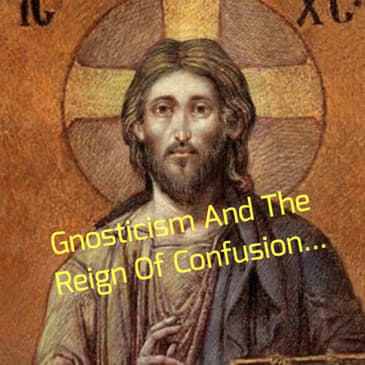
[00:00:57] Good evening everyone. Tonight we are going to take a look back at the concept of Gnosticism and the reign of Confusion.
[00:01:06] What are we going to be talking about here tonight?
[00:01:09] We are going to take a look back at the early church.
[00:01:15] At some of the notions of Gnosticism.
[00:01:19] We are going to perhaps learn a few things and we are going to be looking into the works of the late great Jordan Maxwell.
[00:01:27] His book, that old time religion, that he put together in conjunction with several other people and one of those gentlemen who was named Paul Tyson.
[00:01:36] This portion of the book that we are going to be reading from was largely contributed by Paul Tyson.
[00:01:43] We are going to see that much of the state of the world that we do indeed live in is based in this reign of Confusion.
[00:01:52] Confusion, that is what had set in in what they refer to as the dark ages of mankind, that early portion of the history,
[00:02:05] that we do have, that seems to be largely missing.
[00:02:12] A big chunk seems to be missing from our historical descriptions of things.
[00:02:19] They call this the dark ages. They don't seem to have an awful lot of records from that time.
[00:02:25] The records that they do have indicate that it was a time of extreme poverty, extreme hardship.
[00:02:33] There weren't any real technological or social advances made during that time.
[00:02:39] It was a time that was said to be bound in the auspices of a feudal system.
[00:02:48] Futalism seemed to be the governance of choice of the day.
[00:02:57] And as we take a look back, we know that much of our history is convoluted and we know that much of the mainline religious doctrines that we have received
[00:03:09] have been misconstrued and warped and twisted through the years, through the centuries.
[00:03:15] Into what we have today, and so much dogma has now entered in, to mainline religion that it makes for infighting between the various communities within that particular religion.
[00:03:30] We see this across the board. It's most demonstrable with the Christian religion and of course when we're referring to nosticism,
[00:03:38] nosticism always seems to be inherently tied to Christianity.
[00:03:42] There's a reason for that and perhaps we'll get a little bit into that here tonight.
[00:03:47] But the thing is the nostics bring forward one set of teachings, and the main stream religious structure brings forward another set of teachings.
[00:03:58] And they don't jive, and that gets to be a problem.
[00:04:02] And the truth of the matter seems to fall somewhere in the middle, somewhere between the nostic teachings and what the mainline theological centers teach.
[00:04:15] And this is something that's very difficult to explore for a lot of people, and I do give credit where it is due to Jordan Maxwell for going back and doing all of this research into some of these ancient areas of religion, philosophy, culture, anthropology, all of these different notions of things.
[00:04:38] And being able to put this together, compile this information in a way where it's accessible for your average person and it's understandable to an average person.
[00:04:51] And he was also able to bring into the fold the esoteric.
[00:04:58] And you'll see nosticism in the esoteric seem to go hand in hand.
[00:05:04] Excuse me.
[00:05:05] And there's always this connection to religious beliefs, intermingled with these things.
[00:05:15] And they will claim that there's esoteric versions of things and esoteric versions of things right in the mainline scriptures of the various religions.
[00:05:26] And they're not totally wrong.
[00:05:30] So you always have the people who will argue, do you interpret these things literally or do you read something different into them, some other layer of meaning into them?
[00:05:42] And there's whole sciences that have been based around this in the religious and philosophical disciplines, hermeneutics exploring the different layers of meaning that are covered in the context of any given scripture.
[00:06:00] Now these are not incorrect ways to view things.
[00:06:03] You can take the literal interpretation, it's not necessarily an incorrect way to take things.
[00:06:08] You can take the context and look at it from an allegorical standpoint and be able to get something totally different out of the same text.
[00:06:18] And on and on and on.
[00:06:20] And if you take some of the hidden symbolism or symbology that's embedded into many of the scriptures as well, you can read something else entirely different.
[00:06:31] And the statistics have largely brought forward some different ideas from earlier places, earlier religious doctrines, earlier philosophical doctrines.
[00:06:45] And they interminced it and interspersed it with the mainline Christian theological scriptures, the Bible.
[00:06:56] And they were able to bring forward and bring forth different meanings or contexts to these things, and they taught this to their students.
[00:07:06] And still today we have this very gnostic ideology is prevalent all throughout our society and culture, and even in the mainstream churches.
[00:07:17] And a lot of people might be shocked to hear that.
[00:07:20] Yes, a lot of gnostic doctrines have made it into very many mainline Christian churches.
[00:07:29] The same could be said for Kabbalah.
[00:07:32] A lot of Kabbalah has been brought forward into Christian doctrine into modern day Christian churches.
[00:07:41] You see Kabbalah and Nosticism go hand in hand.
[00:07:47] And like I had alluded to earlier and actually said outright, Nosticism always has this intrinsic link to the Christian faith, to the Christian teachings, to the Christian church.
[00:08:00] And we're going to get into that here.
[00:08:04] So beginning this portion of the book, there's a couple of quotes here from some famous and quasi-famous historical figures or philosophical figures for any who...
[00:08:15] like to look into some of the very old types of teachings and ways of thinking.
[00:08:20] The first one is from Yatri.
[00:08:24] I don't know if you've ever heard of Yatri, Y-A-T-R-I. Yatri.
[00:08:30] And this one says quote, truth is always individual.
[00:08:33] Anyone else's truth is worthless.
[00:08:35] Truth is a non-transferable ticket which only bears one name and quote.
[00:08:41] Now I'm assuming that is some Eastern teacher or Yogi, Yatri.
[00:08:46] I'm not familiar with that name but this is one of the quotes given right out of a gate here.
[00:08:52] Talking about individual truth.
[00:08:56] And there is a certain context to this that can in fact prove to be correct.
[00:09:03] You see if you look at the old alchemical ways of thinking and if you look at the National Natural Initiative Path that life invariably takes each and every one of us down,
[00:09:15] it is an individual path that we all take.
[00:09:19] And therefore we have our own individual experience and this experience is what brings forth truth for us.
[00:09:30] So it's not an entirely incorrect statement but it can be misconstrued in very many ways and many people have done so.
[00:09:38] Especially in the new age circles my truth is different from your truth.
[00:09:42] No, truth is truth. It's just a matter of how you get to it.
[00:09:47] That's the thing everybody has a different path to get there.
[00:09:51] But you will eventually come face-to-face with what is truth.
[00:09:57] That's not to say some persons, one person's truth is different than another person's truth or one person's truth is better than another person's truth.
[00:10:04] No, there is only one truth. Truth is truth, period.
[00:10:09] It's just your path that you took to get there is different and perhaps your learning style is different.
[00:10:18] And perhaps the very terms and words and symbols you use to convey that truth are different, but truth is truth.
[00:10:27] The second quote here is credited to Paul Tillich, quote,
[00:10:33] The passion for truth is silenced by answers which have the weight of undisputed authority in, quote.
[00:10:40] Also another quote here that's not entirely inaccurate.
[00:10:45] The passion for truth is silenced by answers which have the weight of undisputed authority.
[00:10:52] I find that to be true. You always have people who will cite some undisputed authority to tell you that what your experience has been is inaccurate.
[00:11:05] No, that's not true. It can't be true because such and such authority figure told me otherwise.
[00:11:13] So they always invoke the authority figure for truth. And guess what folks?
[00:11:19] Authority does not equal truth and truth does not equal authority. Not in all cases.
[00:11:26] You see, the authority figures in the medical community would tell you certain things that aren't true, and you know they're not true.
[00:11:33] If you're listening to this program, you know what I'm talking about.
[00:11:39] You know exactly what I'm talking about. Authority does not necessarily equal truth.
[00:11:44] So this is also an accurate statement because many people have been shut down and silenced because they speak something that the, quote unquote, authority does not approve of.
[00:11:58] Now this last quote is very likely an old philosopher probably in an philosopher from the Middle East.
[00:12:08] I think based on the name, the name is Kabir. I'm not familiar with this one either. Kabir K-A-B-I-R Kabir.
[00:12:16] And he says quote, oh seekers remember all distances are traversed by those who yearn to be near the source of their being and quote.
[00:12:26] Once again, not entirely inaccurate.
[00:12:33] All distances traversed by those who yearn to be near the source of their being.
[00:12:40] You see, when you're striving for truth and you're striving to have a relationship with your creator with God, the maker of all things,
[00:12:51] you will travel or traverse untold distances, whether that's literal distance or figurative distances.
[00:13:01] When you seek for these things, you work tirelessly towards this, towards the achievement thereof and you will find this and you will get closer to the source of your being to your creator.
[00:13:19] The Bible even says, seek ye first the kingdom of God and his righteousness and all these things will be added unto you.
[00:13:26] So that too is a true statement but we can understand already how some of these things can be misconstrued or misquoted,
[00:13:35] taken out of context and twisted and contorted and perverted into something entirely different.
[00:13:41] And many in the New Age circles have done so with a lot of this stuff as it regards to truth.
[00:13:48] So let's get into the primary reading here itself.
[00:13:54] The truth and the mystery concerns who we really are.
[00:13:58] We know there is an ultimate truth to humanity regarding who we really are.
[00:14:03] We just don't collectively understand it yet, that is the mystery.
[00:14:08] Noses or the illumination of knowledge on a deep personal level can begin to reveal the answers.
[00:14:15] Nosticism is a faith now nearly forgotten but it has become clear in the previous chapters of this work that it was a rather common thing in the first four centuries of Christianity.
[00:14:25] It was considered a heresy by those who opposed it, those mainly being the fathers of the church but it did have value and I'm going to pause for a moment here folks.
[00:14:35] Noses illumination these kinds of ideas these mystery teachings are what are absent in today's church.
[00:14:48] Mystery teachings that doesn't say that there aren't mystery teachings out there or the seeking after this knowledge or illumination.
[00:14:57] There certainly are in these secret society groups of today, these occult fraternities of today.
[00:15:04] The problem is they've all been twisted and contorted from what the real truth is.
[00:15:13] They lead you down a primrose path away from the creator towards a false light.
[00:15:24] But let's go ahead and we'll continue on here because this is just the historical breakdown of nosticism, the notion of Nosis and it did exist in the early Christian church in the very early days of the church.
[00:15:40] There were those within the Christian community who did seek after this stuff, this is when there were still mystery schools around surrounding these various ideas.
[00:15:58] So let's get back to it.
[00:16:00] Nosis in Greek means knowledge or to know. This does not refer to factual knowledge but to an intuitive or spiritual understanding that comes from experience and a pause for a moment here folks.
[00:16:13] So here is what has largely been misconstrued in the modern era and by those modern interpreters of theology, Nosis in and of itself is not necessarily a bad thing.
[00:16:27] It simply means knowledge and it's describing this intuitive or spiritual understanding of things that comes from your individual experience.
[00:16:38] It's not bad to have knowledge. The problem is they have deified this Nosis idea and that's when it becomes an idol.
[00:16:52] That's when it becomes problematic and this is largely what has happened in the modern era of the occultists and the secrets of society groups and all of those who seek after illumination, they have deified the concept of Nosis.
[00:17:16] This understanding, this knowledge, this intuitive knowledge, this spiritual knowledge that itself has become a God to them and as such it has become an idol
[00:17:32] and it is a dangerous thing. It isn't an alternative to God the Creator
[00:17:42] and the things that have been done in the name of Nosis or Nostoc teachings by these various secret schools as completely contorted and twisted and inverted.
[00:17:58] This natural process or experience that we all go through, the natural, the natural initiatic phase of our lives that we all go through.
[00:18:11] You see we're all traveling a path. We all have experiences, that's what life is, life is a school where you go through initiations, natural initiations, not some pre-prescribed initiation ceremony like they perform in these mystery schools.
[00:18:34] So what they've done, they've created a synthetic form of initiation and in so doing they've completely inverted the natural order of things.
[00:18:45] This is not how man learns and grows especially not spiritually. They've hijacked the process. That's largely what has been done here and Nostocism ties directly to this.
[00:19:00] Especially when it comes to the modern mystery schools that we have, occult fraternities and secret society groups. They are quasi-religious in their teachings but they very much have a Nostoc base to them.
[00:19:20] And with this Nostoc base within them, they have contorted these viewpoints and inverted them from what the natural path is.
[00:19:35] So at any rate, let's go ahead and continue here. So just defining Nosis here in the old terms means knowledge or to know it is an intuitive or spiritual understanding that comes from experience.
[00:19:48] The early Nostocs were mystics. People who knew that you could experience God for yourself instead of going into a church and being told what to believe.
[00:19:58] I'm going to pause again there. So I don't think the interpretation here is entirely incorrect.
[00:20:11] You can know God and experience God for yourself without going into a church and being told exactly what to believe and what is doctrinal and what's okay and what's not.
[00:20:23] You can have that experience that is the natural way things happen.
[00:20:29] But the claim here, the early Nostocs were mystics. Yes. And there are differences between Nostocs, Mystics, occultists, magicians, initiates, adeps, all of these different terms that get thrown around in these secret society groups.
[00:20:50] There are distinct differences. Now, mystics, it's not necessarily a bad thing to be a mystic or to study the mystic history of things because certainly mysticism runs hand in hand with philosophy and runs hand in hand with religious teaching, religious ideology.
[00:21:15] You always have those mystics and there are Christian mystics. This is a known commodity, they're always have been and especially in the early church. Some of them were Nostocs.
[00:21:28] And this is according to Paul Tyce here. He said the early Nostocs were mystics. And so who were mystics? Well according to his definition they were people who knew that you could experience God for yourself without having to go into a church and being told what to believe.
[00:21:45] I don't know if that necessarily is a correct description or definition for a mystic. But certainly a lot of people have had mystical experiences. A lot of people have also had experiences with God outside of the church. That's certainly a real thing.
[00:22:08] Like I said here in the opening, I think the truth really lies somewhere in the middle. You see the main stream religious structures have contorted many things out of shape as well.
[00:22:31] And of course the Nostoc teachings and the various other mystery school teachings have also contorted things way out of shape.
[00:22:43] And you have these conflicting ideas between them. The thing is a lot of times these ideas do agree on certain facets of things.
[00:22:54] And this is where you can find the middle ground. And in the middle ground is where you will often find something that seems applicable across the board can be considered a truth.
[00:23:10] You won't find truth strictly in church ladies and gentlemen. Likewise you won't find truth strictly within the auspices of one of the secret society groups or mystic occult fraternities.
[00:23:23] You're not going to find truth in either of those places exclusively. You see both of those institutions do present some truths.
[00:23:40] But you're not going to find ultimate truth in one of those or even both of those for that matter.
[00:23:50] It is an individual path as we've discussed. But that doesn't mean that your truth is different from my truth. There is only one truth.
[00:24:01] And you will find it at one point your path to get there may be different. You see, it seems to me that something was lost in translation here in the early Christian church.
[00:24:18] We've had these teachings. We've had some of these teachings that go back to before the advent of Christianity. That still had some truth in merit to them.
[00:24:30] That it been brought forward through Christianity now and adapted to fit into the mainline Christian theology.
[00:24:39] It doesn't make them untrue. Truths are still truths. It's just the lens of observation we've been given for these truths. But like I was saying, something got lost in transition here in translation.
[00:24:56] So we had these early church fathers. We had the Nostics. We had these various concerns and teachings going through the Christian Church, the early Christian Church.
[00:25:09] And something happened wherein we had some schism within the Christian groups themselves.
[00:25:20] They split off into different denominations who taught certain things and believed certain things.
[00:25:31] And a lot of confusion set in, and darkness set in, a rift was made in the population within the early church.
[00:25:45] And we wound up having doctrinal differences. And the same thing goes on today. And you could look at this across the board. This doesn't necessarily only apply to religion or philosophy.
[00:25:57] This could be applied all over the place. Look at the way our nation operates right now with the political parties. We're divided along political lines. Well, this happened along religious lines, along philosophical lines.
[00:26:14] Now, it's not to say to use the allegory again of the political parties. It's not to say that only one political party teaches truth or has truths behind it and the other one doesn't.
[00:26:31] No, they both have some degrees of truth within them that are upheld. Of course, politics is probably a bad example because it's mostly lies.
[00:26:42] But there are some truths underlying some of the things they try to do. So who knows for sure what exactly happened back in these early church days?
[00:27:00] But something happened and we had what they call the dark ages that manifest their around. And a lot of this had to do with this schism between the gnostic ways of thinking and what became the mainline theological ways of thinking.
[00:27:16] So let's go ahead and get back to this. A lot of this relates to the experiential rather than to the doctrinal.
[00:27:26] In Hebrew to know means to experience. So according to the Hebrews, knowing God means to experience him. This is what most all early Hebrews and Christians were striving to do.
[00:27:37] Unfortunately, the church got in the way of personal experience by creating organized religion. There's a saying which states, quote, religion is for the masses and mysticism is for the individual end quote.
[00:27:52] If you want to be a sheep and follow along with the masses to get a generic candy-coated version of your spirituality, then follow the teachings of the Christian fathers. If you want to explore your own individual spirituality, you must go deeply inside yourself instead of through church doors.
[00:28:10] Wait a minute, you might say, why can't I do both? You most certainly can, but prioritize the matter. You are a unique person with your own unique spiritual path. Here on this earth for a reason. No one else is here for the same purpose. You are special. Find your reason for being here and don't let others decide it for you.
[00:28:31] No man ever followed his genius till it misled him. And that's a quote from Henry David Thoreau. Perhaps you've heard of him, interesting fellow and he's not wrong. You see we do have these individual paths.
[00:28:52] We have these individual paths. So that being the case, we need to follow our individual path. But at the same time, we also need to experience what it is to be a unified church.
[00:29:16] This is where things become problematic because the unified church became what they call here in organized religion, which in and of itself must adhere to certain doctrinal things. And of course dogma sets in man-made dogma sets in misconstrues, the true nature and true teachings.
[00:29:42] And the spiritual intent thereof. And then people become legalistic in their approach, in their way of thinking. And when legalism sets in, well that becomes problematic in and of itself. You see we are told we were given the law in the Bible so that we understood that we couldn't possibly through our own human efforts abide 100% by it.
[00:30:12] Although we can strive towards it. It was a measuring stick to show us that we couldn't do it on our own. That we needed this relationship with God in order to walk that path and that we were going to fail at times. And this is all part of the whole aspect of spiritual growth that we go through.
[00:30:34] So that being a case, when you start to be bound by legalism, all this does is discourage and discredit. And lead people away from that relationship with God.
[00:30:52] When you start walking around telling people how wrong they are about everything and how they're going to hell, that doesn't really when people over doesn't.
[00:31:05] Especially when they catch you doing something that they know that according to the Bible and according to what you say and the standard that you keep is wrong and is sinful and they call you out on it.
[00:31:20] And then they walk away with the attitude hypocrites. These people are hypocrites. Why should I be following them? They say one thing and then do another.
[00:31:32] And this is the problem with organized religion when legalism sets in.
[00:31:38] So that being the case, once we have legalism taking the place of the individual path then this becomes problematic and this causes the relationship that the individual has with God to suffer.
[00:32:08] So we need to understand both the mainline theological concepts as well as what they would call the Nostek interpretations or the mystic interpretations as well, the individualized experiences.
[00:32:29] You see, it's all important and I think the truth and the direction we need to go lies somewhere in the middle.
[00:32:43] You can't possibly keep all of the legalistic precepts of what mainline religious theology teach you.
[00:32:54] You need to have this intuitive knowledge or spiritual knowledge as well and when you have that right relationship with God, the creator, you can have that. You'll know what to do.
[00:33:08] You'll know what's the right thing to do. That's something I've told people for a long time. I live my life by one simple credo. If you know it's the right thing to do, do it.
[00:33:24] Simple as that. And that, I think, is part of this individualized experience or path.
[00:33:36] This is what you would call probably more spiritualality than religion. You see, religion's gotten a bad rap and there's nothing wrong with religion.
[00:33:46] You need some kind of religious context to abide by. You need the moral compass.
[00:33:53] You need that relationship with God. That's what religion was supposed to be this relationship with God, not this legalistic dogma that has become the mainline church.
[00:34:09] But anyway, let's get back to this.
[00:34:14] These soul-searching ideas threatened the church. If you want organized religion, you can't have people doing their own thing.
[00:34:22] The Gnostics did not bow down to any earthly authority or dogma because each person must find that authority within as he or she strives to attain noces.
[00:34:33] And a pause for a moment here, folks. So once again, we see something that's not entirely wrong but of course with all of this you always find that little bit of poison mixed in.
[00:34:47] I think you do need to understand that much of what has been handed to us by the organized church is dogmatic.
[00:35:00] And that sometimes we do have to reach or look within to find the authority about what's right or wrong.
[00:35:09] And that authority is derived from the Holy Ghost, derived from the relationship with God himself. But you see what this author here says, Paul Tyson.
[00:35:20] What he puts in here, he says each person must find that authority within as he or she strives to attain noces.
[00:35:29] It's not about noces. Noces is not going to give you the answer. Now there's nothing wrong with seeking knowledge or looking for knowledge or trying to attain knowledge.
[00:35:42] This is something that's been largely misconstrued. But knowledge in and of itself is not the answer it is not the relationship with God, it does not have authority just because it is knowledge.
[00:35:56] That's where in my opinion the nostics get it wrong.
[00:36:03] They're looking towards the wrong thing. Like I said earlier, they deified the idea of this noces.
[00:36:12] If you want to look at it through the modern lens of observation, noces in our modern day can be construed as science.
[00:36:24] And as I've stated on other occasions here, science is the God of the new age.
[00:36:32] Noces. Noces, knowledge, science. And yes, sometimes it does become difficult to define what exactly is noces or nosticism, what does it mean?
[00:36:50] It's a philosophical idea blended with a pseudo religious idea. But ultimately the Greek term simply means knowledge and it infers an intuitive knowledge or a spiritual knowledge that's gained through experience or insight, not something that you can learn in a book.
[00:37:16] And this is of utmost importance. You can't learn noces in a book or through some teaching from the secret schools or from any mainline religious theological concept.
[00:37:38] It's something you experience through the course of time and study and understanding as you travel down this individualized path that we all have.
[00:37:54] Now that being the case, a lot of what has happened is these people in the secret society groups and mystical cult fraternities. They seek after this noces instead of seeking out relationship with God.
[00:38:12] And that in and of itself is where in we have the problematic disconnect. And that's where something's been misconstrued here in the modern era, and we have people looking in all the wrong places.
[00:38:30] And the things they seek after are not that right relationship with God, that relationship with the creator instead. They're seeking for this knowledge.
[00:38:46] And as I said, there's nothing wrong with looking for knowledge or seeking out knowledge. It only becomes problematic when that becomes the focus, the God in your life.
[00:39:02] Then it becomes problematic. Then it becomes an idol in alternative to God.
[00:39:16] You're seeking after that rather than God. And what does the Bible scripture tell you? Seek ye first, the kingdom of God in his righteousness, and all these things will be added unto you. Well people are looking for the knowledge of God without going to God or having the relationship with God for it.
[00:39:39] And they're not going to find it there. What they're going to find instead is an alternative in idol, an alternative to God, a cheap knockoff of Christ and anti-Christ spirit, if you will.
[00:40:08] And don't get me wrong, a lot of this has actually entered into the mainline churches as well. You have people seeking out all the wrong things.
[00:40:20] Even those who claim to be devout in their religious faith and in their actions, oftentimes, if they're honest with themselves, they're doing things for the wrong reasons. They're seeking after the wrong outcomes.
[00:40:43] But it's all this facade, the white washed tomb as Jesus himself called it. The whiteened sepulcher. That's how he referred to the Pharisees.
[00:41:01] They look the part on the outside, but on the inside. They're no different.
[00:41:13] And we have a lot of this going on. And like I said, you have people seeking that relationship with God in the wrong places.
[00:41:25] A lot of people go to the organized church to find that. And oftentimes in the organized church, they do not find that the same is true of these fraternities, secret societies, sometimes people seek there to find that relationship with God.
[00:41:47] And they don't find it there either. And a lot of this has to do with this confusion that set in early on in the Christian church.
[00:42:08] The reign of confusion. And we'll see as we continue through the main reading here, some of the history of how Nosticism became defined and how it separated from the main organized church fathers and how they became at odds with one another.
[00:42:33] Let's read on here. With this idea growing during the first two centuries of Christianity, something had to be done. The organized church persecuted and stamped out the Nostoc movement so that by the fourth century all Nostoc churches had been closed into all-known writings destroyed.
[00:42:52] Yet the Nostocs are still recognized today as having been brilliant depth psychologists and in a broader sense possibly the first religious philosophers. Their importance was never recognized until centuries later.
[00:43:08] Edward Gibbon in his legendary book called The Decline and Fall of the Roman Empire said, quote,
[00:43:23] In exchange for their greatness, they were ruthlessly persecuted by the church. And this is where it says the reign of confusion set in. You see some people had a very positive outlook on these Nostocs.
[00:43:40] But the main church itself seeking control and unity of message more than anything decided to stamp out what they could of these Nostoc teachings.
[00:43:57] The reign of confusion, the church was in terrible disarray for centuries and is not the great authority it makes itself out to be. It stumbled its way to its current position of authority then used violence to ensure its standing.
[00:44:12] It took the church 150 years after the death of Jesus to establish the present system of deacon's priests and bishops.
[00:44:19] One hundred years later, the clergy was still determining which form of Christianity should be the accepted form but there were still great differences of opinion.
[00:44:29] By the year common era, 325 the Roman Emperor Constantine decided to convene the council of Nicaea to settle the problem once and for all for the entire Roman Empire.
[00:44:42] All bishops were present except for the bishop of Rome due to his advanced age. However, he sent two representatives.
[00:44:50] This council was one of the most manipulative meetings in the history of the world and then it gives a little quotation here. It says, see history of the first council of Nicaea by Dean Dudley reprinted by the booktree.
[00:45:06] The bishops were told how they were expected to vote beforehand and all those who disagreed were excommunicated removed from the meeting by armed guards and banished to remote islands.
[00:45:18] The council continued its business, Constantine's theology was presented to the remaining bishops and it received unanimous approval. What a surprise!
[00:45:28] What resulted was Christiana V. in large part as we know it today, going to pause for a moment here folks.
[00:45:35] So yes, there were several different councils that were held. This being probably one of the utmost importance, the council of Nicaea, where in they decided which books of the Bible were to be considered canon or doctrinal, which ones were considered to be not so to be taken as literally.
[00:45:57] And of course there were many other precepts set by the council of Nicaea and now we're hearing about how manipulated this was and much of what has come about as the mainline organized church that represents Christianity today.
[00:46:22] This is what came out of it based on the old Roman model. This was the reorganization of the Roman Empire into the holy Roman Empire.
[00:46:33] You see this presented itself as a fantastic tool for control for the Roman authorities.
[00:46:47] In the name of religion, in the name of God they could set forward themselves as the holy Roman Empire and they could have an immense amount of influence on people.
[00:47:02] More so than they could just militarily. You see, if you claim to be the representative or vicar of God and people believe you to be so, you can tell them then what is right and what is wrong and they will follow along.
[00:47:19] At least this is probably what was thought about in the early days of the merging of the Roman Empire with what is now the Catholic Church or the Vatican if you want to be proper about it.
[00:47:39] Let's read on though. After all this was over, an official version of the New Testament still did not exist. This did not matter to Constantine.
[00:47:49] They had decided on a general theology so a police authority was immediately sent out to burn and destroy all religious material which did not agree with the new official theology.
[00:48:01] Athenacius, a contemporary to all this was born around common era 296 and died in 373.
[00:48:10] He followed Constantine's example in 367 ordering the expulsion of heretics in all their books from monasteries thereby causing the greatest known collection of the Nostek writings the Naghamadi library to be buried.
[00:48:24] This had immediately followed the Sinad of Leo de Sia in around 363 in Fregia which chose the initial books of the canon for the first time in history.
[00:48:34] He was apparently present at the Council of Nicaea but because his relative youth and lack of status was not allowed to speak.
[00:48:42] Yet it was his views on Christ's deity which eventually became the official doctrine of the church sometime after his death.
[00:48:50] Before this during his 45 year reign as Bishop of Alexandria, he was exiled five different times by five different emperors because of his views for a grand total of 17 years after the second time he probably kept his bags packed.
[00:49:06] Later in the year 389 by Edict of the Emperor Theodosius, the library of Alexandria Egypt was burned to the ground.
[00:49:15] This was the greatest loss of valuable information in the history of the world.
[00:49:20] It was the world's greatest library containing over 700,000 manuscripts, scrolls and codices most of them without duplicates.
[00:49:29] The entire purpose of the library had been envisioned by Alexander the Great to house all of the books ever written under one roof.
[00:49:37] Some of these ancient documents, 270,000 of them, had been collected by Tolemie Philadelphia in exchange for rich rewards.
[00:49:46] Can you imagine what knowledge and value these works had?
[00:49:50] These works were allegedly burned because many of them contained the doctrinal basis of the gospels.
[00:49:56] In other words, the truth.
[00:49:58] Can you imagine what 700,000 ancient documents gathered in one place would look like?
[00:50:03] I'm going to pause for a moment here folks.
[00:50:06] The Library of Alexandria.
[00:50:10] This was said to contain an awful lot of information.
[00:50:16] Ancient information that we don't have access to today, or at least not much of it.
[00:50:23] Of course there are those who claim to have been able to access some really ancient texts of civilizations of the past.
[00:50:35] That told the world before the Great Flood.
[00:50:42] And that's a subject for another time.
[00:50:46] I think we'll cover that at one point in the near future.
[00:50:50] But at any rate, the Library of Alexandria, this was a big deal.
[00:50:55] And there was a lot of information lost about the ancient world there.
[00:51:00] A lot of which didn't have duplicates.
[00:51:03] Now I don't know if that was the true intention of what had been done here.
[00:51:10] And I don't know if this is true as to what were the doctrinal basis of the gospels contained therein that were destroyed.
[00:51:19] We certainly have a lot of records of the gospels from different places.
[00:51:27] Different approaches were taken.
[00:51:29] And we have of course the new testament as we know it today that was cobbled together in some of these meetings.
[00:51:39] And this was decided that this was sound theology.
[00:51:43] Well who made this decision?
[00:51:46] Is this what Christ told people that this and only this is sound theology?
[00:51:54] No, it was regular men with political agendas who sat down and decided what was sound theology.
[00:52:06] And they put forward these ideas.
[00:52:08] And I'm sure some of these people really did have good intentions.
[00:52:12] I've no doubt about that.
[00:52:15] But when you consider what exactly
[00:52:23] the intentions of those who sponsored these men in doing so were, then you have to consider what's the ultimate outcome.
[00:52:34] Well of course it represented a tool in the hands of the Roman Empire of the time.
[00:52:44] A powerful tool that can be wielded to influence the minds of men.
[00:52:50] And that was largely what was done.
[00:52:53] And they did this in the name of God and in the name of the greater good.
[00:53:03] Let's read on and find out more about this early history of the Christian church and how the nofticks were rooted out.
[00:53:12] And much of their writings obscured to the dustbin of history.
[00:53:19] About the year 393 and with many great monastic works now destroyed,
[00:53:24] the clergy made a more accurate decision on what books to use for the New Testament following the Sinod at Hepo in Africa.
[00:53:32] This canon was meant to represent the official religion that had been crammed down their throats 75 years earlier by Constantine.
[00:53:40] To this day the books we find in the New Testament have never been declared official by any authority or counsel.
[00:53:48] The disagreement over New Testament books continued for centuries.
[00:53:52] The book of Revelation today considered the most important New Testament book had continually been taken in and out of the Bible for over a thousand years.
[00:54:03] Once the nofticks were finally defeated with the fall of the Manic Keyans around Common Era 600,
[00:54:10] the dark ages soon followed.
[00:54:13] The this bleak period began largely because Christian leaders acted on a realization.
[00:54:18] That realization that to control the people and avoid additional centuries of trouble,
[00:54:23] it was necessary to control knowledge in its dissemination.
[00:54:27] All the ancient wisdom that could be gathered together and either destroyed or hidden away in places like the Vatican Library,
[00:54:35] would be taken out of circulation.
[00:54:38] All avenues which people might take to achieve independent learning were closed off.
[00:54:43] Not even priests or pre-lates were allowed to learn to read or write during many dark age years.
[00:54:50] I'm going to pause for a moment here folks. That is of course if you accept the mainline narrative of the history of the dark ages.
[00:55:00] This is what's taught and what we're told about now. Is this true?
[00:55:05] I don't know.
[00:55:07] It seems we're missing something once again in the translation here,
[00:55:17] as to how exactly all of this went down, but certainly we can agree and we can see that in one degree or another,
[00:55:26] the church had a hand in keeping knowledge from the people.
[00:55:32] It's all about the control of information.
[00:55:37] And don't we see the same things going on today?
[00:55:40] Who controls the information and the dissemination of the information?
[00:55:45] Who controls what Efficientum says?
[00:55:48] It's not the same thing going on today.
[00:55:50] It's just back then this was all done through the church as the main authority figure disseminating all of this, controlling all of this.
[00:56:05] This was the accepted power structure at the time.
[00:56:13] Information warfare.
[00:56:17] That is what allegedly according to this mainline historical narrative, that is what drove mankind into the dark ages.
[00:56:29] A small group at the top of the power structure, who wielded their power to control the flow of information.
[00:56:45] And this is what caused the set in of the dark ages.
[00:56:50] Remember that I think there's something important to that connotation here looking at things going on today.
[00:56:57] It says, even bishops were just barely able to spell in Latin.
[00:57:02] Well all sources of true knowledge which could potentially threaten the church were kept away from them.
[00:57:08] Much of the great knowledge of the past is allegedly locked away in the enormous Vatican library where no one to this day except the private guardians have access to it.
[00:57:20] The practice of controlling knowledge was refined by Pope Paul IV in 1555, soon after he graduated from being Inspector General of the Inquisition and became Pope.
[00:57:32] At this time he established the index of forbidden books in which every book considered to be detrimental would be blacklisted.
[00:57:40] In some cases, stored away and forbidden to be seen by any Christian or anyone else for that matter.
[00:57:46] The Pope warned that anyone who read a book on the list was committing a mortal sin.
[00:57:52] After more than four centuries the index was discontinued by Pope Paul VI in 1966.
[00:57:59] It would seem that many rare and interesting books may still be in the Vatican's possession.
[00:58:07] If anyone has a Vatican library card I'd like to borrow it for a few months as would I, the author here attempting a little bit of humor.
[00:58:16] But we can see here this decree made by Pope Paul IV in 1555 establishing this index of forbidden books.
[00:58:30] This is where we get the modern notion that you're not supposed to look at some of these occult books that it's bad, it's evil to do so.
[00:58:44] That's where the notion came from folks.
[00:58:48] You see information in and of itself is not going to hurt you.
[00:58:53] Reading something is not a mortal sin.
[00:58:59] In fact, I think it's imperative to understand what it is that you are battling against in the spiritual.
[00:59:07] You need to read some of these mystical books, these books on philosophy, these teachings, these occult teachings.
[00:59:14] Even things like works on magic and ritualism doesn't hurt to read that and understand some of what's presented there because
[00:59:27] if you don't and you're ignorant of who the enemies of your soul are, or how you've been manipulated some of the ways that have been used to manipulate you.
[00:59:39] Some of the things that have been done and some of the dangers that you were open to by being ignorant of such a thing.
[00:59:48] But this is where that whole idea comes from.
[00:59:53] That's why mainstream Christianity today, they, oh, you shouldn't look at things like those occult books.
[01:00:03] That's bad, that's evil.
[01:00:06] It might not be good for you to put those things into practice but simply looking at it and reading about it and understanding what it is that the practitioners of it believe in and of itself is not harmful
[01:00:20] in fact can give you a better view of the bigger picture of the spiritual battlefield.
[01:00:32] But once again this is about information control, it's information warfare.
[01:00:41] So they tell you don't read this because if you do it's bad for you and so it's for your own good to not read it.
[01:00:48] So it's for the greater good.
[01:00:52] You see, to suppress information, what good could come from secrecy folks?
[01:01:00] How has the suppression of information ever been good for a person?
[01:01:09] Think about that.
[01:01:11] Once again this falls back to one of the oldest mind control tools ever conceived and that mind control tool is secrecy.
[01:01:21] Secrecy, if you know something somebody else doesn't that gives you a type of power over them.
[01:01:27] That's why they've done this whether it's the mainstream power structure, the accepted power structure which at this point in history was considered to be the church.
[01:01:38] Or whether it's somebody else like in our modern era.
[01:01:45] Today there are at the top of the power structure in this world, whether you want to accept it or not.
[01:01:54] There are darker cultists who run things at the top of the power structure in this world and they do hide and secret away knowledge from us.
[01:02:07] The masses to give them an advantage over us, to give them some type of control over us, some type of power over us.
[01:02:19] That is the primary purpose of keeping the secrets.
[01:02:27] Now what secrets are these? I don't know. I don't claim to know.
[01:02:32] What exactly it is that they know that we don't.
[01:02:36] Obviously they have a better grasp of the cycles of time that occur in this place than we do.
[01:02:43] They also understand the language of symbology much better than we do.
[01:02:50] And they can leverage certain principles, energetic principles of certain time periods towards certain agendas that they want.
[01:03:03] They know a little bit more about this than we do.
[01:03:09] And they've utilized these tools through the course of time.
[01:03:13] They've instantiated themselves into these seats of power in this world.
[01:03:21] And they do direct things and steer things in certain ways.
[01:03:28] And there are spiritual influences that work with them on this.
[01:03:37] Now back in the early church age here and coming up through the dark ages,
[01:03:43] and even up into the early portion of the modern era, up through into the Renaissance,
[01:03:49] and perhaps a little ways past the Renaissance.
[01:03:53] The Catholic Church, the Vatican, has been one of the main conduits of power in this world.
[01:04:03] One of the main tools used by these darker cultists who instantiated themselves in the topmost levels of that structure.
[01:04:15] And they still continue today to use it to some degree.
[01:04:21] And this once again contributes to the confusion.
[01:04:27] Because you see, we have these different factions or groups of secret societies that seem at odds with one another.
[01:04:36] Orders like the Jesuits and the Freemasons who seem opposed to one another.
[01:04:41] They seem to be bitter enemies but they do work very closely together in fact,
[01:04:47] and work towards the same overall goals.
[01:04:51] They have the same philosophical belief systems between them that govern them.
[01:05:02] It's the duality, the polarity principle, even at the topmost levels of the power structure in these secret groups, organizations.
[01:05:14] They work back and forth towards a central goal, much like once again we're all sight the allegory of the political parties we have today.
[01:05:26] The Republicans and the Democrats, they work towards the same goals.
[01:05:30] They always keep the same goals moving forward.
[01:05:33] It's just a matter of what direction or tact do they take to get there.
[01:05:38] And sometimes they're not an agreement as to how to get there.
[01:05:42] And one party takes power and gives more direction than another at one time.
[01:05:49] And then the other steps forward and gives direction at another.
[01:05:52] It's the same historical narrative with these secret society groups and with this mainline power structure.
[01:06:00] Now for a very long time, the church has been the official face of the power structure of this world.
[01:06:09] I don't know if that's necessarily still the same case today.
[01:06:12] The church is falling into disfavor in the modern era.
[01:06:19] The Vatican is still highly respected though in world affairs.
[01:06:24] Of course it's its own separate little country, its own nation.
[01:06:28] It's its own little nation state.
[01:06:32] And it has a lot of sway and influence still.
[01:06:36] I wondered about Catholics.
[01:06:39] Still follow the precepts that are put forward by it.
[01:06:45] It decides what's right and what's wrong in some cases.
[01:06:53] And many stand upon its decision because you see they've given it the false mantle of authority.
[01:07:03] The false mantle of authority.
[01:07:06] And this is where in confusion sets in, because you know in your soul, in your spirit sometimes what the authority figure tells you just isn't right.
[01:07:18] But you're not allowed to question that, are you?
[01:07:25] That's where in confusion sets in.
[01:07:28] And this is where we have this disconnect in the modern era.
[01:07:32] What is true? What is right? What is wrong?
[01:07:38] What is the way we're supposed to go?
[01:07:42] What is the thing we're supposed to do?
[01:07:46] Do we listen to the authority figure?
[01:07:50] Do we trust our gut?
[01:07:58] It's always this battle within ourselves.
[01:08:04] And a lot of this has been done in order to control the flow of information, to control the people.
[01:08:17] It's for the purposes of control and power.
[01:08:22] Now no matter who it is that is instantiating this control, it is wrong to do so.
[01:08:30] It is wrong to hide information or keep information from others, especially if it's important information.
[01:08:37] And it's also wrong on many levels to manipulate people with this information, with the flow of information, with the hiding of information, with the putting forward of information.
[01:08:58] And you see, the old tricks are the best tricks. It's always been the same thing going on.
[01:09:03] We just recognize it in slightly different ways today.
[01:09:07] But the power structure of the times passed, which was largely enforced and utilized through the church as the mechanism thereof.
[01:09:16] They did the same things, as we see here in the historical narrative.
[01:09:22] Today it looks slightly different because we have news media and corporation, governments and politics, think tank groups.
[01:09:39] All these different sources who filter and control the information and show us what it is that's right and wrong and what we're supposed to believe
[01:09:50] and how we're supposed to act and what we're supposed to do.
[01:09:55] We have social engineers today, whereas in the past it was the church who was the social engineers.
[01:10:01] Well now this is done elsewhere than within the church, but the church is still largely used as a conduit to put forward this programming of the masses.
[01:10:15] And many people have rejected some of the programming over the course of time.
[01:10:28] But to get back to the history here, the next section here of the reading tonight says the papacy, a sham.
[01:10:39] What kind of authority does the papacy really have? The entire development of the papacy comes from very dubious origins and early popes were scorned by respected church authorities like Tertullian.
[01:10:52] Jesus himself was against calling any man father, which is what the word Pope really means.
[01:11:00] Pope Cyprian in the mid-250s scoffed at the idea that his own position holds the succession from Peter.
[01:11:09] The name Pope only started to be used at the beginning of the third century and from the third to fifth centuries applied to all bishops.
[01:11:17] It was when Cyprian was being called the Bishop of bishops and the Blessed Pope that he took offense.
[01:11:25] Finally in the sixth century, the term Pope became reserved for the bishops of Rome.
[01:11:31] In the year 1073 a Roman council officially banned anyone else from using the title.
[01:11:37] So was Peter the first Pope? No. He was just another bishop if that and I agree with Cyprian that the succession from Peter is a sham.
[01:11:48] Some will argue this point and look to the Bible for proof.
[01:11:53] And then he gives some scripture from Matthew 16 here.
[01:11:59] And this is what people will largely argue that the papacy or the Pope, the office of Pope, is derived from Peter.
[01:12:11] And it says quote, he sayeth unto them, but whom say ye that I am?
[01:12:15] And Simon Peter answered and said thou art the Christ, the Son of the living God.
[01:12:20] And Jesus answered and said to him, blessed art thou, Simon Barjona, for flesh and blood has not revealed it to thee but by my father which is in heaven.
[01:12:29] And I say also to thee that thou art Peter.
[01:12:33] And upon this rock I will build my church and the gates of hell shall not prevail against it.
[01:12:38] End quote, and that was Matthew 16 verses 15 through 18.
[01:12:43] When this argument comes up people quote Matthew 16, 18.
[01:12:48] And leave out the three previous verses.
[01:12:51] We should remember that after meeting Jesus, Simon Barjona had changed his name to Peter or Cephas meaning rock due to his strong faith.
[01:13:01] But the main point is that Jesus was not referring to Peter when he spoke of building his church.
[01:13:06] Jesus spoke Aramaic in Aramaic upon this rock can also mean upon this truth.
[01:13:13] The Geneva Bible translates rock as true faith which confesses Christ.
[01:13:18] Although the words for Peter and rock are the same in the original language, Jesus reminds Peter what his name is first.
[01:13:28] Then says that upon this truth he will build his church.
[01:13:32] He is complimenting Peter for having confessed this truth in verse 16.
[01:13:36] The church will not be built upon Peter, it will be built upon truth.
[01:13:41] It is now agreed by not only many Protestants but also many Roman Catholics that this is the more likely interpretation.
[01:13:50] So I'm going to pause for a moment here folks.
[01:13:54] So the notion that the Pope is in the line of succession from Peter in my own personal view is nonsense.
[01:14:06] This is an office that was put in place by man.
[01:14:13] The authority is not from a direct lineage from Peter.
[01:14:22] That does not stand up to scrutiny in my estimation.
[01:14:26] I agree with this second interpretation given here because you see Jesus did remind him what his name was and he gave the inference there.
[01:14:38] I'm not referring to your name as the rock on which I will build my church.
[01:14:47] The truth on which he will build his church.
[01:14:54] Not on a particular man or person but this is something one of the ways in which things were confused by many, many different translations and interpretations throughout the course of time.
[01:15:16] When applied in different ways, they've come to be used in a way that they weren't intended.
[01:15:31] And that's what happened here.
[01:15:33] So this claim is a serious claim.
[01:15:37] So the papacy does not derive from Peter, not in my estimation, not from the things I've studied and seen.
[01:15:45] It doesn't seem to stand up to muster.
[01:15:48] But there are some who will still make that claim when asked about it.
[01:15:55] But let's get back to this.
[01:15:58] Jesus often used to play on words in his teachings.
[01:16:02] This was a pun of sorts and a compliment as well.
[01:16:05] The two words were the same but used differently by Jesus in a rather nice gesture toward Peter.
[01:16:13] When these two words or verses were translated into the Greek, they were also translated as two distinct and separate words bringing into question Peter's authority.
[01:16:22] Jesus himself rebuked Peter only five verses later.
[01:16:25] This resulted after Peter had approached Christ for predicting to his disciples his own suffering and death.
[01:16:32] Peter insisted that it would not happen, Jesus told him, quote,
[01:16:36] Get the behind me, Satan, now art offense unto me for thou savorest not the things that be of God but those that be of man.
[01:16:46] And that was Matthew 1623.
[01:16:48] It's unlikely that Jesus would have entrusted the future of his church to a man he had just addressed this way.
[01:16:56] Returning to verse 18, we should also be aware that in the aramaic language there was no word for church at that time.
[01:17:05] Jesus repeatedly told his followers that they must not have temples, priests, synagogues or services.
[01:17:12] The Greek word Ecclesia was used since it was the closest to the aramaic and meant at that time a public meeting.
[01:17:23] So Jesus was okay with having public meetings but did not desire to have temples, priests or services.
[01:17:30] He clearly knew that he was building a following but had no intention of founding a church as we know it today.
[01:17:37] In order to legitimize the papacy, we must prove that Peter not only lived in Rome but was a bishop there.
[01:17:45] This is the Catholic claim.
[01:17:47] Most authorities today state there is no reason to believe that Peter was ever in Rome much less being a bishop there.
[01:17:54] More than 20 different references from respected scholars affirm this.
[01:17:58] For instance, Charles de Moulin was an ecclesiastical lawyer from the mid-1500s who was considered a faithful and steadfast Roman Catholic.
[01:18:08] He said, quote, even when after the breaking up of the empire the bishops of Rome began to extend their authority over other churches, they never alleged or put forth this story of Peter's being in Rome.
[01:18:20] The story I suppose not having yet been invented end quote.
[01:18:25] From the popular and critical Bible encyclopedia volume three from 1908 we find number one, Peter in Rome.
[01:18:34] The most thorough investigation of noted scholars has shown that there is not even a remote tradition after Peter's death for the first century to prove that Peter was ever in Rome.
[01:18:45] In fact, there are no such assertions until after the beginning of the third century in any document of authentic note.
[01:18:52] Yet our modern Catholic literature continues to defend it.
[01:18:58] This topic was covered to show that true spiritual authority resides within you rather than in tradition.
[01:19:05] Man made authority is artificial and counterfeit. Your authority is found within the power of your own spirit, and I'm going to pause for a moment right there.
[01:19:18] You see, I agree to a certain extent with the author here.
[01:19:26] Man made authority is an artificial and counterfeit and the inversion of the natural process, this natural relationship between man and God.
[01:19:40] It says your authority is found within the power of your own spirit.
[01:19:47] I don't necessarily agree with that.
[01:19:52] The authority is found within the Spirit of God, with the Holy Spirit and with your connection, your relationship to the Holy Spirit, the Holy Spirit will guide you, will guide your spirit.
[01:20:06] So it's not the power of your own spirit as it says here, and I know this could be considered a different in semantical terms or semantics here.
[01:20:18] But I think it's an important point that was left out, and this is where in some of the poise and always creeps in.
[01:20:27] You see, it's not of yourself.
[01:20:34] You are not the ultimate authority of spiritual things.
[01:20:40] That would be God, our creator. His Holy Spirit will guide and direct.
[01:20:52] That is the authority, not ourselves, but we need to have an hour's spirit in connection or communion with the Holy Spirit.
[01:21:01] We need to have that right relationship with God.
[01:21:05] This I agree with and you won't necessarily find that in the legalistic approaches of churches.
[01:21:14] Man made structures, man made authorities to guide and direct you.
[01:21:23] Now some of them have very good intentions and some of them not so good intentions, but we are finite, fallible human beings and when you submit yourself to a finite, fallible human being.
[01:21:38] Well, always at some point they are going to mess up and you're going to mess up because that's human nature and it's all part of our spiritual growth here.
[01:21:50] It's all part of our experience.
[01:21:54] It's all part of the acquisition of this knowledge, this knowledge of right relationship with God,
[01:22:04] this knowledge, this intuitive spiritual type of knowledge or guidance.
[01:22:13] We don't get that from attending church. We don't get that from taking an initiation pledge in a secret society group and going through the blood ritual,
[01:22:25] swearing blood oaths, making a pact with this organization and the spirit's guiding and manifesting and directing them,
[01:22:40] which are not the spirit of God folks, directing those.
[01:22:48] You don't get it in either of those places. It's an individual journey.
[01:22:56] Now we can learn certain theological truths or philosophical truths from some of these organizations, from some of these mainline churches and from some of these maybe perhaps secret society groups.
[01:23:10] You can learn some truths but that doesn't get you any closer to the goal, to that right relationship with God and that is the only place where you will find satisfaction.
[01:23:30] That's the only way you will receive any of this type of intuitive knowledge with that right relationship with God.
[01:23:48] It's not a nosis. A nosis is a term that has been applied in an idolistic type fashion as a replacement for God.
[01:24:01] No, this isn't going to get you there. Understanding hidden knowledge isn't going to get you there.
[01:24:12] Seeking out a cult knowledge isn't going to get you there. Now are these bad things to look after or to try to learn? No, not necessarily.
[01:24:21] But that is not God. You're not going to find God in that. You need to find a right relationship with God first and then all these things will be added to you.
[01:24:31] Then you will have a better spiritual understanding. You will have a more intuitive connection.
[01:24:39] You will have a better grasp of right and wrong. What is the right path? What is the right thing to do which direction should I take?
[01:24:53] You see all of these things when sought without connection to God, they only lead to folly.
[01:25:05] There's a way that seems at the right to a man but the end thereof is death.
[01:25:12] It's the same with all of this stuff, all of these different occult teachings.
[01:25:19] If you seek out the occult teachings and you follow the occult teachings without understanding where you're going or what you are following exactly.
[01:25:34] You're led down a path that leads to your destruction. Now many mystics and many other people in the past who have pursued some of these occult teachings, many of them were Christians.
[01:25:56] There were Christian mystics, Christian seekers after this stuff. Now does that make them putting this stuff into practice correct? I don't think so. I don't know the answer to that.
[01:26:10] I don't think it's wrong to seek after knowledge, to understand things but I don't think putting any of these occult principles into practice in your life is a good idea.
[01:26:22] That's the difference. When through prayer and supplication, right relationship with God, he'll give you what you need.
[01:26:36] He'll supply the need, you'll have these things then added to you. It goes back to the old scripture again.
[01:26:42] Seek ye first the kingdom of God in his righteousness and all these things will be added unto you. You will have a deeper understanding if that's what you're seeking.
[01:26:54] Seek out God first. You see this is where the reign of confusion comes in. People have sought after knowledge, after wisdom, after all of these things without first seeking after God.
[01:27:08] And that always leads to folly and confusion. Thus we have the reign of confusion even within the auspices of those who claim to be the representatives of God, they lack that deeper connection, that deeper relationship.
[01:27:29] They're following legalism, many of them, dogmatic ways of thinking, ritualism.
[01:27:44] Then maybe they're doing good works, nothing wrong with doing good works.
[01:27:56] But the good works without the right relationship with God are worthless.
[01:28:07] Religion without philosophy is a dead thing. That's largely what has happened. We have religion but no philosophy to go with it.
[01:28:18] That's one of the things that was gutted in the early advent of the church.
[01:28:27] They called them the nostics. Now, were these truly nostics? I don't know. Or were they the philosophers?
[01:28:39] Were they the philosophers who were separated out from the religious?
[01:28:50] It seems to me that this is at the heart of and root of what's happened in this world. And why religion today is largely something people are walking away from because like I said, religion without philosophy is a dead entity.
[01:29:08] This whole world is based upon dead entities. Corporation, the word corpse inherent in the word corporation, it's a dead entity, your straw man identity.
[01:29:22] That fictional representation of yourself on paper is a dead entity. It's what Michael Hoffman calls the reign of dead matter.
[01:29:34] It's all based on these death-based ideas and it's all caught up in this confusion. This separation of the philosophical from the religious.
[01:29:48] This is largely what's happened and the same could be said of philosophy without religion is also a dead thing.
[01:29:56] You see, these two things were meant to be together. And I think maybe that's at the heart of what? Maybe some of the true nostics may have been or may have represented this combination of the philosophical with the religious.
[01:30:16] So that doesn't make control very easy for those who seek control. So they have to separate out these ideas, one from another and say they're the antithetical to one another. When in fact they may be polarized against one another but that polarity is essential in this reality in which we live.
[01:30:46] And that leads to confusion. And that is what has ruled the day since the very dawn of humanity, confusion.
[01:31:06] We're in confusion today. It's the same kind of thing. Society is so divided on so many different lines because of this separation of religious or spiritual ideas from philosophical or scientific ideas.
[01:31:26] There said to be antithetical to one another science, they claim is antithetical to religion. You can't have both. At least that's what they want us to think but that's not true.
[01:31:46] And that is what has led to this reign of confusion, to this reign of dead matter. This division, this artificial division that has been maintained.
[01:32:08] This division between the religious, the philosophical, the scientific, the compartmentalization of ideologies, of ideas.
[01:32:20] And why has this been done? Well, ultimately for control by a very small group of people who profit and benefit from the confusion. Where there is much confusion, there is much profit. That's a fact, Jack.
[01:32:38] That's why they want to keep us separated and confused on so many different levels. So many different ways religion has always been one of those tools that they've used to do so.
[01:32:54] But now in the modern era, they've shifted gears and science is the tool of choice to do that. They've gotten pretty good at it. After thousands of years of manipulating the minds of the masses, they've gotten very good at it.
[01:33:18] The whole point tonight is if you do the one simple step and you seek ye first, the kingdom of God in his righteousness, then all these other things will be added unto you and you will see clearly.
[01:33:36] You will understand you'll be able to look through the lens of the religious doctrine, the theological doctrine. You'll be able to look through the philosophical lens. You'll be able to look through the scientific lens. You'll be able to find common ground in all these things.
[01:34:00] And you will have a clearer picture. Your experience will take you there. The path that you tread will lead you towards the truth as long as you are seeking that truth in God Almighty, the Creator.
[01:34:24] And you're seeking that relationship with him first. Then you'll be given more clear understanding of the things going on in this world around you and how man has been divided along so many lines that are all unnatural.
[01:34:44] And the small part of this inversion process in which these spiritual battles are fought by these spiritual forces that seek to separate you from God Almighty and keep you trapped in this state of confusion.
[01:35:05] Not knowing where to turn, not knowing which way to go, not knowing what is truly right from wrong, when you can know that very easily if you're in right relationship with God.
[01:35:23] You see, they don't want you to think in those spiritual type terms. They don't want you to go down that avenue of thought.
[01:35:41] They would like for you to think in these strictly scientific way. The materialist way, the physical world, the evidence of your eyes, the objective way rather than the subjective way.
[01:36:01] But what we experience in our journey in life is subjective, more so than objective. We need the subjective along with the objective to get a clear review of things and they don't want you to think in subjective ways because this is the path to a more spiritual way of thinking.
[01:36:31] That's why our modern science deals only in things which can be measured and weighed and calculated, counted. This is objective. This doesn't change.
[01:36:55] The only way it changes is if you make a calculation and you alter it through that calculation in some way. This is something objective and measurable. You can measure the amount of change in the thing then, whereas something subjective, well, it varies.
[01:37:18] It varies depending on your lens of observation. It varies depending upon your own personal experience. They don't want that. They want homogenization. They want a hive mind of sorts.
[01:37:35] They don't like people thinking for themselves or coming to some understanding on their own or learning something on their own without some outside authority telling them what why, where, when, how?
[01:37:53] They don't want to teach you how to think. They want to teach you what to think. And that has been the modus operandi of all of these different institutions in this world, whether it be organized religion, whether it be these secret society groups or these occult fraternities, or whether it be the scientific establishment academia.
[01:38:17] All of these different pursuits, they have their own agendas, their own biases that they want to instill in you. They don't want you to think for yourself. They want you to take their word because they are the authority.
[01:38:38] And they use this mantle of authority to direct and steer people further into this confusion. And if you're confused, and you don't know what to do, well, how do you know what to do? You ask the authority. What should I do?
[01:38:53] The authority tells you what to do and you do what they say. It's a control mechanism.
[01:39:03] It's about control. It's what it's always been about whether it's the church that represents that pinnacle of control, or whether it's the world economic forum that represents that pinnacle of control.
[01:39:17] Whatever it may be, it's always been about control. And control is established by confusing your mind, confusing your spirit, confusing your soul by separating your connection from God.
[01:39:34] So you can't see clearly. And then they give you a substitute that becomes the authority figure, and you follow that authority.
[01:39:51] Some deep truths to contemplate here tonight, as we've seen. I don't think nosticism in and of itself is an evil thing or antithetical to Christian theology. I don't think so, not at all.
[01:40:08] I think this separation between the early Gnostic Christians and what later came to be the mainline Christian church is demonstrative of how those at the top of the power structure, the small group that is positioned themselves to control things has instituted their methods.
[01:40:37] They're methods of control.
[01:40:41] And divide and conquer. It's an old tactic, and it's a simple tactic. And we see it's still in use today. Keep man divided along certain lines and confusion rains, and when confusion rains, well, there's much profit to be made.
[01:41:02] And if you offer a solution to the confusion, people will accept that solution even if it's a wrong solution because they don't know which way to turn. And that's what's been done here.
[01:41:19] So the takeaway, like I said tonight, if you want freedom from the confusion, see key first, the kingdom of God and his righteousness. And then all these other things will be added unto you. You could bank on that.
[01:41:40] That's the main focus, the main message to take away from this. But anyway, it's always fascinating to look back at the historical context of things like this. See where it comes from. And we've done so. We can see why Nosticism has been given a black eye and why we have much of what has happened in the world today going on today.
[01:42:10] It's all based upon these same classic principles that turn up over and over again. Anyway, I want to thank you all for tuning in tonight. I do appreciate each and every one of you. That's all the time we have for tonight. We'll catch you next time. Have a good one now.
[01:43:10] I knew we were all on it.